

Quick Summary
To choose meaningful religious gifts, start with the recipient's denomination, personal beliefs, and how openly they practice their faith. Then match the item to the occasion and a set budget tier, and add a short personal note tied to something they have shared.
- Look for clues in everyday conversation, such as Scriptures they quote or music they play.
- Choose Scripture-centered or prayer-based items when you are unsure of the recipient's denomination.
- Set your budget in tiers: under $25, $25-$60, or $60-$150, each suited to different occasions.
- Avoid duplicating items the recipient already owns, such as a second study Bible.
- Write a brief note that names why you chose the gift, rather than assuming their beliefs.
Table of Contents
- Start With the Recipient's Faith and Tradition
- Match the Gift to the Occasion and Budget
- Finding Unique Religious Gifts for Her
- Choosing Faith Gifts for Men Without Presumption
- Making a Faith-Based Gift Feel Personal
- Choosing Your Next Religious Gift With Confidence
- Frequently Asked Questions
Start With the Recipient's Faith and Tradition
Choosing religious gifts starts with one question: what does this person believe and practice? A gift that feels meaningful to one reader can feel awkward to another. Before you shop, think about the recipient's denomination, their home church or community, and how openly they talk about their faith.
A common approach is to look for clues in everyday conversation. Notice which scriptures they quote, which music they play in the car, or whether they keep a Bible on the kitchen table. These small details point to what will land well.
Accounting for Denomination and Personal Belief
Denomination shapes a lot of religious practice. Catholics may value rosaries and saints' imagery, while many Protestants prefer Scripture-centered items like journaling Bibles or verse prints. Even within one tradition, people differ. Some find a cross necklace deeply personal, while others prefer something quieter.
When you are unsure, choose something built around Scripture or prayer rather than a specific doctrinal symbol. A prayer journal, for example, works across many traditions because it leaves room for the recipient's own words.
Meeting People at Different Stages of Faith
Not everyone you buy for shares the same level of commitment. A new believer may appreciate a simple devotional with short daily readings. A long-time churchgoer may prefer a study Bible with tabs or a deeper journal with reflection prompts.
Someone who is still exploring faith may feel pressure from an overtly religious gift. In those cases, a gift that expresses encouragement, such as a verse print with a general message of hope, usually feels more comfortable than a gift that assumes a shared belief.
Match the Gift to the Occasion and Budget
Occasion and budget narrow the choice faster than anything else. A birthday, a baptism, a graduation, and a holiday each carry a different level of formality, and the recipient reads your gift through that lens. A small daily item suits a casual occasion; a keepsake fits a milestone. Getting this pairing wrong is the most common reason a religious gift feels off, not the item itself, but the mismatch between the moment and the gesture.
Set a budget before you browse, and set it in tiers rather than a single number. Faith gifts range widely in price, and a thoughtful item does not need to be expensive. A workable pattern many shoppers use:
- Under $25: consumable or daily-use items, a prayer journal, a devotional paperback, a verse card set, a simple cross bookmark. These work for thank-yous, small groups, and coworker gifts where a larger spend would feel presumptuous.
- $25-$60: bundled gift sets, a study Bible, a journal plus pen and case, a framed verse print. This tier fits birthdays, holidays, and teacher or mentor gifts.
- $60-$150: keepsake figurines and similar keepsake items. Reserve this for baptisms, confirmations, ordinations, and major milestones where the gift is meant to be kept for years. Use this tier only when you know the recipient well and the relationship supports it.
A quick decision framework helps when you are stuck. Ask three questions in order: (1) What is the occasion, casual or milestone? (2) What is my budget tier? (3) Does the recipient already own the obvious item in that tier? If they already have a study Bible, a second one is clutter; a journal and a good pen pair better. If they are just starting out, a study Bible with cross-references and a reading plan does more work than a decorative piece.
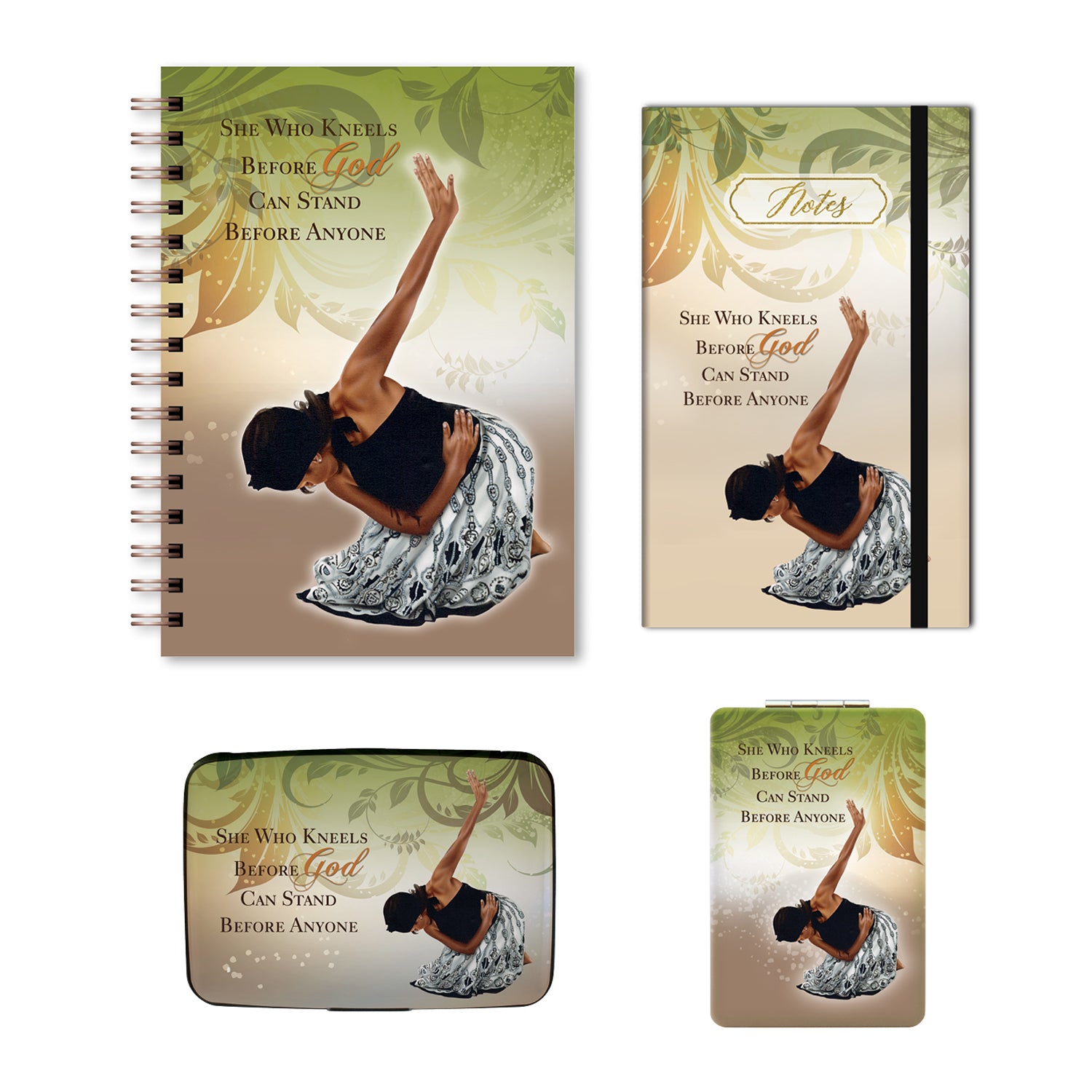
For a curated choice, the SHE WHO KNEELS GIFT SET at $45.00 bundles several items, which makes it simple to match an occasion and budget in one purchase. Watch out: a bundle can feel impersonal if the recipient only uses one piece of it, check that at least two items in the set fit habits you have actually observed.
Budget also interacts with denomination and tradition. Some traditions emphasize sacramentals, rosaries, medals, holy cards, that carry specific meaning and are often given at particular milestones. Others prioritize Scripture and study resources. Spending more does not fix a mismatch; a $12 paperback devotional that fits the recipient's tradition beats a $90 keepsake that does not.
The article sets out three budget tiers and what each one suits, which makes a quick reference for planning a gift.
| Budget tier | Typical items | Best for |
|---|---|---|
| Under $25 | Prayer journal, devotional paperback, verse cards, cross bookmark | Thank-yous, small groups, coworker gifts |
| $25-$60 | Bundled gift sets, study Bible, journal with pen and case, framed verse print | Birthdays, holidays, teacher or mentor gifts |
| $60-$150 | Keepsake figurines | Baptisms, confirmations, ordinations, major milestones |
Finding Unique Religious Gifts for Her
Gifts for women of faith work best when they reflect her interests, not just her religion. Ask what she already does with her time. Does she journal, teach Sunday school, or spend quiet mornings in prayer? Those habits suggest a useful gift.
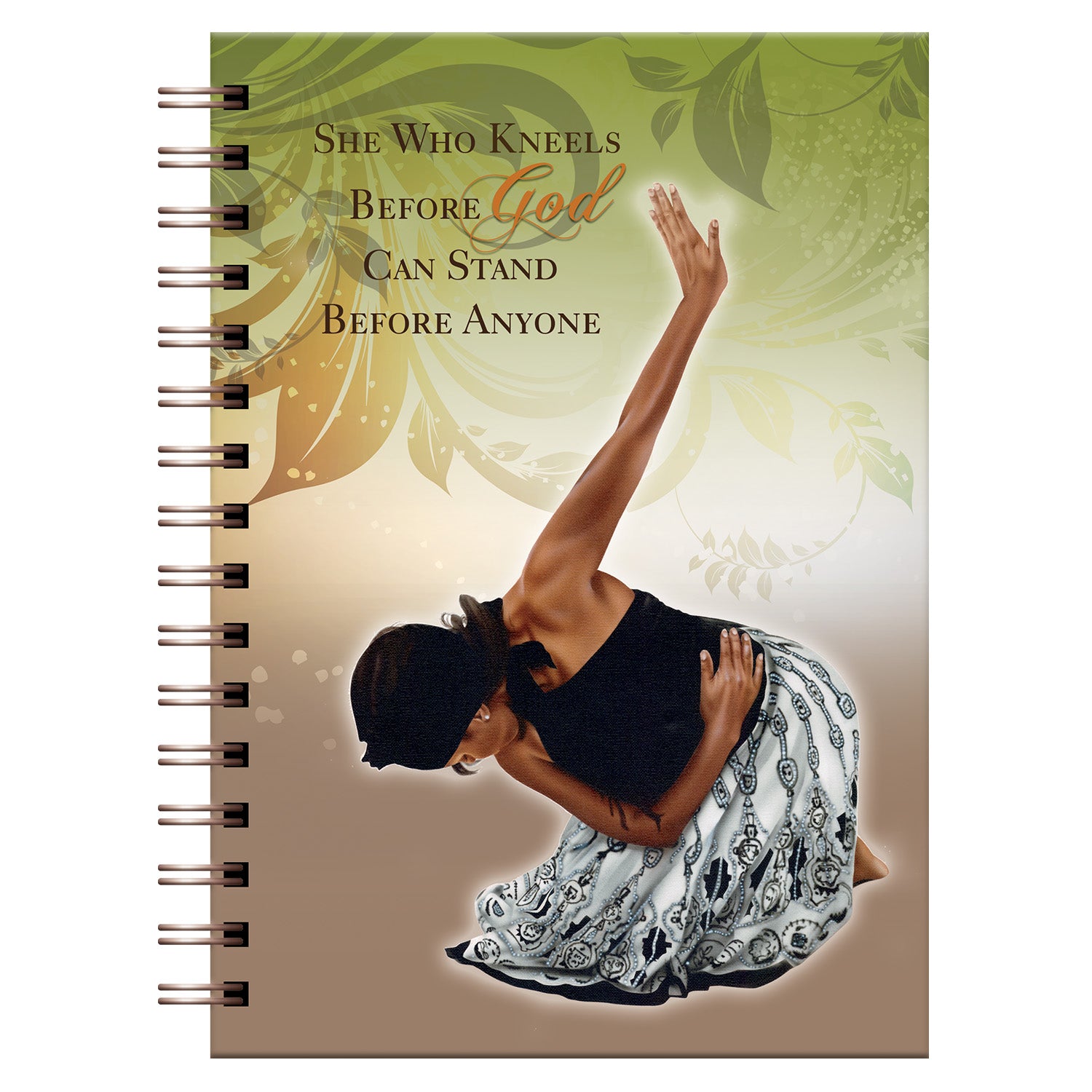
A journal is often a strong choice because it gets used daily. The SHE WHO KNEELS JOURNAL at $13.00 includes 128 lined pages with scripture at the top of each page, which suits sermon notes, prayers, and gratitude lists. For a more keepsake-style option, consider the SHE WHO KNEELS FIGURINE at $60.00.
Choosing Faith Gifts for Men Without Presumption
Many men appreciate faith gifts that look practical rather than overtly devotional. A journal with a clean design, a Bible study tool, or a simple verse print on a desk can feel more natural than a heavily symbolic item.
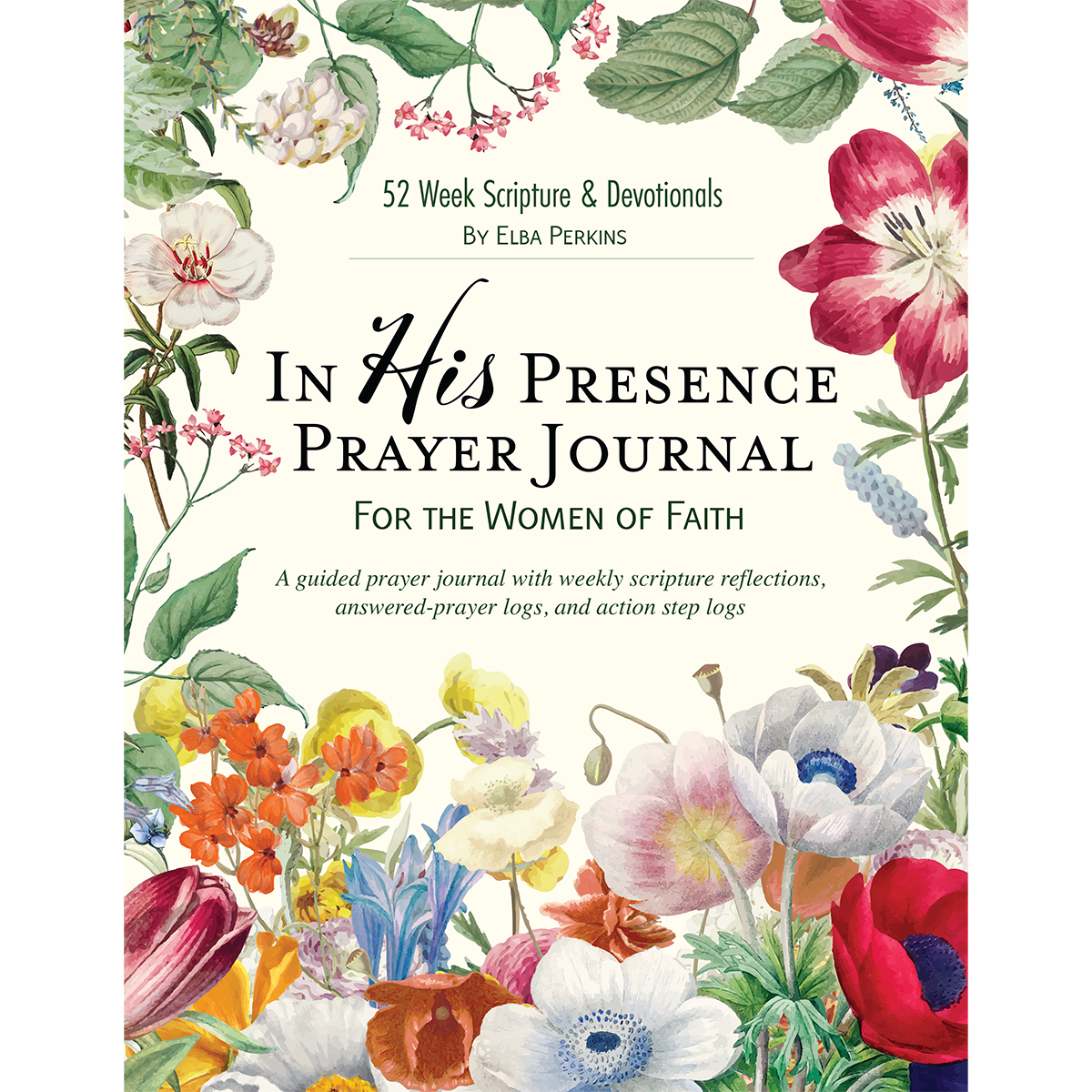
Avoid assuming how a man wants to express his faith. Some men welcome a devotional guide, while others prefer a discreet item they can use without explanation. If you know he is building a daily habit, the In His Presence Prayer Journal at $17.99 offers guided prompts across eight themes, including faith, courage, and forgiveness, which can suit someone growing in his walk with God.
Making a Faith-Based Gift Feel Personal
A personal note often matters more than the item itself, but personalization is where well-meaning gifts go wrong. The goal is to signal that you see the recipient, not to demonstrate how much you know about their faith. Write a short message that references a specific verse, a shared memory, or a prayer you have prayed for them. Keep it brief and sincere. One or two sentences is usually enough; a long letter can feel like pressure.
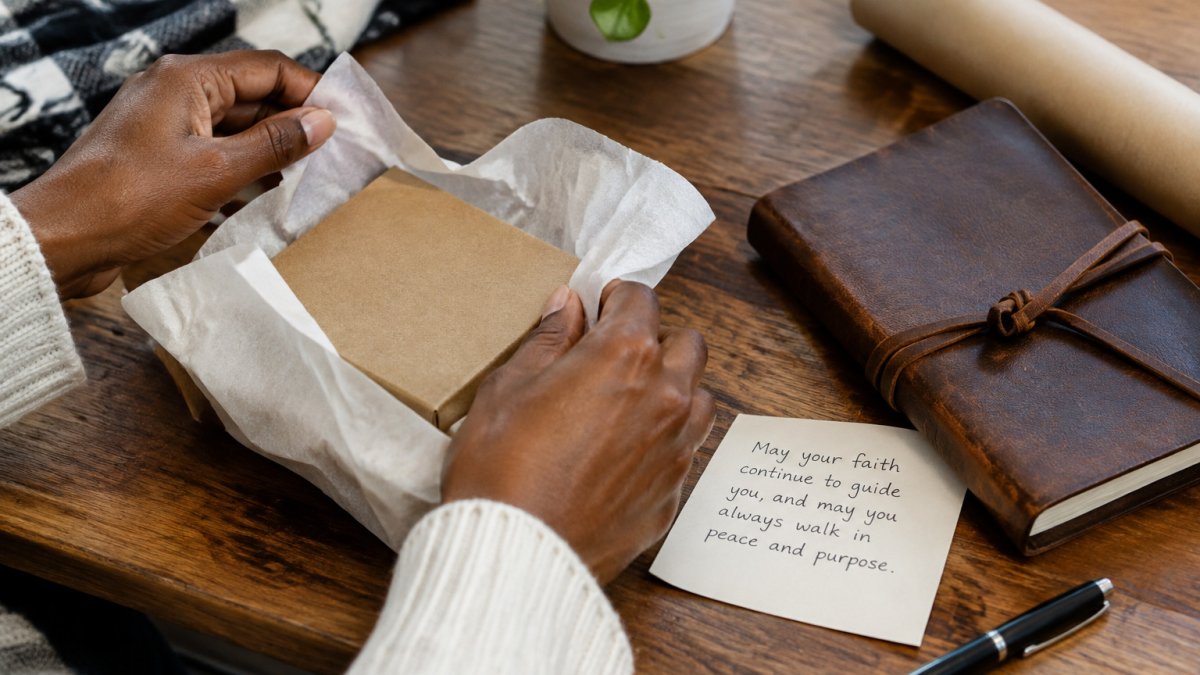
A practical pattern is to name the reason, the item, and the hope in that order. For example: "I remembered you mentioning that Psalm 23 carried you through the spring, so I chose this journal, I hope it gives you room to keep writing." That structure works across traditions because it ties the gift to something the recipient said, not to an assumption you made.
Presentation also counts. A gift box with tissue paper and a handwritten card signals care. Pair the item with a note that explains why you chose it, such as "I thought of you when I read this passage." If you are shipping the gift, include the card inside the box rather than sending it separately, a note that arrives after the gift loses its context.
Cultural sensitivity matters more here than anywhere else in the process. A few situations call for restraint:
- Interfaith or mixed-belief families: choose a gift that expresses care without asserting doctrine, a blank journal, a book of general reflections, or a shared experience. An explicitly doctrinal item can feel like an invitation to debate.
- Recipients who are private about religion: a discreet item they can use without explanation, a leather journal, a simple bookmark, respects that privacy better than a display piece.
- New believers or people returning to faith: avoid gifts that assume knowledge they do not have. A devotional with short readings and space for notes meets them where they are; a deep theological commentary may sit unopened.
- Clergy and church staff: they often receive more devotional material than they can use. A practical item, a durable journal, a good pen, a gift card to a theological bookstore, or a donation in their name may land better than another figurine.
Watch out: personalizing with a verse the recipient has not mentioned can feel presumptuous, especially if it touches a sensitive topic. When in doubt, ask a family member or close friend what the recipient actually reads or carries, rather than guessing from denominational stereotypes.
Accessibility and usability belong in this step too. If the recipient has low vision, a large-print edition or an audiobook devotional is more thoughtful than a standard print item. If they travel or have limited mobility, a compact journal or a digital resource may serve better than a heavy keepsake. Checking language preference matters as well, a Spanish-language or bilingual Bible serves a recipient far better than an English one they will not read.
Finally, consider whether the gift should be religious at all. Sometimes the most meaningful gesture is a donation to a cause the recipient supports, a meal, or time spent together. A faith-based gift is one option among several, and choosing a less explicitly religious gift is not a failure of thoughtfulness, it is a read on the relationship.
Choosing Your Next Religious Gift With Confidence
Start with the recipient's faith and tradition, match the gift to the occasion and budget, and add a personal touch. Those three steps cover most situations. If you are planning ahead, look at resources such as Christian planner buying guide and the How to Choose a Christian Planner for 2027 guide to find a practical item for the year ahead.
Frequently Asked Questions
How do you choose a meaningful religious gift?
Start with the recipient rather than the product. Consider how they practice their faith, what their denomination emphasizes, and whether they are a new believer or a long-time churchgoer. Then match the occasion and a budget you are comfortable with. A gift that reflects what the person already values, such as a prayer journal for someone who keeps a devotional routine, usually feels more meaningful than a generic religious item. A short handwritten note naming why you chose it makes the gift stand out.
What makes a religious gift thoughtful and personal?
A thoughtful religious gift shows you know the person. It might reference a Scripture they have mentioned, a season they are going through, or a hobby they already enjoy. Personalization can be simple: choose a journal with the recipient's name added, or pair a faith item with a note explaining why a particular verse stood out to you. Avoid assuming their beliefs or pushing a gift that may feel presumptuous if you are unsure of their tradition.
What are meaningful religious gifts for her?
The SHE WHO KNEELS Journal at $13.00 works well for women who write prayers, sermon notes or gratitude lists, since its 128 lined pages each open with scripture. The In His Presence Prayer Journal at $17.99 suits women building a daily quiet-time routine, with eight themed sections. For a larger gesture, the She Who Kneels Figurine at $60.00 is a keepsake for Mother's Day or a milestone birthday.
How do I choose a faith-based gift for someone who has everything?
Focus on experiences or practical tools that support their existing practice rather than adding more decor. A journal or devotional they can use daily often matters more than an ornament. You can also choose a gift set, such as the She Who Kneels Gift Set at $45.00, which bundles a journal, sticky notes, a compact mirror and a card holder into one presentation. Pair any gift with a personal note explaining what you hope it encourages.
