

Table of Contents
- Start With Your Story: Define What Meaningful Means to You
- Building a Meaningful Art Collection That Reflects Your Identity
- Collecting and Curating Meaningful Objects: Research, Provenance, and Respect
- How to Decorate Walls With Meaningful Collections
- Finding Pieces That Speak to You: Where to Source Cultural Decor
- Care, Conservation, and Safe Display of Your Collection
- Budgeting for a Curated Collection That Grows Over Time
- Edit and Evolve: Keeping Your Collection Intentional
- Frequently Asked Questions
Last Updated: October 16, 2026
Start With Your Story: Define What Meaningful Means to You
To curate meaningful collection cultural decor, start with one question: What story do you want your home to tell?
It's not about filling walls but choosing pieces that speak to who you are. At African American Expressions, we've spent over 34 years helping people build collections that reflect their heritage, identity, and values.
Start by asking yourself these questions:
- What aspects of Black heritage or culture resonate most with you?
- Do you want your collection to tell one focused story or celebrate multiple narratives?
- How do you want visitors to feel when they enter your space?
- Are there specific artists, time periods, or themes that call to you?
The most powerful collections aren't built by following trends but by someone who knows what they love and why. That clarity becomes your compass as you curate meaningful objects for your home.
Building a Meaningful Art Collection That Reflects Your Identity
A meaningful art collection reflects who you are, not the "right" pieces, but pieces that matter to you.
Choose artwork and objects that connect to your identity, values, or story, whether that's celebrating Black history, honoring family heritage, or supporting emerging artists whose vision aligns with yours.
According to The Art Basel and UBS Survey of Global Collecting 2026, fine and decorative art accounted for 55% of surveyed collectors' spending in 2026, up from 49% in 2025.
When building your collection, think about the themes that matter to you:
- Historical narratives: Pieces that honor significant figures, movements, or moments in Black history
- Cultural celebration: Art that honors traditions, spirituality, or community
- Personal connection: Objects tied to your family history or ancestral heritage
- Contemporary voices: Work by living artists whose perspectives inspire you
- Spiritual or inspirational themes: Pieces that uplift, encourage, or ground you daily
The Praise Dancer Group Stretched Canvas from African American Expressions is a perfect example.

Collecting and Curating Meaningful Objects: Research, Provenance, and Respect
Understanding Cultural Context and Provenance
Before you buy cultural decor, know its story. Provenance means understanding where a piece comes from, who created it, and what it represents culturally.
Start by asking these questions about any piece you're considering:
- Who created this piece and what is their background?
- What cultural tradition or historical moment does it represent?
- Was it created by someone from within that culture or outside it?
- Is the artist compensated fairly for their work?
- Are there any sacred or ceremonial meanings I should understand?
Research requires curiosity and respect, not a degree. Read artist statements, look for interviews or documentation, and check a piece's history if it's vintage or second-hand.
African American Expressions is built on this principle. The Harriet Tubman Relief Art, created by well-known Black artist D.D. Ike, is a powerful example: this 39" x 29" framed piece honors Tubman's courage and sacrifice while telling a story of resistance and hope.

Ethical Sourcing and Fair Compensation
Ethical collecting means ensuring artists and makers are paid fairly, non-negotiable.
When you buy cultural decor, your money has power. Choose pieces where you can trace the money back to the creator.
Here's what ethical sourcing looks like:
- Direct from artists: Buy directly from the maker when possible. They keep 100% of the profit.
- Fair trade certified: Look for certifications that guarantee fair wages and working conditions.
- Black-owned businesses: Support businesses owned by people from the culture being represented. They understand the work's significance and reinvest profits back into the community.
- Transparent pricing: If a piece costs $15, you should be able to understand where that money goes.
- Handmade and limited: Pieces made by hand in small batches typically mean the maker was paid more per item than mass-produced work.
African American Expressions has operated for 34 years on this foundation, working directly with Black artists and makers, paying fairly, and staying transparent about pricing. When you buy the Eye on the Sparrow Wall Plaque for $15 or the Love Sets Us Free Maya Angelou Gold Foil Plaque for $15, you're supporting this commitment.
How to Decorate Walls With Meaningful Collections
Creating Visual Cohesion With Color, Shape, and Subject
To curate meaningful collection cultural decor, you need visual unity, not everything matching, but pieces that work together.
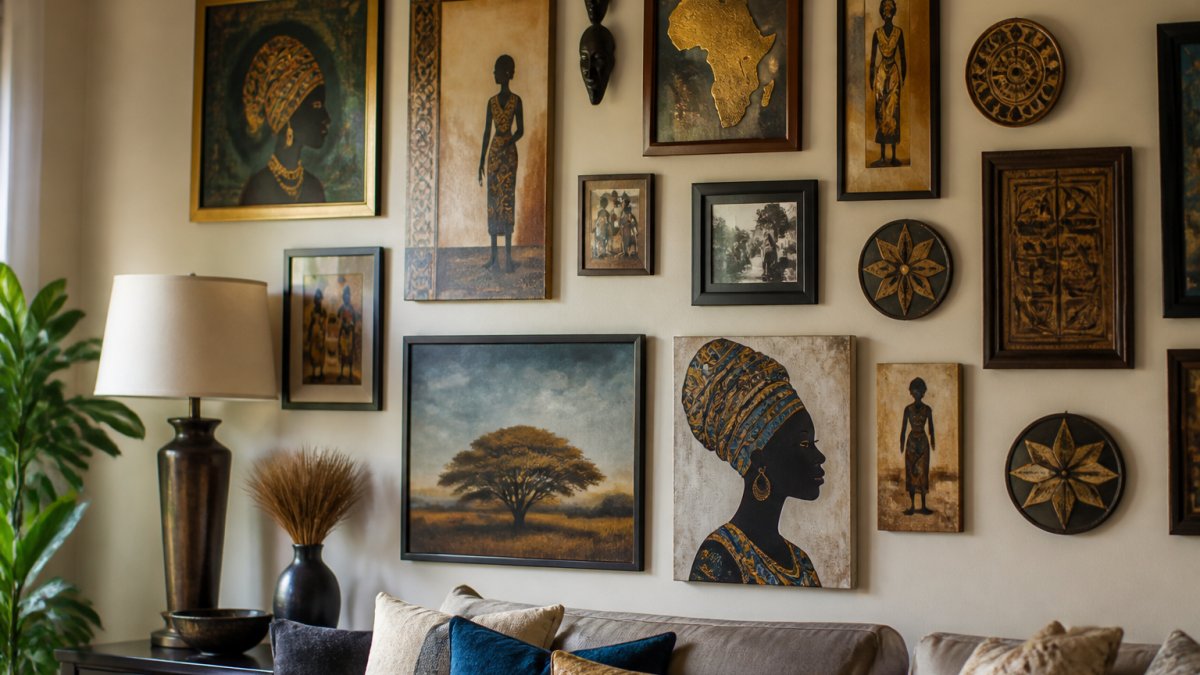
Think of your wall as a composition where colors, shapes, and subjects echo each other even when they're different.
Start with a color palette. Look at the pieces you love most and note repeating colors, gold, deep blues, earth tones.
Think about subject matter. Pieces can celebrate different themes but should connect, spirituality, history, nature, or contemporary art by Black artists.
Gallery Wall Arrangement and Composition
Arranging a gallery wall is both art and strategy, the goal is a display that feels intentional, not random. Here's how:
Plan before you hang. Lay pieces on the floor or a large table, arrange until the composition feels right, and photograph it as your blueprint.
Use a grid or organic flow. Two approaches work well:
- Grid layout: Pieces aligned in neat rows or columns. Clean, modern, organized.
- Organic layout: Pieces clustered together with varied spacing. Feels curated, dynamic, personal.
Start from the center. Hang your largest or most important piece first. Build around it. This anchors the entire arrangement.
Mind the spacing. Leave 2-3 inches between pieces. Too close feels cramped. Too far feels disconnected.
Step back and adjust. Hang pieces, step back 10 feet, and check balance, do your eyes move naturally or get stuck? Adjust as needed. A gallery wall featuring pieces from African American Expressions, like the Praise Dancer Group Stretched Canvas paired with the Eye on the Sparrow Wall Plaque, creates a display that celebrates your identity while maintaining visual harmony.

Finding Pieces That Speak to You: Where to Source Cultural Decor
Emerging Artists and Handmade Objects
The best cultural decor often comes from artists you've never heard of, emerging makers create work with passion and authenticity that mass-produced pieces can't match.
Praise Dancer Group Stretched Canvas (Medium) →
Where to find them:
- Artist websites and social media: Follow Black artists on Instagram, TikTok, and personal websites. Buy directly. You'll get better prices and support the artist fully.
- Art markets and craft fairs: Local markets often feature emerging artists selling handmade work. You can talk to the creator, ask about their process, and understand their story.
- Galleries focused on Black artists: Many galleries specifically showcase work by Black artists. Staff can tell you about each piece's significance.
- Online platforms: Etsy, Shopify stores, and artist collectives connect you directly to makers. Filter by "Black-owned" or "handmade."
Handmade work carries intentionality, someone spent hours creating it, and that energy shows. Handmade pieces also tend to be limited, keeping your collection unique.
Second-Hand and Vintage Finds
Vintage and second-hand cultural decor offers affordability, uniqueness, and sustainability, and honors the piece's history by giving it new life.
Where to look:
- Thrift stores: Goodwill, Salvation Army, and local thrift shops often have vintage art and objects. You have to dig, but the treasures are there.
- Online marketplaces: Facebook Marketplace, Craigslist, and eBay connect you to local sellers and nationwide options.
- Estate sales: When collections are sold, you often find quality pieces at reasonable prices.
- Antique malls: Some specialize in vintage African American art and cultural objects.
- Auctions: Online auctions sometimes feature cultural art and decor.
When buying second-hand, research the piece: learn about the artist if it's vintage art, and understand the context if it carries cultural significance. Second-hand often means more meaningful because it has history.
Care, Conservation, and Safe Display of Your Collection
Proper care keeps your collection beautiful and meaningful for decades.
Light matters most. Direct sunlight fades artwork, especially photographs and prints (Limiting Light Damage).
Control humidity. Extreme moisture damages paper, canvas, and wood. Keep pieces in rooms with stable humidity.
Frame and mount properly. Use acid-free materials, acid degrades paper and fabric over time.
Clean gently. Dust canvas and framed pieces with a soft brush or microfiber cloth.
Handle with clean hands. Oils from your skin damage artwork. Wear clean, dry gloves when moving or adjusting pieces.
Document your collection. Photograph each piece and record the artist's name, purchase date, and price.
Budgeting for a Curated Collection That Grows Over Time
A meaningful collection doesn't require a huge budget, it requires strategy.
Buy quality over quantity. One $90 canvas from African American Expressions beats five $18 mass-produced prints, quality pieces last and appreciate in meaning.
Prioritize strategically. Don't fill your whole space at once, start with one focal point.
Mix price points. Combine investment pieces with affordable finds. The Love Sets Us Free Maya Angelou Plaque costs $15.
Watch for sales and seasonal promotions. Black History Month and holiday seasons often bring discounts. Plan major purchases around these times.
Buy from sources with staying power. African American Expressions has been in business for 34 years.
Edit and Evolve: Keeping Your Collection Intentional
Your collection should grow and change as you do, which means editing.
Remove pieces that no longer resonate. Taste and identity evolve; if a piece no longer speaks to you, donate, sell, or gift it. Look for gaps. Step back and study your collection. What themes or voices aren't represented?
Rotate pieces seasonally. You don't have to display everything at once.
A meaningful collection of cultural decor is never finished, it grows with you, tells your story, and honors the artists and communities behind each piece.
Building a curated collection takes intention, research, and patience, but it transforms your space into something deeply personal. Our canvas art, plaques, and cultural decor pieces are designed to anchor meaningful collections. Start exploring our collection today and discover pieces that speak to your identity and values.
Frequently Asked Questions
What's the difference between collecting and curating a meaningful collection?
Collecting means gathering objects over time, while curating a meaningful collection involves intentional selection based on personal story, identity, and emotional connection. Curation requires research into provenance, cultural context, and how pieces relate to one another. When curating cultural decor, you're not just acquiring items, you're building a cohesive narrative that reflects who you are and what matters to you.
How do you choose cultural decor that feels authentic and meaningful?
Start by asking yourself what stories and values matter most to you. Research the cultural context and artist behind each piece. Look for objects created by emerging artists or makers from the culture you're celebrating, and verify ethical sourcing. Pieces should evoke genuine emotional connection, not feel generic. Support Black-owned businesses and artisans who can speak to the heritage and authenticity of what they create.
How much should I budget for a meaningful art collection?
There's no single answer, meaningful collections can start at $15 and grow over years. The "Eye on the Sparrow" wall plaque costs $15, while larger statement pieces like the Harriet Tubman Relief Art run $240. Start with what fits your budget and add pieces intentionally over time. Quality matters more than quantity. Many collectors build their collections gradually, investing in one meaningful piece every few months rather than rushing to fill walls all at once.
How do you arrange cultural artwork and objects so they look intentional, not random?
Group pieces by theme, color, or subject to create visual cohesion. Vary sizes and shapes to avoid monotony, and use repetition, like repeated colors or frames, to tie the arrangement together. Leave breathing room between pieces. When displaying on walls, consider the height and sight line; center pieces at eye level. A gallery wall works best when pieces share a unifying element, whether that's a shared color palette, frame style, or cultural narrative.