

Table of Contents
- Why Student Participation Matters in School Fundraisers
- Set Clear Goals and Communicate the Fundraising Purpose
- Create Student Fundraising Incentives That Drive Engagement
- Design a School Fundraising Campaign Timeline for Maximum Momentum
- Use Digital Tools and Peer-to-Peer Fundraising Platforms
- Implement Gamification and Leaderboard Systems
- Explore Creative School Fundraising Ideas That Build School Spirit
- Recognize Student Effort and Celebrate Success
- Frequently Asked Questions
Last Updated: October 6, 2026
Why Student Participation Matters in School Fundraisers
Student engagement is the engine that drives successful school fundraisers, and understanding tips for increasing student participation in school fundraisers is essential to that success. Research from the National Institutes of Health shows that student engagement thrives when three key components are present: a supportive learning environment, a personal educational approach, and active student involvement (PMC study on student engagement drivers).
Here's what most schools miss: participation isn't just about selling products. Updating your fundraising page regularly to show progress can boost donations by 30% (Gold Athletics fundraising strategies), which signals to students that their work is being noticed and valued.
At African American Expressions, we've worked with schools for over 34 years. Schools focused on clear communication, meaningful incentives, and student leadership exceed their participation goals, that's the strategy covered here.
Set Clear Goals and Communicate the Fundraising Purpose
Among the most important tips for increasing student participation in school fundraisers, the biggest mistake schools make is launching a fundraiser without clearly explaining why the money matters. A lack of clear communication regarding the purpose of the funds directly impacts participation, regardless of how attractive your incentive structure looks (Upchieve analysis of fundraising challenges).
Define your goal specifically. Instead of "we need to raise money," say "we're raising $5,000 for our robotics team's competition travel." Specificity creates urgency and connection.
Next, communicate this purpose across multiple channels:
- In-class announcements: Have teachers explain the goal and how students can help
- Digital platforms: Post on your school's website, email, and social media
- Student meetings: Hold a kickoff assembly or lunch-and-learn session where students ask questions
When students see classmates excited about the purpose, participation becomes contagious.
Create Student Fundraising Incentives That Drive Engagement
Incentives work only when designed around student motivation. Generic prizes don't move the needle, rewards must feel personal, achievable, and worth the effort, without excluding students who need encouragement most.
Many schools use tiered systems: five items earns a small reward, ten unlocks a better prize, and top sellers earn premium recognition, so every student feels they can win.
Consider these incentive categories:
- Social recognition: Public acknowledgment, special lunch privileges, or featured spotlights on your school's digital board
- Tangible rewards: Gift cards, branded merchandise, or exclusive access to school events
- Experience-based incentives: Early lunch periods, free dress days, or VIP seating at school events
Students respond better to status-based incentives than purely monetary ones, a "Top Seller" certificate often outperforms a generic gift card.
Design Incentives for Every Student, Not Just Top Sellers
This is where participation collapses. If every reward is tied to sales volume, you reward students whose families can already afford to buy and resell. Students from low-income households, students with disabilities limiting door-to-door selling, and students whose caregivers work evenings are locked out of top tiers, and when they disengage, the campaign loses energy.
A more inclusive incentive architecture separates effort from dollars raised:
- Participation-based entry rewards: Every student who registers, attends the kickoff, or completes one share gets a small reward regardless of sales, keeping the floor of engagement high.
- Effort metrics alongside sales metrics: Track "most shares sent," "most thank-you notes written," "most donor conversations started," and "most improved week-over-week", rewarding the work, not the wallet.
- Non-selling roles: Offer credit for designing posters, filming a promo video, running the leaderboard, writing thank-you cards, or staffing a table. Assign these roles explicitly so students who can't sell still earn recognition.
A simple rule: for every dollar-based tier, add one effort-based tier. That separates campaigns where five kids carry everything from ones where 60% of the class is genuinely involved.
Match the Incentive to the Student's Motivation
Students aren't a single audience. Sort incentives into three buckets and cover all three:
- Competitive students respond to leaderboards, rankings, and head-to-head classroom challenges.
- Social students respond to group rewards, class parties, and public shout-outs.
- Purpose-driven students respond to impact, knowing exactly what their effort funded.
If your incentive menu only feeds one bucket, you're only reaching one-third of your students.
Upchieve analysis of fundraising challenges
Design a School Fundraising Campaign Timeline for Maximum Momentum
A timeline keeps energy high from start to finish. Most successful campaigns run 4-6 weeks with clear phases that build momentum.
Week 1-2: Launch and Education
- Hold kickoff meetings and assemblies
- Distribute materials and explain the purpose
- Answer student questions
Week 2-3: Active Selling
- Students begin sales efforts
- Share progress updates weekly (even if modest)
- Celebrate early wins publicly
Week 3-5: Momentum and Recognition
- Highlight top performers and teams
- Share progress toward the goal visually
- Launch leaderboards or progress trackers
Week 5-6: Final Push and Celebration
- Announce top sellers and teams
- Host a celebration event
- Recognize all participants, not just top performers
Timing matters as much as structure. Avoid holidays, exam periods, or when students are overwhelmed; spring and early fall see higher participation.
Use Digital Tools and Peer-to-Peer Fundraising Platforms
Digital platforms have transformed how schools coordinate fundraising. According to the Winkler Group, digital tools are now identified as a primary method to simplify fundraising processes and improve participation (Winkler Group digital fundraising analysis).
Become a part of our AAE family and start fundraising today! →
Digital meets students where they are. Online donation portals, peer-to-peer links, and progress trackers make participation frictionless, students share a link without physical products in hand.
Effective digital platforms offer:
- Easy sharing: One-click options to send fundraising links via text, email, and social media
- Progress tracking: Real-time updates showing how much has been raised toward the goal
- Mobile-friendly design: Students can participate from phones and tablets
African American Expressions supports schools and organizations through our fundraising program, which combines high-quality, culturally inspired products with digital coordination tools.
Implement Gamification and Leaderboard Systems
Gamification transforms fundraising from a chore into an engaging competition. Schools are increasingly using leaderboards to track top-selling students and offering mini-rewards to drive engagement (Kindsight gamification strategies).
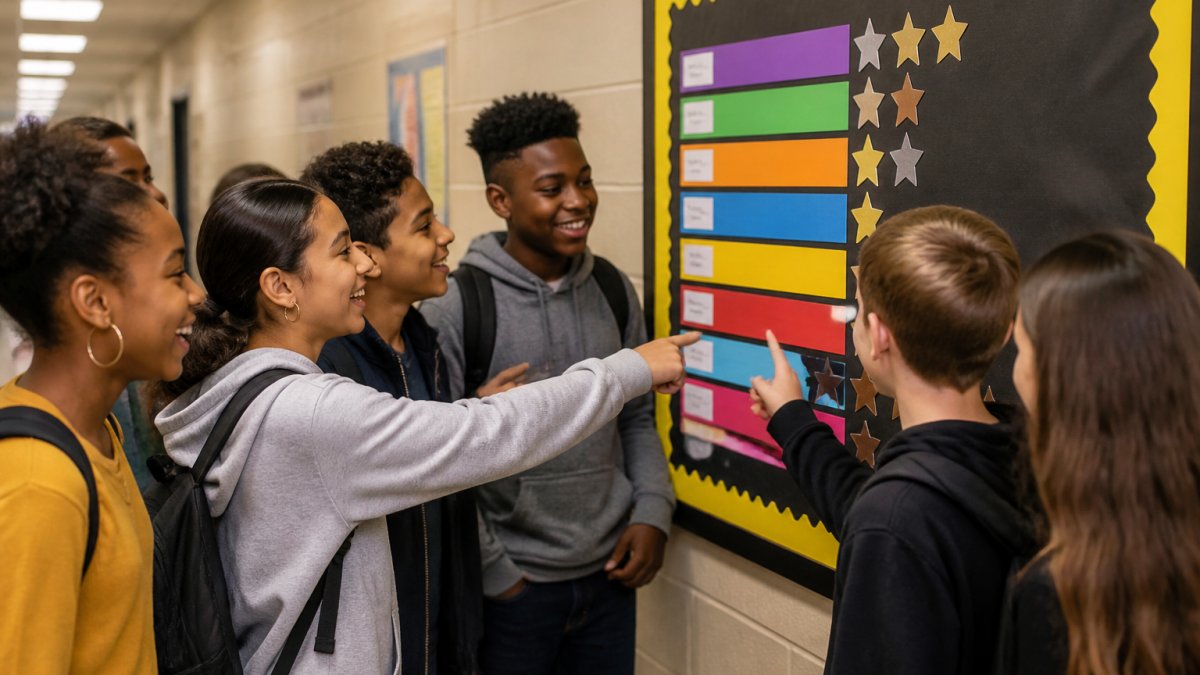
Leaderboards tap competitive instincts while focusing on participation, not just top performers. Celebrate effort at multiple levels: individual sellers, classroom teams, grade levels, and school-wide progress.
Effective leaderboard systems include:
- Individual rankings: Students see where they rank among peers
- Team competitions: Classrooms or grade levels compete against each other
- Milestone badges: Students earn digital or physical badges for hitting sales targets
Seeing your name climb a leaderboard is powerful.
Explore Creative School Fundraising Ideas That Build School Spirit
Standard product sales work, but creative ideas create buzz and deepen school spirit. The best combine cultural relevance with genuine student interest.
Consider these approaches:
- Themed product sales: Sell culturally inspired gifts and home decor that celebrate heritage and identity. African American Expressions offers calendars, canvas art, and stationery that students are genuinely proud to sell because the products tell meaningful stories.
- Talent shows and performances: Students showcase skills while raising funds through ticket sales or donations
- Sports tournaments or athletic events: Organize intramural competitions with entry fees benefiting the fundraiser
The common thread: ideas students actually want to join. When the fundraiser is fun or meaningful, participation becomes voluntary rather than obligatory.
Recognize Student Effort and Celebrate Success
Recognition is the most underutilized motivator in school fundraising. Many schools celebrate top sellers once at the end, then move on, the biggest reason participation drops the following year.
Effective recognition strategies include:
- Weekly shout-outs: Announce progress and top performers in morning announcements or newsletters
- Public displays: Post photos, names, or progress updates in hallways, classrooms, and digital boards
- Personal notes: Handwritten thank-you cards from teachers or administrators to students who participated
The key is inclusivity: every participant should feel recognized, whether they were top seller or sold one item. This builds a culture where participation becomes normal, not exceptional.
| Recognition Type | Timing | Best For |
|---|---|---|
| Weekly shout-outs | During campaign | Sustained motivation |
| Public displays | Throughout campaign | Visual celebration |
| Personal notes | End of campaign | Individual appreciation |
| Celebration event | Final week | Team morale |
| Impact reporting | Post-campaign | Long-term engagement |
Close the Loop: Report the Impact Back to Students
Most guides end at the celebration assembly, a mistake. The weeks after a campaign either cement a habit of participation or let it evaporate before next year.
Students, especially younger ones, can't connect a dollar figure to a real outcome. "We raised $8,400" means nothing; "We raised $8,400, which paid for the new sound system plus bus travel for the robotics team" means everything.
A practical post-campaign impact report includes four things:
- The final number, stated plainly. Total raised, number of participants, and the percentage of the student body that took part. Don't hide a modest result, a small number honestly reported still builds trust.
- The specific things the money bought. Name the items, the teams, the trips, the equipment. If the funds are still being allocated, say so and give a date when students will see the result.
- A visual. A photo of the new equipment, a short video of the team the money supported, or a simple before/after graphic. Visuals travel further than paragraphs.
- A thank-you that names students, not just donors. Recognize the students who sold, the students who designed the posters, the students who wrote thank-you notes. Recognition that only credits adults teaches students that their work doesn't count.
Turn Recognition Into Next Year's Momentum
The impact report isn't just courtesy, it's a recruiting tool. Schools that consistently report back see returning participants re-engage more easily, and new students join because they've seen peers get real credit for real results.
A few mechanisms that work:
- A "where it went" board in a high-traffic hallway that stays up for a full semester, not a week.
- A short assembly segment at the start of the next campaign recapping last year's impact before introducing the new goal.
- A one-page take-home flyer for families that summarizes the outcome and thanks students by name or by class.
Winkler Group digital fundraising analysis
Frequently Asked Questions
How can schools get more students to participate in fundraisers?
Clear communication about the fundraising purpose is essential, without it, participation remains low regardless of incentive structure. Schools should involve students in the planning process, set visible goals, use digital platforms for coordination, and create tiered incentive programs. Research shows that student engagement depends on three components: a supportive learning environment, a personal educational approach, and active student involvement. When students understand why funds matter and feel ownership in the campaign, participation naturally increases.
What student fundraising incentives actually work?
Gamification through leaderboards and tiered rewards drives strong engagement. Schools increasingly use leaderboards to track top-selling students and offer mini-rewards to maintain momentum. Incentives work best when they appeal to different student interests, some respond to recognition, others to small prizes or privileges. Rotating incentive tiers throughout the campaign sustains motivation over time. The key is making rewards attainable and celebrating progress visibly so students stay engaged.
How long should a school fundraiser campaign last?
A well-structured school fundraising campaign timeline typically spans 4-6 weeks, with phases for kickoff, mid-campaign momentum, and final push. Shorter campaigns (under 3 weeks) often fail to build momentum, while campaigns exceeding 8 weeks risk losing student interest. Breaking the timeline into distinct phases with milestone celebrations keeps energy high. Updating progress regularly, ideally weekly, shows students their impact and can boost donations by 30% when displayed on fundraiser pages or school communications.
How can schools make fundraisers more inclusive and accessible?
Inclusive fundraising removes barriers to participation. Offer multiple ways to contribute: digital sales for students without physical inventory, donation options for families unable to sell, and volunteer roles for students who prefer non-sales involvement. Ensure fundraiser materials (flyers, digital platforms) are accessible to all learners, including those with visual or hearing needs. Celebrate contributions of all sizes equally, and avoid incentive structures that favor high-earning students only. When all students feel valued regardless of sales volume, participation and school spirit increase significantly.