

Table of Contents
- Defining Afrocentric Interior Design: A Complete Guide
- The Core Elements of Afrocentric Interior Design Style
- How Modern African Home Decor Fits Today's Interiors
- How to Style Afrocentric Decor Room by Room
- African American Heritage Home Decor: Choosing Pieces That Tell a Story
- Afrocentric Design vs. Afro-Boho: What's the Difference?
- Ethical Sourcing and Budget-Friendly Ways to Start
- Frequently Asked Questions
Last Updated: September 28, 2026
Defining Afrocentric Interior Design: A Complete Guide
Afrocentric interior design is a decorating approach that centers African, African diaspora, and Black American cultural traditions through materials, motifs, color, and craft. According to HGTV's 2026 design trend analysis, demand for African-inspired products and decor elements keeps climbing as homeowners look for interiors with genuine cultural weight.
This guide from African American Expressions covers what the style actually is, where it comes from, and how to bring it into your home without turning your living room into a museum exhibit.
The short version: it is not a single look. It is a set of visual languages, and knowing which one you are speaking changes every purchase you make.
Historical and Cultural Roots
The style draws from a continent of distinct traditions, not one monolithic aesthetic. Textile arts from West Africa, carved sculpture, beadwork, and architectural patterns all feed into what designers now call Afrocentric interiors.
Academic work from the University of Johannesburg on contemporary African identity in interior design traces how designers consciously reference cultural background rather than treating African influence as surface decoration. The University of Illinois Library's Afrocentric architecture and design guides collect case studies showing how those references translate into buildable, livable spaces.
The Core Elements of Afrocentric Interior Design Style
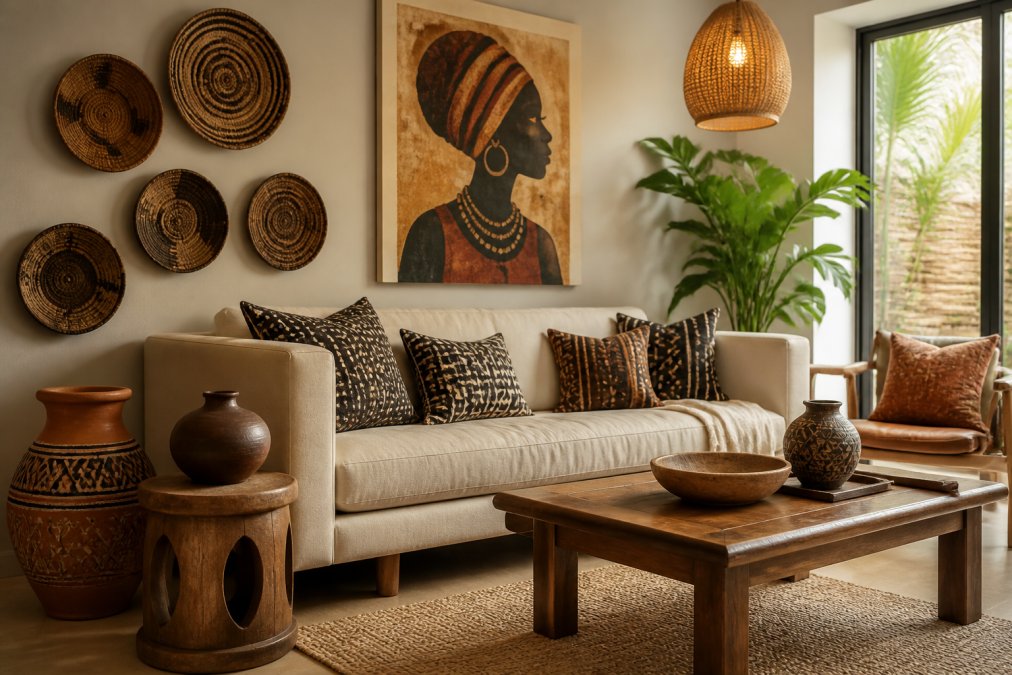
Five building blocks show up again and again: earthy color, handcrafted textiles, natural materials, sculptural forms, and storytelling art. Get these right and the room reads as intentional rather than themed.
Earth Tones and Warm Palettes
Terracotta, ochre, clay, deep brown, and burnt orange form the base. These warm tones come from the actual pigments of African soil and pottery, which is why they pair so naturally with wood and natural fiber.
Textiles, Patterns, and Natural Materials
Mudcloth, kente cloth, and geometric patterns carry most of the visual weight. A 2026 trend report from Woodgrain on sculptural and organic shapes places organic forms in the top ten interior trends, which explains why carved stools and hand-thrown pottery feel current rather than retro.
| Element | What It Adds | Where to Start |
|---|---|---|
| Earth tones | Warmth, grounding | Wall color, upholstery |
| Mudcloth and kente | Pattern, heritage | Pillows, throws, art |
| Woven baskets | Texture, storage | Wall display, floors |
| Sculptural wood | Organic shape | Stools, bowls, frames |
How Modern African Home Decor Fits Today's Interiors
Modern African home decor works because it mixes rather than matches. A single statement piece against a neutral backdrop reads more sophisticated than a room where every surface competes.
Home & Texture's 2026 coverage of the maximalist Afrocentric aesthetic notes a deliberate rejection of timid, minimal design in favor of statement lighting, velvet, and lacquered finishes. That is a real shift. For years the advice was to tone cultural decor down. The current guidance runs the other way.
How to Style Afrocentric Decor Room by Room
Most guides stop at inspiration photos. The harder question is spatial: how do you place large-scale mudcloth patterns, carved sculptural furniture, and woven wall displays without the room reading as cluttered or costumed? The answer is a simple ratio most practitioners land on, roughly 60 percent neutral base, 30 percent texture and mid-tone, 10 percent bold pattern or statement object. That 60/30/10 split keeps the eye moving instead of stalling on one loud surface.
A second rule that saves small rooms: match pattern scale to room scale.
Living Room and Entryway
Start with the wall behind your main seating. A large canvas or relief piece anchors the room, then woven baskets and a textured throw fill in around it. On layout: leave at least 14 to 18 inches between the sofa and a coffee table so the carved wood or hammered-metal piece has breathing room, and hang art so the center sits at roughly 57 to 60 inches from the floor, the same eye-level rule galleries use.
Bedroom and Dining Space
Bedrooms handle pattern better than most people expect. Layer a mudcloth-inspired throw over a neutral duvet and keep the rest quiet. For a queen bed, a throw folded across the foot at about 20 inches deep gives you the pattern hit without turning the bed into a display. Keep nightstand decor to one lamp, one small object, and one book stack.
Small Rooms and Renters
If you cannot paint or hang, work with what is movable. A leaning framed textile against a wall, a stack of woven baskets on the floor, and a carved stool used as a side table all deliver the aesthetic without a single nail. Group objects in odd numbers and vary heights by at least a few inches, the eye reads that variation as intentional rather than accidental.
African American Heritage Home Decor: Choosing Pieces That Tell a Story
African American heritage home decor should connect to a specific narrative, not a generic theme. The difference between meaningful and forgettable is whether you can say what the piece depicts and why it matters to you.
Afrocentric Design vs. Afro-Boho: What's the Difference?
Afrocentric design leans on African and diaspora traditions with a focus on heritage and craft. Afro-Boho blends those elements with bohemian layering: macramé, floor cushions, mixed patterns, and a looser, more eclectic feel.
Ethical Sourcing and Budget-Friendly Ways to Start
Authenticity matters more than volume here, but 'buy authentic' is not useful advice on its own. What separates a genuine artisan piece from a warehouse import is a short list of checkable signals. Run any purchase through them before you commit.
How to Tell Authentic From Mass-Produced
The maker is named. A seller who can tell you the artist, the workshop, or the region, and ideally shows you a photo or a short bio, is almost always selling real work. A listing that says only 'African-style' or 'tribal-inspired' is a red flag.
Budget-Friendly Ways to Start
You do not need a full redesign. Start with one wall, one textile, and one object, then add over time. Three approaches keep the cost low without sacrificing authenticity:
- Buy small from real makers. A hand-thrown bowl, a single woven basket, or a small framed print from a named artist often costs less than a mass-produced 'set' and carries far more meaning.
- Thrift and estate sales. Older hand-carved pieces and vintage textiles turn up regularly and often predate the current trend, which means better materials and lower prices.
- DIY what you can. Block-printing a plain cotton throw with a simple geometric stamp, or framing a piece of mudcloth-inspired fabric you already own, gets you the pattern hit for the cost of materials.
Frequently Asked Questions
What colors are typically used in Afrocentric interior design?
Afrocentric interior design leans on warm, earthy tones: terracotta, ochre, burnt sienna, deep clay red, and rich browns. These are often balanced with vibrant accents like indigo, gold, or emerald green pulled from Kente cloth and tribal motifs. The goal is a warm palette that feels grounded rather than stark, which is why you rarely see all-white or cool gray schemes in authentic Afrocentric spaces. Start with a neutral base, then layer two or three earth tones through textiles, pottery, and wall art.
How does Afrocentric design differ from Afro-Boho style?
Afrocentric interior design centers specifically on African and Black diaspora heritage, using mudcloth, Kente cloth, tribal motifs, and handcrafted artisanal pieces as its foundation. Afro-Boho is a broader bohemian fusion that mixes African elements with global influences like macrame, rattan, and layered vintage textiles. Afrocentric tends to be more intentional and culturally grounded, while Afro-Boho is looser and more eclectic. You can absolutely combine them, but know which one is leading the design so the space still reads as cohesive.
How can I incorporate Afrocentric decor without cluttering my space?
Pick one statement piece per room and let it anchor the design. A large relief art piece or a stretched canvas can carry a wall on its own, so you do not need to fill every surface. Pair it with two or three smaller accents like a woven basket, a carved figurine, or a textured throw. Keep the background neutral so the cultural pieces stand out. This approach works well in smaller rooms where too many patterns compete for attention.
Where can I find authentic, high-quality Afrocentric home decor?
Look for retailers that name the artists behind their pieces and describe the cultural context of each item. African American Expressions, for example, has offered culturally inspired art and decor for over 34 years, including works by named artists like D.D. Ike. When shopping, check for details on materials, dimensions, and construction. A framed relief piece or a professionally stretched canvas signals real craftsmanship, while vague product descriptions often point to mass-produced imitations.
Decorating with cultural meaning takes more thought than filling a cart with matching sets, and that is exactly why it looks better when it is done well. African American Expressions has spent 34 years supplying culturally inspired art, figurines, and home decor, and our fundraising program lets schools and churches earn 40% on every sale while they shop. Browse the collection, find the piece that starts the conversation, and become part of our AAE family.