

Table of Contents
- Why Churches Need Diverse Fundraising Ideas for Churches
- 1. Product Sales and Merchandise Fundraisers
- 2. Community Events and Social Gatherings
- 3. Digital and Online Giving Strategies
- 4. High Profit Margin Church Fundraisers: Raffles and Auctions
- 5. Seasonal and Holiday-Themed Fundraisers
- Church Fundraising Event Planning Checklist
- Common Fundraising Mistakes to Avoid
- Frequently Asked Questions
Last Updated: September 2, 2026
Why Churches Need Diverse Fundraising Ideas for Churches
Giving to religion in the United States reached $146.54 billion in 2024, yet this masks a troubling shift (givingusa.org). While nominal donations increased by 1.9%, inflation-adjusted giving actually declined by 1%, according to Giving USA 2025 report on religious giving trends. Religion's share of total charitable giving has shrunk from 34% in 2011 to just 23% in 2024, a structural change demanding new strategies.
Median giving per household dropped from $910 in 2021 to $600 in 2024, while the top 1% of givers increased contributions by 47%. Researchers estimate that modest improvements in consistent giving could unlock $30 billion annually across faith communities.
African American Expressions has spent 34 years helping churches bridge this gap through strategic fundraising. The solution isn't a single fundraiser, it's a diversified approach combining digital giving infrastructure, community engagement, and high-margin product sales.
1. Product Sales and Merchandise Fundraisers
Product-based fundraising remains one of the highest-margin approaches available to churches. When executed correctly, product sales generate funds while strengthening community bonds and supporting Black-owned businesses.
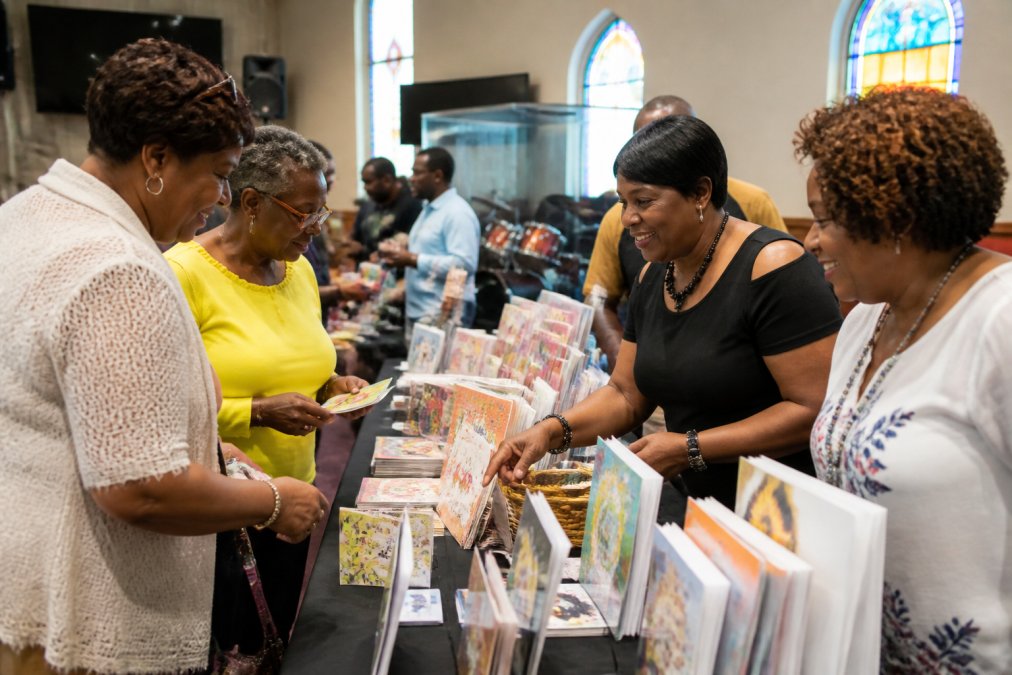
Why Product Sales Work Best for Congregation Engagement
Product fundraisers outperform traditional approaches because they transform giving into a tangible exchange. Donors receive culturally meaningful gifts, stationery, cards, home decor, rather than simply contributing funds. African American Expressions's fundraising program exemplifies this approach, offering 40% commission on every item sold, significantly outperforming traditional bake sales or car washes. Over 34 years, the program has generated millions of dollars for churches, schools, and community organizations. When your congregation sells products celebrating Black heritage and faith, you're reinforcing community identity while fundraising.
How to Launch a Card and Gift Fundraiser
Start by selecting your product line. Greeting card assortments work exceptionally well for churches because they're affordable ($13 per boxed set), have built-in profit margins, and appeal across age groups. The ALL OCCASION ASSORTMENT 9 includes 18 inspirational Christian greeting cards with stunning Black women artwork, a total value of $58 for just $18, leaving substantial room for markup.

Implementation sequence:
Week 1-2: Planning and Inventory, Decide on your fundraising goal, calculate required sales volume based on your 40% commission, order initial inventory from African American Expressions, and recruit 3-5 volunteers.
Week 3: Launch and Promotion, Announce the fundraiser during Sunday services with clear messaging about your mission. Distribute product samples to key congregation members and create a simple order form or digital signup sheet.
Week 4-5: Sales Phase, Encourage congregation members to sell to friends, family, and coworkers. Host a table at church events and send weekly email updates highlighting bestsellers and deadline reminders.
Week 6: Fulfillment and Stewardship, Collect payments, submit bulk order to African American Expressions, distribute products, and send thank-you notes to all participants.
Many churches maintain a small inventory of best-selling items available for purchase after services, generating consistent revenue without the intensity of a major campaign.
2. Community Events and Social Gatherings
Community events serve a dual purpose: they generate revenue while strengthening the social fabric of your congregation. Events create reasons for people to gather and naturally discuss church life and giving.
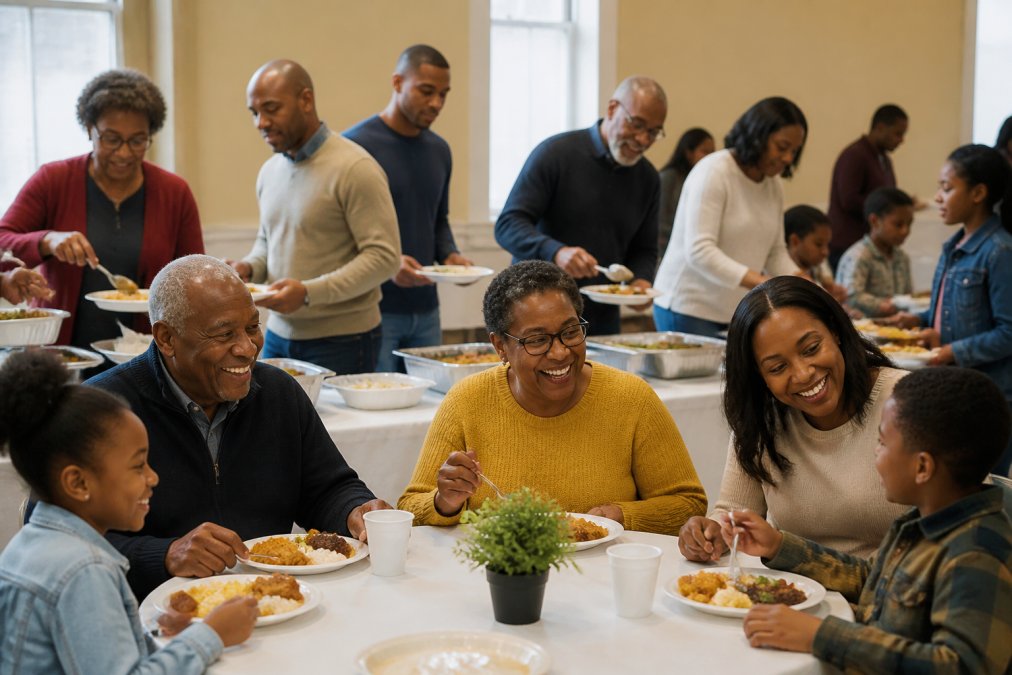
Food-Based Events That Drive Attendance
Food fundraisers tap into a simple truth: people will attend events where they can eat well and enjoy community. A spaghetti dinner with a $12 ticket price costs roughly $3-4 in ingredients per plate, yielding $8-9 in net proceeds per attendee. With 100 attendees, that's $800-900 in a single evening. Food events also attract people beyond your immediate congregation, family members, coworkers, and neighbors who might not otherwise attend church functions.
Structure your food event around convenience and community. Partner with volunteers who have culinary skills to handle preparation. Assign roles clearly: some volunteers cook, others serve, others manage the donation table.
Youth-Focused Activities and Game Nights
Youth-focused fundraisers generate enthusiasm while engaging younger congregation members in stewardship. Game nights, movie screenings, and skill-based competitions appeal to Gen Z and younger millennials who prefer experiences over product purchases. charity coffee brands.
The Church Flow Games Cards ($32) from African American Expressions work perfectly here. This Christian card game combines Fill in the Blank and Act it Out Charades with 100 faith-based cards. Host a game night where teams compete, charge $8-10 per person for entry, and include light snacks. Announce the fundraising goal upfront, youth are motivated by transparency and understanding where their participation leads.

3. Digital and Online Giving Strategies
Digital giving has fundamentally transformed church fundraising. Churches that accept tithing online increase overall donations by 32%.
Recurring Donations and Automatic Giving
Recurring giving is the single most impactful digital strategy available to churches. When a donor sets up automatic monthly contributions, they're making a commitment that transcends emotional or financial fluctuations. Recurring giving accounts for approximately 40% of total digital giving in churches that offer it.
Implement recurring giving by setting up a simple online giving platform, offering preset recurring amounts ($25/month, $50/month, $100/month) to reduce decision friction, and clearly explaining how recurring gifts sustain ministry throughout the year. Send monthly impact reports showing how recurring gifts directly fund programs. Recurring donors become more invested in church success and are more likely to attend services, volunteer, and advocate for the church.
Text-to-Give and Mobile Fundraising
Text-to-give has emerged as a fast-growing giving channel, particularly among younger donors. A member receives a text with a simple code (e.g., "Text CHURCH to 77777"), and they can donate directly from their phone. Churches using multi-channel digital strategies, including text-to-give, report increased giving. Set up text-to-give by partnering with a church giving platform or mobile payment provider. Display the text code prominently during services, in bulletins, and on your website. QR code giving works similarly, place a QR code in your bulletin, on signage, or on the projection screen for members to scan and donate.
4. High Profit Margin Church Fundraisers: Raffles and Auctions
Raffles and auctions generate excitement while creating competition that drives higher giving. Unlike product sales or events, raffles feel like games, people are motivated by the possibility of winning something valuable.
Silent Auctions and Donation Bidding
Silent auctions work by displaying items and allowing attendees to write bids on paper. The highest bidder wins the item. Successful silent auctions require quality items (partner with local Black-owned businesses to solicit donations), strategic pricing (start bid prices at 30-40% of retail value), clear display with descriptions and retail values, and engagement through periodic announcements as the auction nears its end. Many churches combine silent auctions with a live auction for premium items to create energy that drives higher bids.
50/50 Raffles and Prize Drawings
50/50 raffles are simple: sell raffle tickets at $5-10 each, then draw a winner who receives half the total revenue. The other half goes to your church. Legal compliance matters here. Raffle regulations vary by state. Before launching a 50/50 raffle, verify your state's requirements through State attorney general offices provide raffle regulations.
5. Seasonal and Holiday-Themed Fundraisers
Seasonal fundraisers tap into natural giving patterns. People are more generous during holidays, and seasonal fundraisers feel timely rather than opportunistic. African American Expressions offers multiple holiday card assortments specifically designed for churches. The ASSORTMENT A707 ($13) features faith-centered Christmas designs with African American worship imagery and scripture-inspired messages. Each boxed set includes 15 embossed cards with foil-lined envelopes and gold sticker seals. Churches can resell these at $20-25 per box, generating $7-12 profit per unit.

Holiday fundraisers also create natural stewardship moments. When a congregation member receives a beautiful Christmas card from their church, they're reminded of their faith community and more likely to give. Consider launching a "12 Days of Giving" campaign during December, where each day features a different giving opportunity: online giving, product sales, silent auction items, or volunteer opportunities.
Become a part of our AAE family and start fundraising today! →
Church Fundraising Event Planning Checklist
Successful fundraising requires systematic planning. Use this checklist to ensure you're covering critical logistics, legal requirements, and stewardship elements.
| Planning Phase | Key Tasks | Timeline | Owner |
|---|---|---|---|
| Goal Setting | Define fundraising goal, identify fund use, set success metrics | 4 weeks before | Leadership |
| Volunteer Recruitment | Recruit and assign roles, conduct training | 3 weeks before | Coordinator |
| Logistics | Secure venue, arrange supplies, confirm vendors | 2 weeks before | Logistics Lead |
| Marketing | Create promotion materials, launch social media, send emails | 2-3 weeks before | Communications |
| Legal Compliance | Verify regulations, obtain licenses if needed, document procedures | 4 weeks before | Administrator |
| Event Execution | Run fundraiser, manage finances, capture photos | Event date | Full Team |
| Stewardship | Send thank-you notes, report results, celebrate with congregation | 1 week after | Leadership |
Pre-Event Planning and Volunteer Recruitment
Volunteer recruitment determines whether your fundraiser succeeds or collapses. Recruit by being specific about role expectations. Don't ask someone to "help with the fundraiser." Instead, say: "We need someone to coordinate volunteers for the silent auction. This involves recruiting 5 people to staff the bidding table, training them on procedures, and managing the bid sheets during the event. Time commitment: 4 hours total." Specific asks get better responses.
Legal Compliance and Tax Considerations
Tax compliance protects your church and donors. Donations to qualified religious organizations are tax-deductible, but only if your church maintains proper documentation and follows IRS requirements.
Key compliance elements include issuing written acknowledgment for donations over $250 (including the amount and description of goods/services provided), verifying raffle licensing requirements before running raffles or drawings, understanding whether product sales are subject to sales tax (varies by state and product type), and maintaining detailed donor records for at least 3 years. Consult with your church's accountant or a nonprofit attorney before launching major fundraisers.
Post-Event Stewardship and Donor Retention
Post-event stewardship determines whether one-time donors become repeat givers. Send thank-you emails to all donors, volunteers, and contributors within 1-2 days, being specific about how funds will be used. Post photos and results on social media and in the church bulletin within one week. Send formal thank-you letters to major donors ($100+) within one month, including a financial summary and specific outcomes. Send quarterly impact reports to recurring donors showing how their contributions are being used, including photos, testimonials, and specific outcomes.
This stewardship sequence transforms transactional giving into relational giving. Donors who understand the impact of their contributions give again, and give more generously.
Common Fundraising Mistakes to Avoid
Understanding what doesn't work is as valuable as knowing what does. Here are the most common mistakes churches make:
Relying on a single fundraiser. Churches that run only one major fundraiser annually create feast-or-famine dynamics. Diversify across product sales, events, digital giving, and seasonal campaigns.
Unclear mission communication. Many fundraisers fail because people don't understand what they're funding. Clearly articulate: "We're raising $5,000 to fund our youth ministry program."
Volunteer burnout. Churches often ask the same 10 people to run every event. Instead, recruit broadly and rotate roles. Give people clear time commitments so they can say yes to specific events rather than open-ended volunteering.
Ignoring digital channels. Churches that rely primarily on cash plates and pledge cards are losing donations from younger members. Implement online giving, text-to-give, and recurring donations immediately.
Poor follow-up. Churches that don't acknowledge donors after fundraisers miss the opportunity to build long-term relationships. Send thank-you notes, share results, and report impact.
Fundraiser fatigue. Some churches run so many fundraisers that donors and volunteers feel exhausted. Aim for 3-4 major fundraisers annually plus ongoing digital giving, not 10+ events that wear people out.
Treating fundraising as separate from ministry. The best fundraisers feel like ministry, not commerce. When your congregation sells African American Expressions greeting cards, they're not just raising money, they're supporting Black-owned business and celebrating cultural heritage. Frame fundraising as an expression of your church's values.
Effective fundraising for churches requires moving beyond bake sales and car washes. Churches that implement diversified strategies combining product sales, community events, digital giving, and seasonal campaigns see significantly higher participation and more consistent revenue. African American Expressions's 40% fundraising commission model, combined with culturally authentic products like faith-centered greeting card assortments, gives your congregation a high-margin tool that generates funds while strengthening community identity. Become a part of the African American Expressions family and start fundraising today with products that celebrate heritage while building sustainable revenue for your ministry.
=== FAQ ANSWERS (audit these too, same rules) ===
[1] Q: What are the most profitable fundraising ideas for churches? A: Product sales through culturally meaningful items, recurring online giving programs, and 50/50 raffles consistently deliver high profit margins. Churches using multi-channel digital strategies report the strongest revenue growth. Product-based fundraisers work especially well because they align with donor values, when supporters purchase items that celebrate heritage and community, they feel invested in both the product and the mission. Recurring giving accounts for approximately 40% of total digital giving in churches that actively promote it.
[2] Q: How can churches support Black-owned businesses while fundraising? A: Partner with Black-owned product suppliers for fundraising merchandise. African American Expressions, a Black-owned company with 34 years of experience, offers fundraising programs where churches earn 40% commission on culturally inspired gifts, stationery, and home decor sales. This approach generates funds for your congregation while directing revenue to Black-owned enterprises, strengthening economic support within the community. Churches benefit from authentic, high-quality products that resonate with their congregation's values.
[3] Q: What should be included in a church fundraising event planning checklist? A: A comprehensive checklist includes: volunteer recruitment and role assignments, budget and financial projections, legal compliance (nonprofit filing, raffle licensing), marketing and promotion timeline, event logistics (venue, supplies, staffing), donor communication plan, and post-event stewardship strategy. Don't overlook tax documentation, ensure all donations are properly recorded for donor receipts. Assign a stewardship coordinator to follow up with donors within two weeks of the event to thank them and share impact.
[4] Q: Why do some churches struggle with consistent giving despite offering online options? A: The gap exists because many congregants aspire to give more than they actually do. Churches that address this through clear communication about giving impact, transparent budget reporting, and designated fund options see stronger participation. When donors understand exactly how their gifts support ministry and community outreach, they're more likely to commit to recurring donations.
[5] Q: What legal requirements apply to church fundraisers like raffles? A: Raffle regulations vary by state but typically require nonprofits to register, obtain permits, and maintain detailed records of ticket sales and prize distribution. Some states cap prize values or ticket prices. Consult your state's attorney general office or nonprofit regulatory body for specific requirements. Additionally, all donations must be properly documented for tax-deductible receipt purposes. Working with a compliance professional or consulting IRS Publication 557 helps ensure your fundraiser meets federal and state requirements.
Frequently Asked Questions
Q: What are the most profitable fundraising ideas for churches?
A: Product sales through culturally meaningful items, recurring online giving programs, and 50/50 raffles consistently deliver high profit margins. Churches using multi-channel digital strategies report the strongest revenue growth. Product-based fundraisers work especially well because they align with donor values, when supporters purchase items that celebrate heritage and community, they feel invested in both the product and the mission. Recurring giving accounts for approximately 40% of total digital giving in churches that actively promote it.
Q: How can churches support Black-owned businesses while fundraising?
A: Partner with Black-owned product suppliers for fundraising merchandise. African American Expressions, a Black-owned company with 34 years of experience, offers fundraising programs where churches earn 40% commission on culturally inspired gifts, stationery, and home decor sales. This approach generates funds for your congregation while directing revenue to Black-owned enterprises, strengthening economic support within the community. Churches benefit from authentic, high-quality products that resonate with their congregation's values.
Q: What should be included in a church fundraising event planning checklist?
A: A comprehensive checklist includes: volunteer recruitment and role assignments, budget and financial projections, legal compliance (nonprofit filing, raffle licensing), marketing and promotion timeline, event logistics (venue, supplies, staffing), donor communication plan, and post-event stewardship strategy. Don't overlook tax documentation, ensure all donations are properly recorded for donor receipts. Assign a stewardship coordinator to follow up with donors within two weeks of the event to thank them and share impact.
Q: Why do some churches struggle with consistent giving despite offering online options?
A: The gap exists because many congregants aspire to give more than they actually do. Churches that address this through clear communication about giving impact, transparent budget reporting, and designated fund options see stronger participation. When donors understand exactly how their gifts support ministry and community outreach, they're more likely to commit to recurring donations.
Q: What legal requirements apply to church fundraisers like raffles?
A: Raffle regulations vary by state but typically require nonprofits to register, obtain permits, and maintain detailed records of ticket sales and prize distribution. Some states cap prize values or ticket prices. Consult your state's attorney general office or nonprofit regulatory body for specific requirements. Additionally, all donations must be properly documented for tax-deductible receipt purposes. Working with a compliance professional or consulting IRS Publication 557 helps ensure your fundraiser meets federal and state requirements.
This article was written using GrandRanker