

Table of Contents
- Why Shoppers Are Looking Beyond Black Art Depot
- Top Black Art Depot Alternatives for Wall Art and Figurines
- Is Heritage Decor Worth the Price?
- Black-Owned Home Decor Brands: What Sets Them Apart
- How to Verify Authenticity and Quality Before Buying
- Conclusion
Last Updated: August 22, 2026
Why Shoppers Are Looking Beyond Black Art Depot
The market for work by Black artists has grown dramatically. According to The Columbia Journal of Law & the Arts, the market for work by Black artists grew by close to 400% between 2008 and 2021. Yet despite this explosive growth, many consumers struggle to find authentic, high-quality pieces that reflect their values and aesthetic preferences.
Black art depot alternatives are becoming essential for homeowners who want more choice, better curation, and transparent sourcing. The shift isn't just about finding cheaper options, it's about discovering platforms that genuinely understand cultural heritage, support independent creators, and deliver gallery-quality pieces without the gatekeeping that has historically defined the art world.
At African American Expressions, we've tracked this trend closely. Shoppers today demand three things: authenticity, affordability, and alignment with their values. They want to know their money supports Black artists and Black-owned businesses. They want pieces that tell meaningful stories, not generic "diversity décor." And they want options beyond what a single retailer can offer.
Below, we'll show you exactly how to evaluate black art depot alternatives, compare the top platforms, and verify that what you're buying is genuine.
Top Black Art Depot Alternatives for Wall Art and Figurines
Several platforms have emerged as strong contenders for home décor shoppers seeking authentic African American art and heritage pieces. Each brings a different approach to artist partnerships, pricing, and community impact.
African American Expressions: Established Quality with Community Impact
African American Expressions has operated for over 34 years as a premier destination for culturally inspired home décor, wall art, and figurines. The platform partners directly with established and emerging Black artists, offering canvas art, relief pieces, and figurines that celebrate African American heritage and spiritual themes.
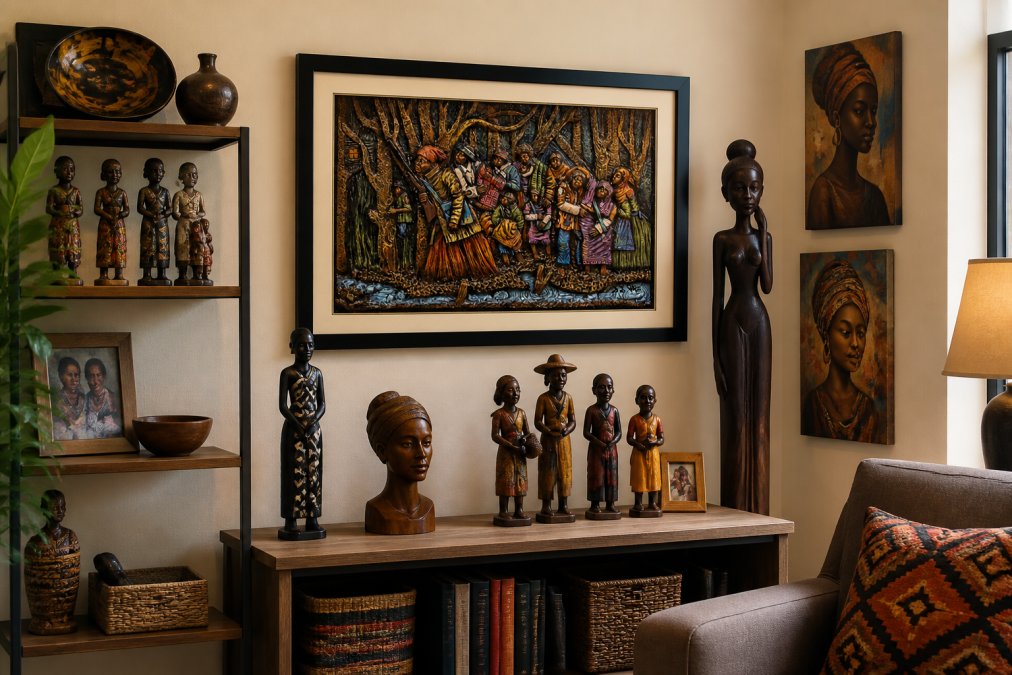
The figurine collection ranges from $35 to $56 for most pieces, with canvas art starting at $35 for smaller formats. Larger framed pieces like the Harriet Tubman Relief Art (39" x 29") are priced at $240, reflecting the craftsmanship and scale of statement pieces. The brand's 40% fundraising commission for schools and churches creates a dual benefit: homeowners support their community while accessing quality décor.

What sets African American Expressions apart is transparency around artist partnerships. The brand explicitly credits artists by name, Thomas Blackshear, Dorothy Allen, and Nicholle Kobi are featured prominently. This matters because it ensures artists receive recognition and, critically, compensation through established royalty relationships.
The platform's strength lies in its curation. Every piece is selected for artistic merit and cultural significance, not mass appeal. The "She Who Kneels" figurine ($56) and "Glory of the Lord" figurine ($56) exemplify this: they're designed with theological and cultural depth, not as generic "inspirational" décor.
Shipping does carry a standard charge, and delivery timelines are clearly communicated upfront. For organizations using the fundraising program, the 40% commission applies to all sales, making it a transparent revenue-sharing model.
Shades of Color: Artist Partnerships and Mass Production
Shades of Color operates on a direct artist partnership model, fusing Black art into mass-produced home décor including shower curtains, floor mats, kitchen aprons, and wall art. The company works with African American artists to scale their designs across multiple product categories.
According to research from BlackNews.com, Shades of Color's fundraising program has generated over $467,000 worth of in-kind gifts since its inception in 2011 in addition to monetary donations. This volume-based approach makes pieces more accessible at lower price points while still routing revenue back to artists and organizations.
The model works well for budget-conscious shoppers and organizations seeking high-volume fundraising. Mass production means lower per-unit costs and faster inventory turnover. However, this approach trades some of the artisanal quality and limited-edition exclusivity that collectors value.
The platform's strength is accessibility and scale. By placing art on everyday items, shower curtains, aprons, floor mats, Shades of Color democratizes heritage décor. A family can display African American art across multiple rooms affordably. For fundraising programs, the high volume of lower-priced items often generates faster revenue than premium pieces.
Black Art in America: Online Platform with Physical Gallery
Black Art in America (BAIA) launched in 2010 as a free online resource and has since expanded to include a physical gallery with sculpture gardens, annual events like the Fine Art Print Fair, and a strong digital marketplace.
The platform reaches 750,000 people monthly through its online presence and has generated over $1 million in artwork sales in 2024, according to Black Art in America Gallery & Gardens. BAIA bridges the gap between discovery (online) and experience (physical gallery and events), making it valuable for collectors who want both digital convenience and in-person curation.
BAIA's differentiation is community. The platform hosts emerging artists alongside established names, creating a discovery ecosystem. Collectors can follow artists, attend gallery events, and participate in the Fine Art Print Fair. This creates a community around the work, not just transactional purchasing.
The online marketplace includes prints, original works, sculpture, and mixed media. Pricing varies widely based on artist reputation and medium, but print options start lower than original works, making entry accessible.
| Platform | Starting Price | Best For | Artist Compensation Model |
|---|---|---|---|
| African American Expressions | $35-$56 (figurines), $240 (large framed art) | Curated heritage décor, fundraising programs | Direct artist partnerships, royalties |
| Shades of Color | Lower price points (mass-produced) | Budget-conscious shoppers, high-volume fundraising | Artist licensing, volume-based revenue |
| Black Art in America | Varies by artist (prints from ~$20+) | Discovery, community engagement, emerging artists | Artist-direct sales, gallery commission |
Is Heritage Decor Worth the Price?
Heritage décor commands a premium compared to mass-market wall art, and the question of value depends on what you're actually buying. You're not just paying for an image on a wall, you're paying for artist compensation, cultural authenticity, and often, community impact.
The average household spends $2,752 annually on home décor, according to Level Frames. Within that budget, heritage pieces typically occupy the "intentional" category, items chosen for meaning, not just filling wall space.
Here's what justifies the premium: authentic heritage décor involves artist labor, quality materials, and ethical supply chains. A $56 figurine from African American Expressions is hand-painted resin with artist royalties built in. A $35 canvas print reflects artist licensing and curatorial review. Compare that to a $5 mass-produced poster from a big-box retailer, and the difference in craftsmanship and artist compensation becomes clear.
The real value proposition emerges when you consider longevity and meaning. A heritage piece selected intentionally becomes a conversation starter, a teaching tool for children, and a reflection of identity in your home. It holds emotional and cultural weight that generic décor doesn't. Research shows that consumers increasingly prefer artwork reflecting originality and craftsmanship over mass-produced decor, suggesting the market is shifting toward meaningful pieces. authentic art decor.
For organizations using fundraising programs, the math is different. A school earning 40% commission on African American Expressions sales turns home décor into community revenue. A $56 figurine sale generates $22.40 for the school. A $240 framed piece generates $96. Over a fundraising campaign, this compounds quickly.
The affordability argument is strongest for Shades of Color's model, where mass production lowers per-unit cost while still supporting artists. A $15 shower curtain with heritage art reaches more households than a $240 framed piece, though the per-item artist compensation may be lower.
Black-Owned Home Decor Brands: What Sets Them Apart
Black-owned home décor brands operate with a fundamentally different value system than mainstream retailers. They prioritize artist relationships, cultural authenticity, and community reinvestment, often at the cost of higher prices and lower production volume.
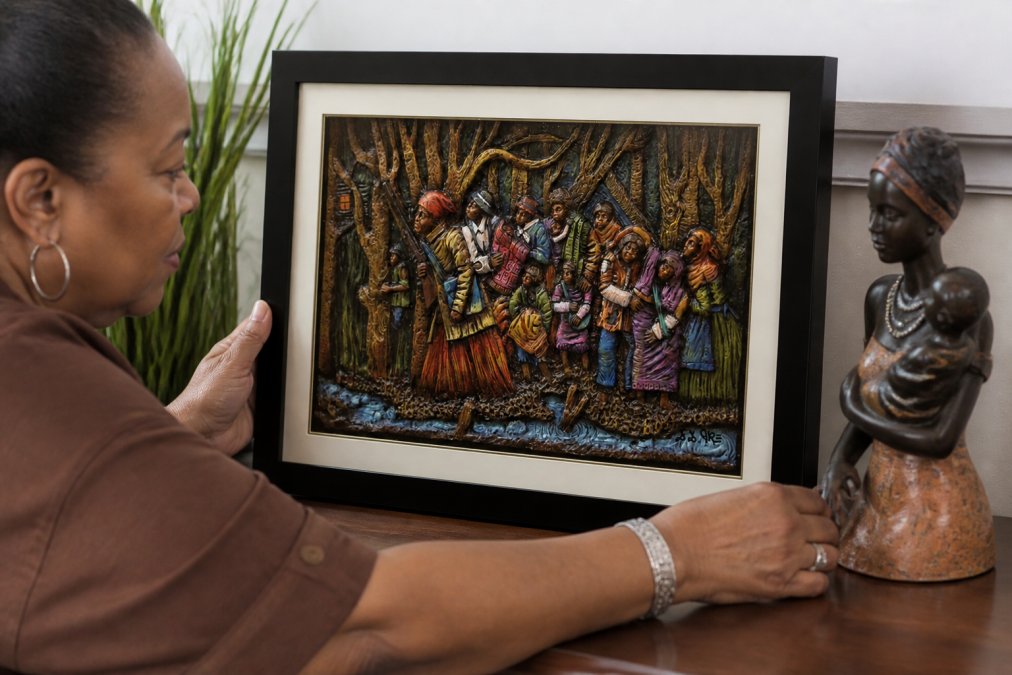
Black consumers account for $272 billion in discretionary spending, yet only 2.3% of the interior design industry is Black-owned, according to research from African American Expressions' 2026 Heritage Decor Guide. This gap creates both a market opportunity and an equity issue. When you buy from Black-owned brands, you're addressing that imbalance directly.
What distinguishes Black-owned decor brands from mainstream alternatives:
Become a part of our AAE family and start fundraising today! →
Artist Transparency. Black-owned platforms name their artists, credit their work, and often pay royalties or licensing fees. This contrasts sharply with mass retailers that source anonymous designs. African American Expressions credits Thomas Blackshear, Dorothy Allen, and Nicholle Kobi by name, ensuring artist visibility and compensation.
Cultural Authenticity. These brands curate for meaning, not just aesthetics. A piece celebrating Harriet Tubman's legacy isn't chosen because it matches a color palette, it's chosen because it honors a historical figure central to African American heritage. This intentionality filters out tokenism and generic "diversity" décor.
Community Reinvestment. Black-owned brands often funnel revenue back into Black communities through fundraising programs, artist development, and organizational support. African American Expressions' 40% fundraising commission exemplifies this model: home décor becomes a vehicle for community funding.
Quality Standards. Limited production runs and artisanal approaches mean higher quality control. Each piece is reviewed for craftsmanship, not just profitability. This results in pieces that last, both aesthetically and functionally.
Relationship Building. Black-owned brands often engage directly with customers, understand their communities, and respond to feedback. This creates loyalty that transcends transactional purchasing.
The trade-off is clear: Black-owned brands cost more and stock less inventory than mainstream retailers. But that's by design. Lower volume allows for higher quality, artist compensation, and community impact. You're not just buying décor, you're funding a different kind of business model.
How to Verify Authenticity and Quality Before Buying
Not all heritage décor is created equal. Verification requires checking three dimensions: artist authenticity, material quality, and ethical sourcing.
Check Artist Attribution. Legitimate platforms credit artists by name, title, and often biography. If a piece lists "Artist Unknown" or provides no artist information, skip it. Black-owned platforms like African American Expressions explicitly name artists and often include their background. This transparency is a quality signal.
Inspect Material and Craftsmanship. Canvas art should use archival-quality materials that resist fading. Figurines should be hand-painted resin or ceramic, not cheap plastic. Read product descriptions carefully for material specifications. African American Expressions provides detailed descriptions: "durable resin," "hand-painted," "premium quality." These specifics matter.
Verify Revenue Sharing. Ask how artists are compensated. Are they paid per piece? Royalties? Licensing fees? Transparent platforms disclose this. African American Expressions' 34-year track record and explicit artist partnerships demonstrate this commitment. Platforms that hide compensation details are suspect.
Look for Third-Party Validation. Awards, press mentions, and community recognition matter. Black Art in America's 750,000 monthly reach and over $1 million in artwork sales in 2024 represent third-party validation of quality and community trust.
Request Sample Images. Before ordering, ask for high-resolution photos of the actual product, not just product renderings. Real images reveal craftsmanship details that marketing photos obscure.
Check Return Policies. Legitimate platforms offer returns or exchanges if quality doesn't match expectations. African American Expressions accepts returns on all orders for a refund when received within 45 days of the product delivery date. Platforms that refuse returns or make the process difficult are often hiding quality issues.
Compare Across Platforms. The same artist's work may be priced differently across platforms. Higher prices don't always mean higher quality, sometimes they reflect overhead or markup. Comparing African American Expressions, Shades of Color, and Black Art in America helps you identify fair pricing.
Conclusion
The market for Black art and heritage décor has expanded dramatically, creating real alternatives to single-platform shopping. African American Expressions, Shades of Color, and Black Art in America each offer distinct value: curated quality and artist partnerships, mass-production affordability, and community-driven discovery, respectively.
Choosing among black art depot alternatives ultimately depends on your priorities. If you value artist transparency, curation, and community fundraising, African American Expressions delivers all three with its 34-year track record, direct artist partnerships, and 40% fundraising commission for schools and churches. Start with an affordable figurine like the "Mold Me Make Me" ($44) or "Yellow Angel Figurine" ($46) to experience the quality firsthand, then invest in larger statement pieces as your collection grows.

Become a part of the African American Expressions family and start supporting Black artists while transforming your home into a gallery of meaningful heritage art today.
=== FAQ ANSWERS (audit these too, same rules) ===
[1] Q: What makes a Black art depot alternative worth choosing over mainstream decor retailers? A: Black-owned decor brands offer authentic cultural representation, direct support for African American artists, and pieces with genuine storytelling. The market for work by Black artists grew nearly 400% between 2008 and 2021, reflecting increased demand for culturally meaningful art. Many alternatives like African American Expressions provide fundraising programs that generate community impact, African American Expressions has generated millions of dollars for schools and churches through their initiatives since 1991. Beyond aesthetics, you're investing in economic support for Black creators and heritage preservation.
[2] Q: Is heritage decor worth the price compared to mass-produced alternatives? A: Heritage decor typically costs more than mass-produced items, but the value extends beyond aesthetics. Quality figurines and canvas art from brands like African American Expressions use durable resin and premium materials designed to last decades. A piece like the Harriet Tubman Relief Art ($240) serves as both decor and historical tribute, sparking conversation and reflection. When you factor in craftsmanship, artist compensation, and cultural authenticity, heritage pieces represent affordable luxury rather than premium pricing.
[3] Q: How do I verify that a black-owned home decor brand is actually authentic? A: Check the company's founding history and ownership structure, legitimate Black-owned brands like African American Expressions (operating since 1991) publish this information transparently. Look for artist attribution: quality pieces credit the creator by name, like Thomas Blackshear's work on canvas art. Verify community impact through documented programs; African American Expressions publicly reports fundraising results. Read customer reviews specifically mentioning print quality and durability. Authentic brands also participate in industry standards and may display certifications. If a retailer can't clearly answer who owns the company or who created the art, that's a red flag.
[4] Q: What should I look for when choosing between black art depot alternatives? A: Prioritize three factors: artist representation (does the brand credit and compensate creators?), material quality (resin durability, canvas weight, framing), and community mission (do they support schools, churches, or fundraising?). Compare specific products side-by-side, figurines from African American Expressions range from $44 to $56, while canvas art starts at $35. Consider your use case: faith-inspired pieces work for spiritual spaces, while bold canvas art suits modern living rooms. Check shipping policies and return windows, as heritage decor often ships custom or made-to-order. Finally, verify that the brand's values align with yours, whether that's supporting Black-owned businesses, funding community organizations, or preserving cultural heritage.
Frequently Asked Questions
Q: What makes a Black art depot alternative worth choosing over mainstream decor retailers?
A: Black-owned decor brands offer authentic cultural representation, direct support for African American artists, and pieces with genuine storytelling. The market for work by Black artists grew nearly 400% between 2008 and 2021, reflecting increased demand for culturally meaningful art. Many alternatives like African American Expressions provide fundraising programs that generate community impact, African American Expressions has generated millions of dollars for schools and churches through their initiatives since 1991. Beyond aesthetics, you're investing in economic support for Black creators and heritage preservation.
Q: Is heritage decor worth the price compared to mass-produced alternatives?
A: Heritage decor typically costs more than mass-produced items, but the value extends beyond aesthetics. Quality figurines and canvas art from brands like African American Expressions use durable resin and premium materials designed to last decades. A piece like the Harriet Tubman Relief Art ($240) serves as both decor and historical tribute, sparking conversation and reflection. When you factor in craftsmanship, artist compensation, and cultural authenticity, heritage pieces represent affordable luxury rather than premium pricing.
Q: How do I verify that a black-owned home decor brand is actually authentic?
A: Check the company's founding history and ownership structure, legitimate Black-owned brands like African American Expressions (operating since 1991) publish this information transparently. Look for artist attribution: quality pieces credit the creator by name, like Thomas Blackshear's work on canvas art. Verify community impact through documented programs; African American Expressions publicly reports fundraising results. Read customer reviews specifically mentioning print quality and durability. Authentic brands also participate in industry standards and may display certifications. If a retailer can't clearly answer who owns the company or who created the art, that's a red flag.
Q: What should I look for when choosing between black art depot alternatives?
A: Prioritize three factors: artist representation (does the brand credit and compensate creators?), material quality (resin durability, canvas weight, framing), and community mission (do they support schools, churches, or fundraising?). Compare specific products side-by-side, figurines from African American Expressions range from $44 to $56, while canvas art starts at $35. Consider your use case: faith-inspired pieces work for spiritual spaces, while bold canvas art suits modern living rooms. Check shipping policies and return windows, as heritage decor often ships custom or made-to-order. Finally, verify that the brand's values align with yours, whether that's supporting Black-owned businesses, funding community organizations, or preserving cultural heritage.
This article was written using GrandRanker