

Table of Contents
- What Makes High Quality Black Art Prints Worth Your Investment
- Is Heritage Decor Worth the Price: Understanding Value in Black Art
- Featured Artists and Their Most Sought-After Prints
- How to Frame Art Prints for Maximum Impact and Preservation
- Supporting Black Artists: Why Your Purchase Matters
- Curated Collections: Contemporary and Timeless Styles
- Caring for Your Art: Preservation and Longevity Guide
Last Updated: August 27, 2026
What Makes High Quality Black Art Prints Worth Your Investment
The market for work by Black artists grew by close to 400% between 2008 and 2021, according to The Columbia Journal of Law & the Arts. That explosive growth reflects deeper recognition that high quality black art prints carry real cultural weight and artistic merit that collectors have historically overlooked.
High quality black art prints start with authentic artistic vision, whether figurative, abstract, or mixed media, combined with superior production methods and archival materials. Giclée printing uses archival-quality inks and fine art paper to reproduce originals with stunning color accuracy and longevity, fundamentally different from standard inkjet or offset printing that fades over time. Museum-grade materials, acid-free paper, UV-protective framing, and archival mounting ensure your investment holds its value and beauty for decades.
Is Heritage Decor Worth the Price: Understanding Value in Black Art
The average African American art fan in the United States is 33.8 years old and predominantly female (74.4%), according to Rascasse Audience Intelligence. These collectors make deliberate choices about what hangs in their homes and why.
When evaluating whether high quality black art prints justify their price, consider three factors. First, limited edition prints command higher prices because scarcity matters, 100 signed giclée prints are more valuable than unlimited digital reproductions. Second, the artist's reputation and exhibition history influence price; institutional validation adds market value. Third, production quality directly impacts longevity and resale potential. A $240 framed piece using archival materials will outlast a $50 print on cheap paper by a decade or more, making it cheaper per year of enjoyment.
The Harriet Tubman Relief Art at $240 isn't priced that way because of hype. Artist D.D. Ike's relief work demands museum-grade framing, the piece is substantial (39" x 29"), and the materials preserve emotional impact for generations. The real question is whether YOU value what you're paying for. If cultural representation in your home matters, if you want art reflecting your identity and heritage, if you're willing to invest in something that appreciates rather than depreciates, then yes.

Featured Artists and Their Most Sought-After Prints
Between 2008 and 2018, just 2.37% of all acquisitions at 30 prominent museums were works by African American artists, according to Art Agency Partners. But the market is correcting, slowly but steadily.
Thomas Blackshear has built a reputation for figurative work capturing spiritual and emotional depth. His Coat of Many Colors canvas (11" x 14") at $35 offers accessible entry into his practice without sacrificing the visual storytelling that defines his work. D.D. Ike's relief work combines sculptural presence with historical narrative. His Harriet Tubman Relief Art (39" x 29" framed) tells a story of tension, courage, and hope embedded in the Underground Railroad, meant to provoke reflection every time someone walks past it.

Artworks by African and African diasporic artists saw a 35% increase in auction sales over the previous two years, according to the Art Basel and UBS Report. Global auction sales of works by African artists reached $116.5 million in 2022. When the Lucas Museum paid $15.3 million for Robert Colescott's "George Washington Carver Crossing the Delaware," despite the artist's previous record being under a million dollars, it sent a clear signal: this work has value that was never reflected in the market before.
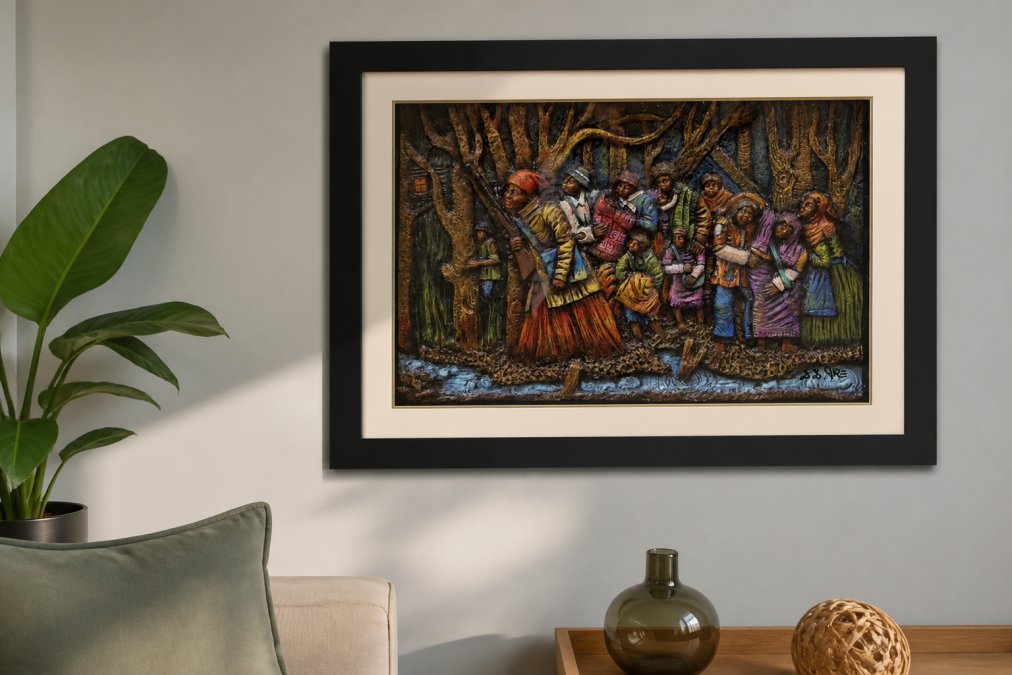
African American Expressions curates pieces across price points: the Forgiven glass plate by Thomas Blackshear at $20, the Coat of Many Colors canvas at $35, and the Harriet Tubman Relief Art at $240 for significant investment in a large-scale, museum-quality piece.
How to Frame Art Prints for Maximum Impact and Preservation
Framing is about preservation as much as aesthetics. The wrong frame can damage a print through acid transfer, UV exposure, or poor ventilation.
Start with an archival-quality mat (acid-free, lignin-free) that creates a barrier between the print and glass, preventing moisture damage and degradation. Standard mats yellow within years, transferring discoloration to your print. UV-protective glass filters out 99% of ultraviolet radiation, which fades colors and weakens paper fibers. For high quality black art prints with vibrant color palettes, UV glass is worth the $20-30 investment.
The frame should complement the work without competing with it. For bold, contemporary pieces, simple wood frames in natural tones or black let the work dominate. Leave at least a quarter-inch gap between mat and glass for air circulation to prevent moisture pooling. For valuable pieces, professional framing ensures proper spacing and hanging hardware that won't strain the frame over time.
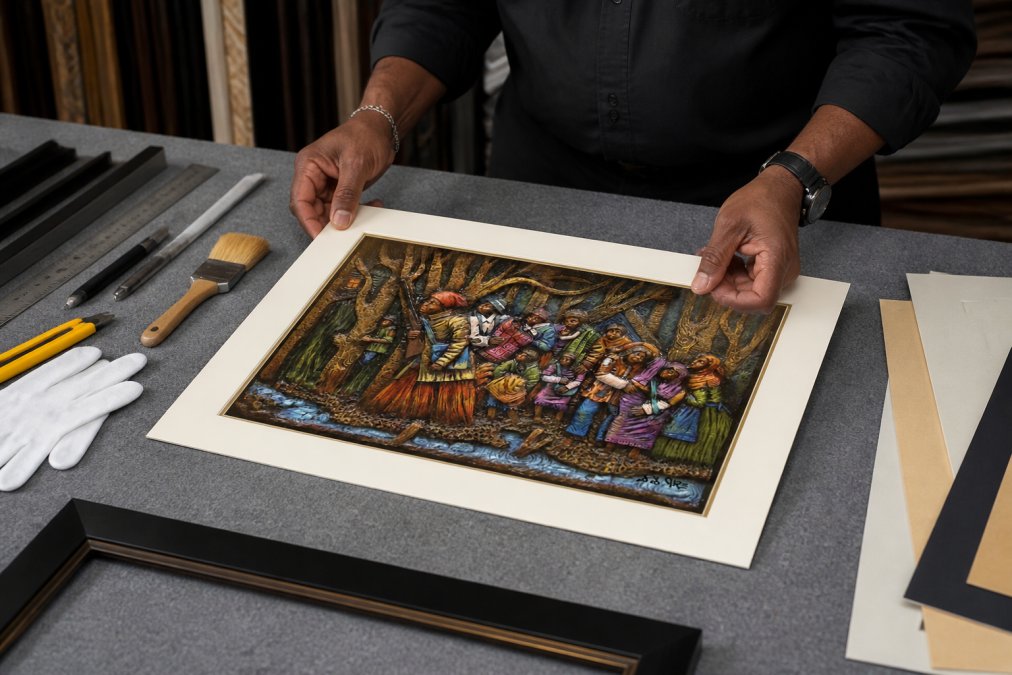
Inspect framing periodically. If you notice yellowing in the mat, fading in the print, or warping, it's time to reframe. The cost protects the artwork itself.
Supporting Black Artists: Why Your Purchase Matters
When you buy high quality black art prints, you're participating in a market correction that's been centuries in the making. White collectors make up 85% of the fine art world, while African American collectors account for just 4%, according to the UBS report. Every purchase from a Black artist shifts those numbers.
When Swann Auction Galleries formed the first department dedicated to fine art by Black Americans at any major auction house, works by Romare Bearden sold for over triple their low estimates, hitting record prices up to $95,000. That wasn't because the work suddenly became better, it was because the market finally paid attention.
Artist Kerry James Marshall observed: "Markets are not driven by black people. The way artworks travel around the world has a lot to do with how the market functions." When you buy from a Black artist or through a Black-owned business like African American Expressions, you're literally changing how the market functions. You're creating demand that galleries notice, that institutions respond to, that influences what gets collected and preserved.
African American Expressions has partnered directly with established and emerging Black artists for 34 years, and through its fundraising program, enables schools, churches, and organizations to generate significant funds by earning 40% on every sale.
Become a part of our AAE family and start fundraising today! →
Curated Collections: Contemporary and Timeless Styles
High quality black art prints span contemporary abstract expressionism alongside historical figurative work, mixed media collages, and traditional relief art. Contemporary pieces emphasize visual storytelling through bold color and dynamic composition, designed to provoke conversation. Timeless styles draw from historical narratives and cultural icons, like the Harriet Tubman Relief Art, rooted in specific history yet transcending simple illustration.
The best curated collections mix both styles, creating visual conversation between periods. Start with one strong piece that genuinely speaks to you, then add pieces that complement or deliberately contrast with it. The most interesting collections are conversations between different artistic voices.
Caring for Your Art: Preservation and Longevity Guide
Your high quality black art prints are meant to last. Keep prints away from direct sunlight, which fades colors even with UV-protective glass. Avoid humid environments like bathrooms or kitchens where moisture warps paper and promotes mold. Temperature fluctuations stress materials, so keep pieces in climate-controlled spaces.
Never touch unframed print surfaces with bare hands; skin oils cause permanent marks. Clean only the glass with a soft, dry cloth. Check framed pieces annually for yellowing mats, fading, warping, or separation between layers. If storing temporarily, keep prints flat in archival boxes with acid-free tissue between pieces, never roll them. Store in cool, dry, dark places; basements and attics experience damaging temperature and humidity swings.
If prints get damaged, consult professional conservators rather than attempting amateur restoration.
| Care Task | Frequency | Impact |
|---|---|---|
| Visual inspection | Annually | Catches damage early |
| Dust framed glass | 2-3 times yearly | Maintains clarity |
| Check for environmental damage | Seasonally | Prevents moisture and UV harm |
| Professional assessment | Every 5-10 years | Ensures long-term preservation |
| Reframing (if needed) | As damage occurs | Protects the artwork itself |
Treat your art like it matters, because it does. High quality black art prints are made to be lived with and to spark conversation. The care you invest now determines whether your collection appreciates or deteriorates over time.
Investing in high quality black art prints means committing to work that reflects your values and enriches your space. African American Expressions curates pieces combining artistic integrity with accessibility. Whether you start with the $35 Coat of Many Colors canvas or invest in the $240 Harriet Tubman Relief Art, you're supporting Black artists and participating in a market correction that's long overdue. Explore our collection and find the pieces that speak to your heritage and vision.
=== FAQ ANSWERS (audit these too, same rules) ===
[1] Q: What should I look for when buying high quality Black art prints? A: Prioritize giclée prints on archival-quality paper or canvas, these use pigment-based inks that resist fading for decades. Check for artist signatures, edition numbers (limited editions hold value better), and museum-grade framing options. Verify the print's provenance and ensure it comes from established Black artists or reputable Black-owned galleries. African American Expressions offers canvas pieces like the Coat of Many Colors ($35) that combine affordability with quality craftsmanship by recognized Black artists.
[2] Q: What are the differences between giclée prints and standard art prints? A: Giclée prints use fine-art inkjet technology with archival pigments, producing museum-quality reproductions that last 100+ years without fading. Standard prints typically use dye-based inks that fade within 5-10 years. Giclée prints offer superior color accuracy, deeper blacks, and finer detail, especially important for figurative paintings and mixed media work. The investment in giclée technology ensures your high quality Black art prints retain their visual impact and cultural significance for generations.
[3] Q: How can I verify the authenticity of Black art prints online? A: Purchase from established Black-owned retailers with transparent artist partnerships and documented histories. Look for artist biographies, edition information, and certificates of authenticity. Research the artist's exhibition history and institutional recognition. African American Expressions, operating for 34 years, provides detailed artist information and direct artist partnerships, for example, the Harriet Tubman Relief Art ($240) is created by renowned artist D.D. Ike with full provenance documentation. Avoid unmarked prints or sellers without verifiable artist credentials.
[4] Q: Are Black art prints a good investment for home decor? A: Yes, when purchased from established artists and galleries. Between 2008 and 2021, the market for work by Black artists grew nearly 400%, with auction sales of African and African diasporic artworks increasing 35% over two years. Limited-edition prints by recognized artists appreciate in value while enriching your living space. Beyond financial return, high quality Black art prints celebrate cultural heritage and support Black artists directly. Pieces like the Harriet Tubman Relief Art combine artistic merit, historical significance, and investment potential.
Frequently Asked Questions
What should I look for when buying high quality Black art prints?
Prioritize giclée prints on archival-quality paper or canvas, these use pigment-based inks that resist fading for decades. Check for artist signatures, edition numbers (limited editions hold value better), and museum-grade framing options. Verify the print's provenance and ensure it comes from established Black artists or reputable Black-owned galleries. African American Expressions offers canvas pieces like the Coat of Many Colors ($35) that combine affordability with quality craftsmanship by recognized Black artists.
What are the differences between giclée prints and standard art prints?
Giclée prints use fine-art inkjet technology with archival pigments, producing museum-quality reproductions that last 100+ years without fading. Standard prints typically use dye-based inks that fade within 5-10 years. Giclée prints offer superior color accuracy, deeper blacks, and finer detail, especially important for figurative paintings and mixed media work. The investment in giclée technology ensures your high quality Black art prints retain their visual impact and cultural significance for generations.
How can I verify the authenticity of Black art prints online?
Purchase from established Black-owned retailers with transparent artist partnerships and documented histories. Look for artist biographies, edition information, and certificates of authenticity. Research the artist's exhibition history and institutional recognition. African American Expressions, operating for 34 years, provides detailed artist information and direct artist partnerships, for example, the Harriet Tubman Relief Art ($240) is created by renowned artist D.D. Ike with full provenance documentation. Avoid unmarked prints or sellers without verifiable artist credentials.
Are Black art prints a good investment for home decor?
Yes, when purchased from established artists and galleries. Between 2008 and 2021, the market for work by Black artists grew nearly 400%, with auction sales of African and African diasporic artworks increasing 35% over two years. Limited-edition prints by recognized artists appreciate in value while enriching your living space. Beyond financial return, high quality Black art prints celebrate cultural heritage and support Black artists directly. Pieces like the Harriet Tubman Relief Art combine artistic merit, historical significance, and investment potential.
This article was written using GrandRanker