

Table of Contents
- What Heritage Decor Actually Means in 2026
- Modern Heritage Interior Design: Blending Past and Present
- Heritage Furniture Quality Standards: What You're Actually Paying For
- The Real ROI of Heritage Decor: Cost-Per-Use and Resale Value
- Maintenance, Preservation, and the True Long-Term Cost
- Sustainable Impact: Why Heritage Decor Beats Fast Furniture
- How to Incorporate Heritage Elements Without Overspending
- Conclusion
Last Updated: August 11, 2026
What Heritage Decor Actually Means in 2026
Heritage decor is furnishing and styling a home with pieces that carry genuine historical character, authentic antiques, artisanal reproductions, or heirloom-quality goods built to last generations. At African American Expressions, we've spent over 34 years curating culturally significant pieces that reflect legacy, craft, and identity.
Heritage decor in 2026 spans a wide spectrum, from handcrafted furniture using centuries-old joinery techniques to mass-produced pieces that merely borrow the visual vocabulary of the past. Knowing the difference is everything. Today's heritage movement blends historical depth with livable contemporary design, making it accessible to homeowners who want authenticity without a museum aesthetic.
Modern Heritage Interior Design: Blending Past and Present
Modern heritage interior design combines historically grounded materials, craftsmanship, and aesthetic references with contemporary spatial sensibilities to create interiors that feel both timeless and livable.
This isn't about recreating a Victorian parlor. The most compelling heritage interiors layer worn leather, solid wood, hand-thrown ceramics, and natural textiles against cleaner architectural lines, reading as collected over time rather than purchased in a single weekend.
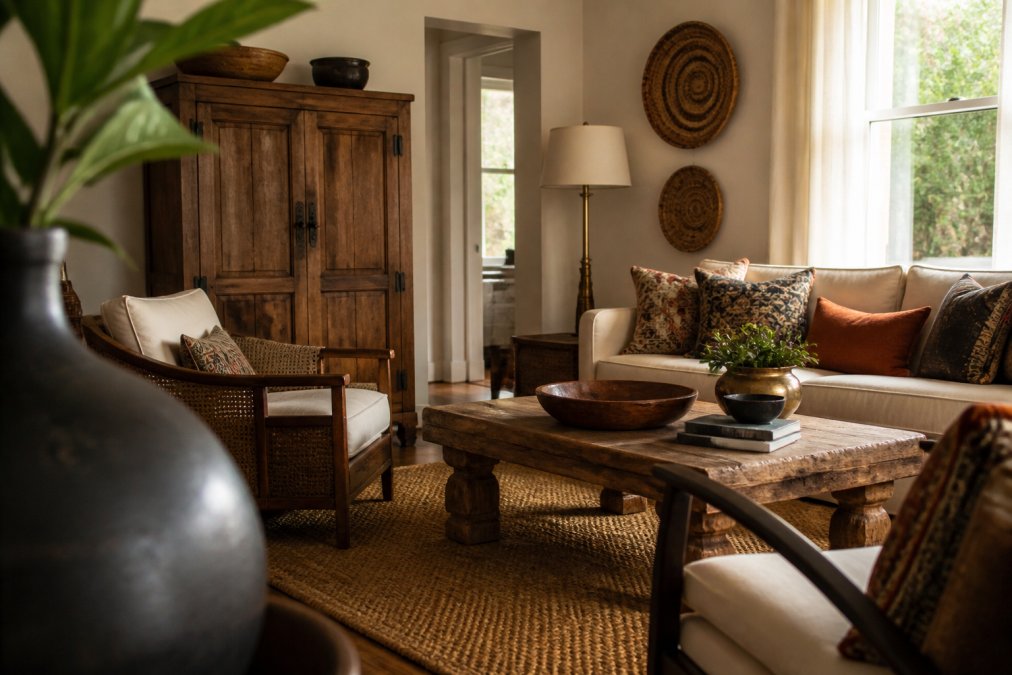
What separates modern heritage styling from simple vintage decorating is intentionality. Every element is curated. The patina on a brass candlestick, the grain visible through a hand-rubbed finish, the visible mortise-and-tenon joint on a chair leg: these are features, not flaws.
Warm Neutrals, Texture, and the Anti-Trend Movement
The anti-trend movement is driving heritage decor's resurgence. Homeowners increasingly reject seasonal micro-trends in favor of interiors built around warmth, texture, and longevity.
Warm neutrals, creams, ochres, taupes, and deep walnuts, create spaces that age well and don't clash with trend cycles. Texture is equally critical. Natural materials like linen, rattan, seagrass, and aged leather introduce tactile complexity that mass-produced interiors cannot replicate. According to the Sustainable Furnishings Council's guidance on natural materials, responsibly sourced natural materials perform better over time and carry significantly lower environmental footprints than synthetic alternatives.
A room styled around heritage principles doesn't need refreshing when new color palettes sweep through social media. That stability has real financial value.
Heritage Furniture Quality Standards: What You're Actually Paying For
Heritage furniture quality is defined by construction methods, material sourcing, and hand labor involved. The price premium reflects real differences in longevity and how pieces age.
Mass-produced sofas typically feature engineered wood frames held with staples and corner blocks, upholstered in blended fabric. Heritage-quality pieces use solid hardwood frames, hand-tied spring systems, mortise-and-tenon or dovetail joinery, and materials that develop richer patina over decades.
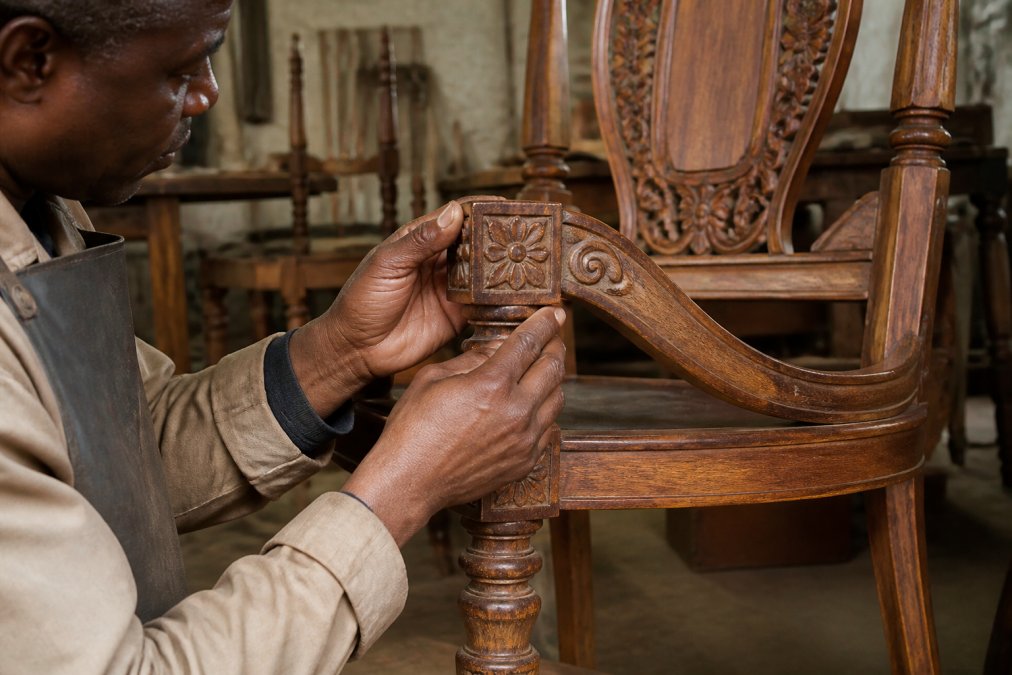
Many heritage standards trace to the Arts and Crafts movement, which emphasized honest construction: no veneers hiding inferior materials, no decorative elements serving no structural purpose. Makers like Stickley use quartersawn oak and mortise-and-tenon joinery that produces furniture routinely passed down across generations.
Construction Methods That Determine Longevity
The most reliable indicators of genuine heritage quality are joinery methods. Mortise-and-tenon joints, dovetail drawer construction, and hand-carved details require skilled labor that automated production cannot replicate efficiently. These connections strengthen with age rather than loosening over time.
Compare this to dowel-and-glue construction common in budget furniture. Under repeated stress, those connections fail, and repair becomes impractical.
A practical checklist for evaluating construction quality:
- Joinery: Look for mortise-and-tenon or dovetail joints, especially in drawer construction
- Frame material: Solid hardwood, not particleboard or MDF
- Finish: Hand-rubbed oil or wax finishes that penetrate wood, not spray lacquers
- Hardware: Solid brass or forged iron, not zinc alloy castings
- Weight: Genuinely heavy pieces generally indicate solid construction
How to Identify Authentic Heritage Pieces
Identifying authentic heritage pieces requires examining physical evidence of hand labor and quality materials, not relying on marketing language.
The clearest signal is inconsistency. Handcrafted pieces show slight variations in carving depth, tool marks in recessed areas, and minor asymmetries. Mass-produced reproductions are perfectly uniform.
Other reliable indicators include:
- Patina: Genuine age produces even, deep patina across all surfaces, including undersides. Faked patina is usually applied only to visible surfaces.
- Secondary woods: Authentic antique furniture uses expensive primary wood for visible surfaces and secondary wood like pine for drawer interiors, a sign of period-accurate construction.
- Provenance documentation: Reputable dealers provide documented histories for significant pieces.
- Smell: Old wood and finishes have a distinctive smell that cannot be replicated.
The Real ROI of Heritage Decor: Cost-Per-Use and Resale Value
The financial case for heritage decor is strongest when calculating cost-per-use rather than sticker price. A well-built heritage dining table lasting 40 years almost always wins on a per-year basis compared to mass-produced alternatives.
The comparison isn't between upfront prices but total cost of ownership over realistic lifespan. Mass-produced pieces requiring replacement every 7-10 years generate multiple purchase events, disposal costs, and time spent selecting replacements.
Heritage pieces carry genuine resale value. Stickley furniture consistently holds significant resale value because the brand's reputation for quality is well established. Authentic antiques tend to appreciate rather than depreciate.
Become a part of our AAE family and start fundraising today! →
| Factor | Heritage Piece | Mass-Produced Alternative |
|---|---|---|
| Expected lifespan | 40+ years | 7-10 years |
| Cost-per-year (relative) | Lower over time | Higher over full cycle |
| Resale value | Holds or appreciates | Negligible after 3-5 years |
| Repair viability | High: solid materials, replaceable parts | Low: bonded materials, proprietary parts |
| Environmental replacement cycles | Once per generation | 4-6 times per generation |
Maintenance, Preservation, and the True Long-Term Cost
Maintenance is the hidden variable in heritage decor investment. Genuine heritage pieces require specific care to preserve value and longevity.
Most heritage maintenance is straightforward and inexpensive. Solid wood furniture benefits from periodic conditioning with natural oils or waxes, preventing drying and cracking. This is a once-or-twice-yearly task costing very little.
What to budget for over 20 years:
- Wood conditioning: Periodic oiling or waxing, minimal cost
- Upholstery: Professional cleaning every 3-5 years; reupholstering at 15-20 years
- Hardware: Brass develops patina naturally; polishing is optional
- Structural repairs: Solid wood joinery can be re-glued if loosened
- Refinishing: A full refinish every 20-30 years can restore a piece to near-original condition
According to the Forest Stewardship Council's resources on wood durability, properly maintained solid hardwood furniture remains structurally sound for well over a century.
Sustainable Impact: Why Heritage Decor Beats Fast Furniture
Heritage decor and sustainability are structurally aligned. The durability that makes heritage pieces worth their price keeps them out of landfills.
Mass-produced furniture typically uses materials that cannot be recycled, is treated with finishes that off-gas volatile compounds, and is constructed in ways that make repair impractical. Heritage pieces, particularly those made from solid wood, natural textiles, and traditional finishes, can be repaired, refinished, reupholstered, and repurposed.
Brands like Woven use responsibly sourced natural materials like jute, rattan, and seagrass, designing products to be repairable and largely compostable at end of life. According to the EPA's guidance on sustainable materials management, extending product useful life is one of the highest-impact actions consumers can take to reduce waste. Heritage decor is structurally a sustainability choice.
The repurposed and refurbished furniture market also deserves attention. Buying authentic vintage or antique pieces prevents new production entirely, carrying the lowest possible environmental footprint.
How to Incorporate Heritage Elements Without Overspending
Heritage decor doesn't require complete renovation or unlimited budget. The most effective approach is strategic layering: identifying high-impact pieces worth genuine investment and filling supporting roles with more accessible options.
Invest heavily in:
- Structural furniture: dining tables, sofas, bed frames. Cost-per-use math works most powerfully here.
- Flooring and rugs: natural fiber rugs and hardwood floors carry rooms for decades.
Invest moderately in:
- Lighting: solid brass or cast iron fixtures develop genuine patina and last indefinitely.
- Upholstered seating: quality frame construction matters most; fabric can be changed.
Spend selectively on:
- Decorative accessories: canvas art, culturally significant prints, hand-thrown ceramics, and heirloom textiles add depth without major outlay.
African American Expressions has approached this layering philosophy for over 34 years, offering canvas art, culturally inspired prints, and accessories that carry genuine heritage significance without requiring full room renovation.
Practical steps for incorporating heritage elements on a realistic budget:
- Audit what you have. Identify pieces already carrying character.
- Prioritize one anchor piece. Invest in one genuinely high-quality piece per room rather than spreading budget thin.
- Shop secondary markets. Estate sales and reputable vintage dealers offer authentic pieces at below-new prices.
- Restore before replacing. A piece with good bones and tired finish is almost always worth refinishing.
- Add cultural depth through art and textiles. Original art and handcrafted textiles carry enormous heritage value at accessible prices.
According to the National Trust for Historic Preservation's resources on adaptive reuse, preserving and repurposing existing pieces is consistently more resource-efficient than acquiring new ones.
Building a home that reflects genuine heritage and cultural identity is one of the most meaningful investments a homeowner can make. African American Expressions has spent 34 years helping homeowners, community organizations, and cultural institutions find pieces with genuine meaning: canvas art, culturally significant prints, and accessories that celebrate Black heritage with the quality and authenticity that makes them worth keeping. Explore the full collection and discover pieces built to last far longer than the trends they transcend.
Frequently Asked Questions
What is heritage design style?
Heritage design style draws on historical aesthetics, traditional craftsmanship, and timeless materials to create interiors that feel collected and layered rather than trend-driven. Think solid wood furniture with visible joinery, heirloom textiles, warm neutrals, and artisanal objects that carry cultural or historical significance. Modern heritage design blends these classic elements with contemporary silhouettes so spaces feel sophisticated without feeling like a museum. The defining quality is authenticity, pieces chosen for longevity and meaning, not seasonal appeal.
Is vintage heritage decor a good financial investment?
Heritage decor can hold or appreciate in value when pieces are well-made, authentic, and properly maintained. Heirloom-quality furniture from established makers retains strong resale value compared to mass-produced alternatives, which depreciate quickly. The cost-per-use calculation often favors heritage pieces: a solid wood table used daily for 30 years costs far less per year than a flat-pack replacement bought every five. Culturally significant pieces, particularly those tied to specific artistic or historical movements, tend to appreciate most reliably over time.
How can you tell if a heritage piece is authentic and high quality?
Check the construction first: authentic heritage furniture uses solid wood (not veneered particleboard), mortise-and-tenon or dovetail joinery, and hand-finished surfaces with natural patina. Look for maker's marks, provenance documentation, or certificates of authenticity for antiques. On newer artisanal pieces, ask about material sourcing and whether components are hand-carved or machine-stamped. Weight is a reliable indicator, quality pieces are noticeably heavier. For decor items, examine finish consistency, stitching density on textiles, and whether cultural motifs are accurately represented.
How does heritage decor differ from modern minimalist trends?
Heritage decor prioritizes warmth, layering, and narrative, rooms feel curated over time rather than styled in one pass. Minimalism strips spaces down to function and clean lines, often favoring anonymous, replaceable objects. Heritage design embraces texture, patina, and pieces with visible history. The two approaches aren't mutually exclusive: many designers pair a minimal architectural shell with a few carefully chosen heritage anchors, a bespoke cabinet, an heirloom rug, to create spaces that feel both uncluttered and deeply personal.
This article was written using GrandRanker