

Table of Contents
- What Makes Unique Black Heritage Home Decor Pieces Worth Your Investment
- Handcrafted Art and Relief Pieces That Tell Your Story
- Vibrant Textiles and Pillow Covers for Every Room
- Inspirational Wall Plaques and Accents
- How to Style Heritage Decor in Your Home
- Supporting Black-Owned Home Decor Brands and Creators
- Building Your Curated Collection
Last Updated: August 19, 2026
What Makes Unique Black Heritage Home Decor Pieces Worth Your Investment
The average household spends $2,752 annually on home decor, yet most goes toward mass-produced items that say nothing about who you are. Unique black heritage home decor pieces tell a different story, they transform a living space into a reflection of cultural pride, ancestral connection, and intentional design choices that mainstream retailers rarely offer.
At African American Expressions, we've spent 34 years curating collections that go beyond decoration. They're investments in identity, community, and quality craftsmanship. The difference between generic wall art and a handcrafted relief piece by artist D.D. Ike isn't just aesthetic, it's the difference between a house that looks nice and a home that speaks to who you are.
Black consumers account for $272 billion in discretionary spending as of Fall 2025, yet only 2.3% of the interior design industry is Black. When you intentionally seek out pieces from Black artists, makers, and entrepreneurs, you're investing in creators who've been historically overlooked and undervalued. Black Americans are 34% more likely to pay more for products that reflect their personal image, and 75% find it important for companies to highlight cultural representation.
| Category | Investment Range | Best For |
|---|---|---|
| Handcrafted Relief Art | $240+ | Statement pieces, living rooms, galleries |
| Vibrant Textiles & Pillows | $25 | Accents, layering, multiple rooms |
| Wall Plaques & Accents | $15 | Entryways, bedrooms, offices |
| Curated Collections | Varies | Building a cohesive design story |
Handcrafted Art and Relief Pieces That Tell Your Story
Relief art represents the intersection of traditional craftsmanship and contemporary design. Unlike flat prints, these pieces have physical depth, shadows and light play across the surface, creating movement and emotion that photographs can't capture.

The Harriet Tubman Relief Art from African American Expressions, created by renowned artist D.D. Ike, exemplifies this approach. This 39" × 29" framed piece depicts Tubman leading enslaved people to freedom on the Underground Railroad, mixing darkness with color and shadow with light to capture both gravity and hope. At $240, it anchors a room and invites conversation.
What separates handcrafted relief pieces from mass-produced alternatives is authenticity of narrative. When D.D. Ike creates a work about Harriet Tubman, he's translating lived cultural memory into visual form. The piece carries weight because the artist understands the story at a deeper level than a factory production line ever could.
The Last Supper Relief Art, also by D.D. Ike at $240, depicts the final meal of Jesus with his disciples, speaking to spiritual heritage and communal bonds central to Black cultural and religious traditions. Both works share the same commitment to authentic representation.
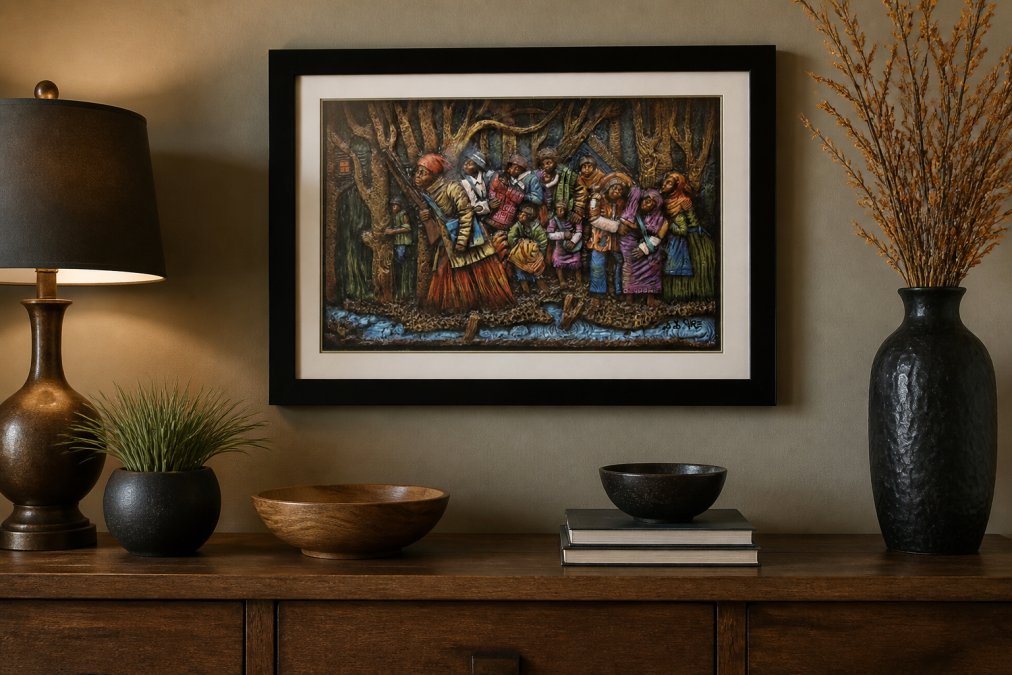
Consider placement carefully. Relief art demands visual real estate. A bedroom wall, living room focal point, or gallery hallway works better than cramped corners. The piece needs room to breathe and light to perform.
Vibrant Textiles and Pillow Covers for Every Room
Textiles are where heritage decor becomes accessible. Pillow covers at $25 each allow you to layer cultural identity throughout your home without significant financial commitment. They're also forgiving, you can swap them seasonally, experiment with combinations, and build a collection gradually.
African American Expressions offers several textile options. The "She Who Kneels" pillow cover features powerful Black art depicting a woman in spiritual submission, paired with the affirmation: "She Who Kneels Before God Can Stand Before Anyone." The "Praises Go Up" pillow cover, featuring artwork by Carl Crawford, shows three women with eyes toward heaven, with the text: "When the Praises go up, the Blessings rain down!" These aren't generic inspirational messages, they're culturally rooted affirmations grounded in Black spiritual traditions.

For contemporary styling, the "Strong Girl" pillow cover by artist Nicholle Kobi offers fashion-forward aesthetics without sacrificing cultural grounding. The "Sister Friends" cover celebrates the bonds between Black women, a relationship form with deep cultural significance.
The strategic advantage of pillow covers is flexibility. Unlike wall art, which commits you to a fixed location, pillows can migrate. A cover that works in your living room during winter might move to a bedroom in spring. This mobility encourages experimentation and keeps your decor from feeling static.
Inspirational Wall Plaques and Accents
Wall plaques occupy a specific design niche: they're smaller than statement art, more affordable than relief pieces, and perfect for filling negative space. At $15 each, they're the most budget-friendly entry point into heritage decor.
The "Eye on the Sparrow" wall plaque (12" W × 10" H) features the affirmation: "His eye is on the sparrow and I know he watches me." This piece combines spiritual reassurance with floral design elements. The "Love Sets Us Free" Maya Angelou-inspired gold foil plaque brings contemporary minimalism to heritage messaging, appealing to those building Afro-Minimalist spaces.
Wall plaques are particularly effective in transitional spaces: entryways, hallways, and bathroom walls. These areas benefit from smaller focal points that don't demand the visual real estate of larger pieces.
According to research from MRI-Simmons' 2026 Black consumer study, 75% of Black consumers find it important for companies to highlight cultural representation. Wall plaques serve this function, they're visible daily affirmations that your home reflects your values and heritage.
How to Style Heritage Decor in Your Home
Styling heritage pieces requires intention. The goal isn't to create a museum but to weave cultural elements into your existing aesthetic so they feel integrated rather than imposed.
Start with a focal point. Choose one statement piece, a relief art work, a large textile installation, or a collection of plaques arranged as a gallery wall. This anchor prevents your decor from feeling scattered. Layer with complementary neutrals. Heritage pieces often feature vibrant colors and bold patterns. Balance them with neutral furniture and walls so the decor stands out without overwhelming the space.
Mix scales intentionally. Combine large statement pieces with smaller accents. The Harriet Tubman Relief Art ($240) pairs beautifully with three or four pillow covers ($25 each) and a wall plaque ($15). This combination creates visual rhythm without requiring a massive budget.
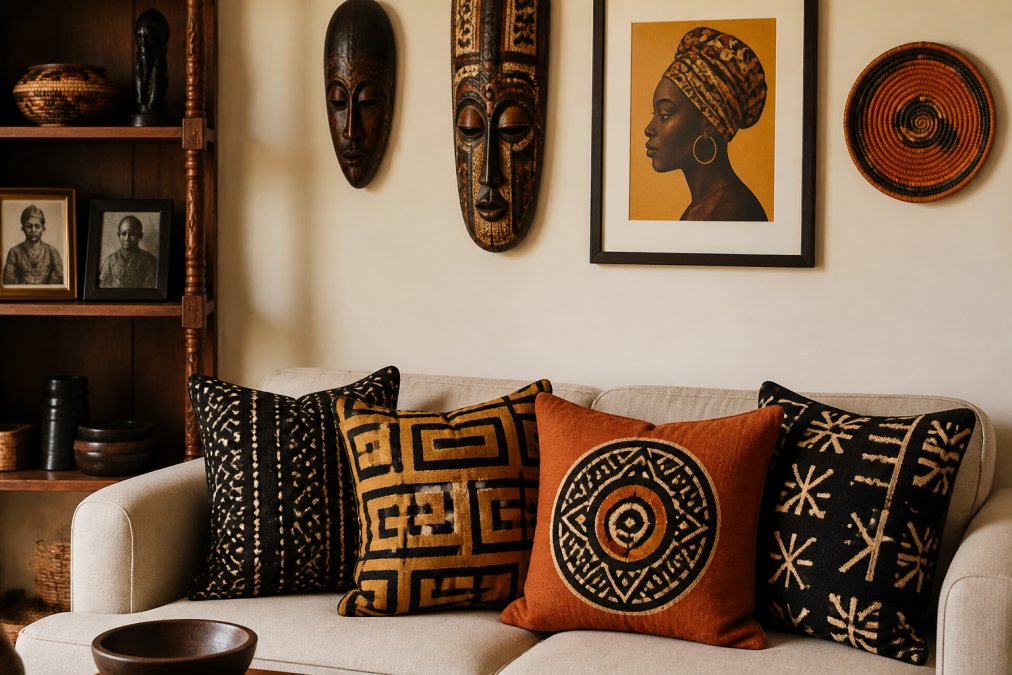
Consider the Afro-Minimalism trend, a design movement that pairs African heritage aesthetics with contemporary simplicity. Rather than filling every surface, select specific pieces and give them breathing room. One stunning pillow on a neutral sofa. One plaque on an otherwise bare wall. One relief art piece as the room's anchor. This approach respects both the cultural weight of the pieces and the visual calm of minimalist design.
Become a part of our AAE family and start fundraising today! →
Rotate seasonally. Swap pillow covers for different holidays or seasons. This keeps your space feeling fresh while deepening your relationship with each piece.
Supporting Black-Owned Home Decor Brands and Creators
When you purchase from Black-owned businesses, the impact extends beyond your home. Black buying power is projected to reach $2.1 trillion in 2026, yet Black entrepreneurs remain significantly underrepresented in design and retail.
Sheila Bridges Home offers a powerful example. Drawing on eighteenth-century French toile traditions, Bridges created wallcovering featuring images that lampoon stereotypes deeply embedded in the African American experience. Her work is now housed in the Cooper Hewitt, Smithsonian Design Museum's wallpaper collection. This trajectory demonstrates what's possible when Black designers control their own narratives.
Jungalow, founded by Justina Blakeney, started as a blog and evolved into a lifestyle brand selling boho decor and artisan pieces. The brand prioritizes sustainability by shipping in pre-used boxes and planting at least two trees for every purchase.
Thomas Day, a nineteenth-century Black furniture maker, developed a distinctive "Exuberant Style" incorporating negative space and mahogany veneers. He became arguably the first Black furniture maker in the country to gain renown among white clientele, with his workshop at one point accounting for 11% of North Carolina's furniture market. His legacy proves that Black craftsmanship has always driven design innovation.
African American Expressions represents this lineage. Operating for 34 years, the company has generated millions of dollars in revenue while supporting schools, churches, and organizations through a fundraising program that returns 40% of sales. When you buy a pillow cover or relief art piece, a portion directly funds Black institutions.

Black consumers are 41% more likely to prefer products and brands that their social circles approve of. Supporting Black-owned brands isn't just individual choice, it's communal practice.
Building Your Curated Collection
A curated collection of heritage decor pieces develops over time. Rather than purchasing everything at once, approach it as a gradual investment in your home's cultural narrative.
Start with one statement piece. The Harriet Tubman Relief Art or Last Supper Relief Art works as a foundation. This $240 investment anchors your collection and establishes your aesthetic direction.
Add textiles next. Pillow covers at $25 each allow you to experiment with messaging and visual language. Try three covers: one spiritual, one affirming, one relational. This combination covers different emotional registers while remaining visually cohesive.
Include wall plaques for transitional spaces. The "Eye on the Sparrow" or "Love Sets Us Free" plaques at $15 each fill hallways, entryways, and bathrooms while reinforcing your home's cultural identity.
According to Nielsen's 2026 Black consumer insights report, Black consumers are tastemakers whose choices create a "cool factor" that influences mainstream brand preferences. Your curation carries cultural weight, you're not following trends, you're setting them.
A statement relief art piece ($240), four pillow covers ($100), and two wall plaques ($30) totals $370. This represents a meaningful but manageable investment in a home that reflects your values. The real value compounds over time. Unlike trendy decor that feels dated in five years, culturally grounded pieces deepen in meaning.
Creating a home that celebrates Black heritage isn't about following design rules. It's about choosing pieces that speak to who you are and what you value. African American Expressions makes this possible with 34 years of expertise in sourcing authentic, high-quality items that honor cultural traditions while fitting modern aesthetics. Start with one statement piece and build from there. Your home deserves decor that tells your story.
Frequently Asked Questions
What defines Black heritage home decor?
Black heritage home decor celebrates African American culture, history, and artistic traditions through handcrafted pieces, vibrant textiles, and meaningful art. These items feature authentic designs inspired by ancestral influences, cultural narratives, and contemporary interpretations of traditional motifs. Pieces range from relief art depicting historical figures like Harriet Tubman to pillow covers with affirmations rooted in spiritual and cultural significance. True heritage decor prioritizes authentic craftsmanship and cultural accuracy over generic stereotypical designs.
Is heritage decor worth the price?
Yes. Black heritage home decor pieces represent more than aesthetics, they're investments in cultural preservation and artist support. Quality handcrafted items like relief art ($240) or artisanal textiles ($25 pillow covers) last decades when properly maintained. Black consumers are 34% more likely to pay premium prices for products reflecting their personal image. Supporting heritage decor means funding Black artisans and creators who remain underrepresented in the design industry at just 2.3% despite representing 12.1% of the population.
How can I incorporate cultural art into my living space without cultural appropriation?
Seek pieces created by Black artists and designers with authentic cultural connections. Learn the symbolism and history behind patterns and designs before purchasing. Robin Reaves, co-founder of R&R Interior Design 365, emphasizes incorporating 'elements of my heritage and culture into design projects' through vibrant colors, bold patterns, Black art, and family photos. Avoid generic 'African-inspired' items lacking cultural knowledge. Instead, choose curated collections from Black-owned businesses and established artists whose work reflects genuine heritage rather than stereotypical interpretations.
What are the benefits of supporting Black-owned home decor brands?
Supporting Black-owned home decor brands strengthens economic power, Black buying power will exceed $2 trillion in 2026. Black consumers represent $272 billion in discretionary spending as of Fall 2025, up from $259 billion the prior year. When you purchase from Black creators, you're investing in communities, funding representation in an industry where Black professionals hold only 2.3% of positions, and ensuring cultural authenticity. Brands aligned with social causes resonate strongly; 38% of African Americans aged 18-34 expect brands to support social movements.
How do I care for heritage textiles and pillow covers to ensure they last?
Proper maintenance preserves heritage textiles for generations. Wash pillow covers in cold water on a gentle cycle, using mild detergent free of bleach or harsh chemicals that fade vibrant colors. Air-dry rather than machine-drying to prevent shrinkage and preserve print quality. Rotate pillow covers seasonally to distribute wear evenly. Avoid direct sunlight exposure, which fades colors over time. For delicate hand-woven or mud cloth textiles, hand-wash separately and lay flat to dry. Store in breathable cotton bags away from moisture and pests to maintain the integrity of artisanal craftsmanship.
This article was written using GrandRanker