

Quick Summary
Long term maintenance for heritage furniture starts with a condition check before you clean or move a piece. Follow a light weekly routine, keep pieces away from sun, heat and humidity swings, and test any cleaner on a hidden spot. Call a conservator for flaking finishes or structural cracks.
- Walk around each piece and note cracks, loose joints, hardware and finish changes in a written record.
- Dust weekly, wipe spills right away, and check hardware monthly.
- Keep pieces out of direct sun and away from radiators, vents and exterior walls.
- Identify the finish and test cleaners on a hidden spot before applying any wax or oil.
- Call a conservator for flaking finishes, active insect damage or structural cracks.
Table of Contents
- Start With a Condition Check Before You Touch Anything
- Build a Furniture Care Routine You Can Keep Up
- How to Clean Antique Wood Furniture Without Damaging the Finish
- Protecting Furniture From Sunlight and Humidity
- Waxing, Oiling and When to Leave the Finish Alone
- How Long Mahogany Furniture Lasts With Proper Care
- Setting Up Your Heritage Furniture Schedule and When to Call a Conservator
- Frequently Asked Questions
Start With a Condition Check Before You Touch Anything
Last Updated: October 29, 2026
Long term maintenance tips for heritage furniture start with one habit: looking before you touch.
A simple condition check is worth doing before you clean, polish, or move a piece.
Heritage furniture is any piece old enough, or made well enough, to carry real historical or family value.
Here is what to check:
- Finish: Note cracks, clouding, sticky spots, or areas that look lighter than the rest.
- Joints: Gently check for gaps, looseness, or cracks where legs meet the frame.
- Hardware: Look for loose knobs, rust, or missing screws.
Write down what you see, even in a phone note.
Watch out: Do not pull on wobbly legs or push a loose drawer to test it.
Build a Furniture Care Routine You Can Keep Up
A good routine beats an ambitious one you never finish. Most long term maintenance tips for heritage furniture come down to small tasks done on a steady schedule. Consistency protects the finish far better than occasional deep cleaning.
Start with a light weekly routine:
- Dust with a soft cloth or feather duster.
- Wipe spills right away with a dry cloth.
- Check coasters and pads under drinks and lamps.
Then add a monthly check:
- Vacuum upholstery with a brush attachment.
- Tighten loose hardware gently.
- Turn cushions and rotate pieces that sit in direct light.
A 10-minute weekly task is easier to keep than a long weekend project. Put a reminder on your calendar and attach it to something you already do, like Sunday coffee.
How to Clean Antique Wood Furniture Without Damaging the Finish
Cleaning is where many well-meaning owners cause harm. The safest approach for antique wood furniture is gentle, slow, and minimal, dust far more often than you polish.
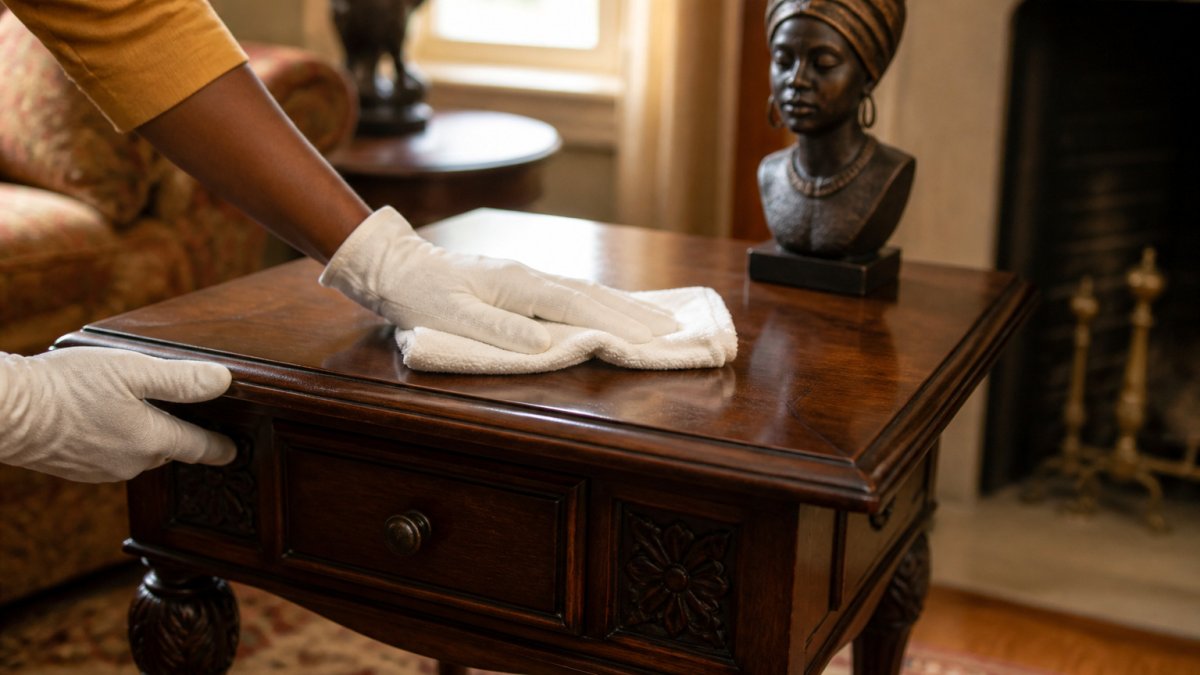
Follow these steps to clean antique wood safely:
- Dust with a dry, soft cloth or a clean feather duster.
- Test any cleaner on a hidden spot, such as the underside of a leg.
- Mix a few drops of mild soap in water, or use a very slightly damp cloth with plain water.
- Wipe in the direction of the grain, then dry immediately with a clean towel.
- Avoid soaking the wood or leaving moisture sitting on the surface.
Skip harsh chemicals, abrasive pads, and all-purpose sprays with ammonia or bleach. They strip the finish and leave the wood dull.
Watch out: Never scrub hard at a stain. Friction can wear through the finish faster than the stain itself.
Protecting Furniture From Sunlight and Humidity
Sunlight and humidity are the two slowest-acting threats to heritage furniture, and the two most owners underestimate. Light fades and embrittles finishes, dries and checks wood, and bleaches textiles. Moisture swings swell and shrink wood, lift veneer, cloud shellac, and feed mildew. The fix is not expensive equipment, it is a stable environment and a habit of watching it.
Know your targets before you buy anything
A stable indoor relative humidity is more important than any single number, and a piece that stays steady year-round is generally safer than one that swings widely with the seasons.
A simple digital hygrometer, the kind sold for nurseries and humidors, tells you more than guesswork. Place one in the room where your heritage pieces live, away from vents, radiators, and exterior walls.
Placement decisions that do the most work
- Keep pieces out of direct sun. Ultraviolet light is the main cause of faded finishes and bleached upholstery, and it works even through window glass. Sheer curtains, blinds, or UV-filtering window film all reduce exposure. Rotate pieces that cannot avoid a sunny wall so no single face takes years of direct light.
- Stay away from heat and moisture sources. Radiators, baseboard heaters, fireplaces, forced-air vents, and exterior doors create local microclimates that dry or damp one side of a piece faster than the other. That differential is what cracks veneer and opens joints.
- Give exterior walls a gap. In cold months, exterior walls run cooler and damper than the room. A few inches of clearance behind a case piece or chest reduces condensation risk on the back and underside.
Acclimatize gradually when you move a piece
A heritage piece that moves from a dry attic to a heated living room, or from a humid garage to an air-conditioned house, can react within days. Cracks, lifted veneer, and sticking drawers are common after a sudden move. Where you can, bring the piece into its new room in a moderate season, keep it away from vents for the first few weeks, and watch the hygrometer.
Read the early warning signs
Catching environmental stress early is the whole game with heritage pieces. Watch for these signals and note them in your condition record:
Become a part of our AAE family and start fundraising today! →
- Crazing or fine cracking in the finish, often the first sign of repeated humidity swings.
- Lifted or bubbled veneer, moisture or heat getting under the surface.
- Sticky or cloudy shellac, too much humidity, or a finish that has been exposed to moisture.
If you see several of these at once, correct the environment before you treat the piece. Cleaning or polishing a piece that is still sitting in a damp or sun-blasted spot just hides the problem.
Seasonal checks that take ten minutes
Four times a year, walk the room with your hygrometer readings in hand. Note the season, the humidity range, and any new marks on your pieces. Compare against last season's notes. A pattern, say, veneer lifting every winter when the heat comes on, tells you exactly where to intervene: a humidifier in that room, a gap from the vent, or a move to a more stable wall. That record is the difference between reacting to damage and preventing it.
Waxing, Oiling and When to Leave the Finish Alone
Finish care is where heritage furniture differs most from modern furniture, and where the wrong product does the most lasting harm. The right answer depends on what the finish actually is, not on what the polish bottle says. Before you wax, oil, or polish anything, identify the finish.
Identify the finish first
Most heritage pieces fall into a handful of finish families, and each behaves differently:
- Shellac, common on older pieces. It dissolves in alcohol, clouds with moisture, and can be revived gently, but it is easily damaged by water rings and household cleaners.
- Lacquer, common from the 1920s onward. Harder than shellac but sensitive to solvents and some polishes; clouding and cracking are common with age.
- Varnish and polyurethane, more modern, more resistant, but still vulnerable to heat and abrasion.
A simple test on a hidden spot, a drop of denatured alcohol on an inconspicuous area, will tell you whether a finish is shellac (it softens) or something more resistant. If you are not sure, treat the piece as fragile and get advice before applying anything.
What wax and oil actually do
A thin coat of paste wax on a sound finish adds a sacrificial layer that slows moisture exchange and makes dusting easier. It does not feed the wood or repair damage.
Oil nourishes bare or oil-finished wood, but it is not a universal treatment. On a shellac or lacquer finish, oil sits on top, attracts dust, and can darken the surface unevenly.
When to leave the finish alone
Some finishes should not be touched with wax or oil at all. Leave the surface alone, and consult a conservator, if you see:
- Crazing, flaking, or lifting, adding product can trap flakes and make them harder to stabilize.
- Cloudy or patchy shellac or lacquer, this often signals moisture damage that needs treatment, not polish.
- Original finish that is thin but intact, patina and wear are part of the piece's history and value. A thin original finish is often better left as-is than topped up.
Conservation versus restoration
These two words are not interchangeable, and the difference matters for both the piece and its value.
Conservation aims to stabilize what exists: halt active damage, consolidate flaking finish, control the environment, and preserve original material and patina.
Owners often refinish a piece to "freshen it up" and later learn the original finish was a significant part of its value.
How Long Mahogany Furniture Lasts With Proper Care
Mahogany is one of the most durable woods used in heritage furniture. With proper care, solid mahogany pieces can remain in good condition for generations.
Lifespan depends on several factors:
- Wood quality: Solid, dense mahogany holds up better than veneer over cheap wood.
- Finish condition: An intact finish protects against moisture and light.
- Environment: Stable humidity and indirect light extend life.
Care slows aging but cannot stop it entirely. Wood continues to move slowly with the seasons, so expect small changes over time. The goal is steady, gentle maintenance that keeps your mahogany piece stable for years to come.
Setting Up Your Heritage Furniture Schedule and When to Call a Conservator
A written schedule keeps long term maintenance tips for heritage furniture from fading into good intentions. Use this simple calendar as a starting point:
| Task | Frequency |
|---|---|
| Dust and wipe spills | Weekly |
| Check hardware and joints | Monthly |
| Inspect humidity and sun exposure | Seasonally |
| Light wax or oil (if appropriate) | Once or twice a year |
| Full condition review | Yearly |
Call a professional conservator when you notice flaking finishes, active insect damage, structural cracks, or any repair you are unsure about. A conservator can stabilize a piece without erasing its history.
Keep your schedule in a shared place, like a notes app or a printed card inside a drawer. Update it after each check. Over time, your records will show exactly how your heritage pieces are changing and what they need next.
Frequently Asked Questions
How do you care for heritage furniture?
Care for heritage furniture by checking its condition first, then dusting it weekly with a soft cloth, keeping it away from direct sun and heating vents, and maintaining steady indoor humidity. Avoid harsh chemical cleaners and silicone polishes, which can build up and damage old finishes. Inspect joints and hardware every few months, and tighten loose parts gently. For any structural repair or finish restoration, consult a qualified furniture conservator rather than attempting it yourself.
How often should you clean antique wood furniture?
Dust antique wood furniture lightly once a week to prevent grime from settling into the finish. A deeper clean with a barely damp cloth and a mild solution should happen only every few months or when the surface looks dirty. Over-cleaning can wear down old finishes, so use the lightest method that works. Always dry the surface immediately after any moisture touches it to prevent water marks and warping.
How long does mahogany furniture last?
Well-made mahogany furniture can last for generations, often a century or more, when it is cared for consistently. Its lifespan depends on construction quality, the age and condition of the finish, and exposure to sunlight, humidity and temperature swings. Stable indoor conditions and regular, gentle maintenance do the most to extend that lifespan. Serious damage such as cracked joints or lifted veneer should be assessed by a professional early.
Can you use coconut oil on a wooden table?
Coconut oil is not recommended for heritage wood furniture. It can go rancid, attract dust, and leave a sticky residue that makes future refinishing harder. For oiling or waxing, use products made specifically for furniture, applied sparingly and tested first in an inconspicuous spot. If the finish is original and in good condition, it is often best to leave it alone and focus on cleaning and environmental protection.
