

Last Updated: October 30, 2026
Quick Summary
Heirloom furniture is a durable, well-built purchase rather than a reliable financial investment. It offers predictable use value and sentimental value, but resale value is uncertain and depends on maker, condition, style, and market demand. Judge it by the use you will get over many years.
- Heirloom furniture rarely appreciates like a financial asset, so resale proceeds are uncertain.
- Buyers should separate use value, sentimental value, and resale value when deciding.
- Check recent sold prices for comparable pieces, not asking prices, before assuming value.
- Estimate total cost of ownership, including repairs, upholstery, storage, and insurance, then divide by years of use.
- Verify construction details like joinery and drawer bottoms, since a solid wood label does not guarantee solid wood throughout.
Table of Contents
- Does Heirloom Furniture Hold Its Value?
- Upfront Cost Versus Long-Term Use
- How to Identify Quality Furniture Before You Buy
- Antiques Versus New Heirloom-Quality Pieces
- How to Care for Antique and Heirloom Furniture
- Deciding Whether a Heirloom Piece Fits Your Budget
- Frequently Asked Questions
Heirloom furniture is well-built furniture meant to be used for decades and passed down through a family. People often buy it because they want a piece that holds up, looks good over time, and carries a story. Whether it is a good financial investment is a separate question, and the answer depends on what you expect from the purchase.
Several features tend to separate lasting furniture from short-lived pieces:
- Solid wood or high-grade hardwood instead of particleboard
- Joinery such as dovetails, mortise-and-tenon, or dowels rather than staples alone
- Simple, classic designs that stay in style
- Upholstery and finishes that can be repaired or refreshed
Heirloom quality is not a regulated term. Anyone can put it on a label. The useful test is whether the materials and construction hold up under close inspection.
Watch out: A "solid wood" label does not guarantee the whole piece is solid wood. Drawer bottoms, backs, and panels are often plywood or veneer, so check the construction details, not just the marketing.
Guide to furniture construction and wood types
Does Heirloom Furniture Hold Its Value?
The honest answer is that heirloom furniture is a durable good, not a reliable investment. It can deliver decades of use and strong sentimental value, but it rarely appreciates like a financial asset, and resale proceeds depend on factors the original buyer cannot control. See how antique-style decor performs when resold.
It helps to separate three kinds of value:
- Use value: the daily utility of a well-built table, chair, or dresser over many years. This is the most predictable return.
- Sentimental value: family history and meaning, which cannot be liquidated.
- Resale value: what a future buyer will actually pay. This is the uncertain part, and it is what most people mean when they ask whether furniture is a good financial investment.
The difference is not durability. It is maker, age, condition, provenance, and current demand.
What actually drives resale value
- Maker and provenance: A documented piece by a recognized workshop or designer attracts collectors. An unmarked piece of similar quality usually does not.
- Condition: Original finish, tight joints, and intact hardware command more than a refinished or repaired piece. Heavy restoration can reduce collector interest even when it improves appearance.
- Style and current taste: Demand shifts. Mid-century pieces that were inexpensive a decade ago have seen strong demand, while some traditional styles have softened. Tastes can reverse again.
- Rarity and reproduction confusion: A piece is not valuable just because it is old. Reproductions and altered pieces are common, and buyers discount anything they cannot authenticate.
- Market channel: Auction houses, dealers, online marketplaces, and private sales each produce different net proceeds after fees, commissions, and selling time.
Liquidity and resale channels
Furniture is an illiquid asset. Selling takes time, and each channel has trade-offs:
- Auction houses: Best for documented or collectible pieces. Expect seller's commissions and fees that reduce net proceeds, plus a wait of weeks or months for a sale.
- Dealers and consignment shops: Convenient, but they typically pay wholesale or take a commission, so proceeds are lower than a private sale.
- Online marketplaces: Wider reach, but you handle photography, logistics, and buyer risk, and large pieces often sell slowly.
- Private sales and estate sales: Can work well for complete households, but pricing is uncertain and negotiation is expected.
Before assuming a piece will hold its value, check recent sold prices for comparable items rather than asking prices. Listings show what sellers want; sold data shows what buyers actually paid. If you cannot find sold comparables, treat resale value as unknown rather than optimistic.
Overview of how antique and collectible values are determined
Upfront Cost Versus Long-Term Use
Heirloom-quality furniture often costs more at the start. The real question is whether the extra cost is spread across enough years of use to beat a cheaper piece you would replace sooner. Answering that requires looking beyond the sticker price to the total cost of ownership.
Pricing depends on the maker, materials, size, and whether the piece is new or antique. Check current prices directly with each seller, because costs vary widely by piece and by market.
Build a total cost of ownership estimate
A simple framework:
- Purchase price: the amount you pay today, including delivery and any sales tax.
- Expected years of use: be realistic. A well-made dining table may serve 20 to 40 years; a upholstered sofa may need reupholstery every 10 to 15 years.
- Repair and restoration: budget for re-gluing joints, refinishing, hardware replacement, and structural repairs. Antiques often need more upfront restoration than new pieces.
- Upholstery: fabric replacement is a recurring cost on seating. Quality frames justify reupholstery; particleboard frames usually do not.
- Storage and moving: large pieces cost money to move and store, and those costs count against the investment.
- Insurance and care: riders on homeowner's or renter's policies for valuable pieces, plus conditioners, climate control, and minor repairs.
- Resale or disposal: selling has fees and time costs; disposal has its own cost.
Divide the total of those costs by the years of expected use to get a true annual cost. Compare that with the annual cost of a cheaper piece you would likely replace every five to seven years.
A worked comparison
The numbers can be close, which is why the decision often comes down to use value, repairability, and whether you want to keep the piece.
A higher price can still be a poor deal if the piece falls apart in a few years, needs costly restoration you did not anticipate, or fits a style you will tire of. A lower price can be a poor deal if the piece cannot be repaired and ends up in a landfill.
Become a part of our AAE family and start fundraising today! →
Guide to furniture construction and wood types
The article frames the purchase as a total cost of ownership question, so this table summarises the cost factors it lists.
| Cost factor | What it covers | Note |
|---|---|---|
| Purchase price | Amount paid today, including delivery and sales tax | Check current prices directly with each seller |
| Expected years of use | How long the piece serves | Dining table 20 to 40 years; upholstered sofa 10 to 15 years |
| Repair and restoration | Re-gluing, refinishing, hardware, structural repairs | Antiques often need more upfront restoration |
| Upholstery | Fabric replacement on seating | Worth it only for quality frames |
| Storage and moving | Cost of moving and storing large pieces | Counts against the investment |
| Insurance and care | Policy riders, conditioners, climate control, minor repairs | Relevant for valuable pieces |
| Resale or disposal | Selling fees and time, or cost of disposal | Selling takes time and reduces net proceeds |
How to Identify Quality Furniture Before You Buy
Look past the marketing. A few quick checks can reveal a lot about how a piece was made.
- Check the joints: Pull drawers and look at the corners. Dovetails and tight mortise joints suggest careful construction.
- Look at the wood: Grain that runs through the visible surfaces usually means solid wood. Uniform, repeating patterns can suggest veneer.
- Test the hardware: Drawer slides, hinges, and screws should feel secure and operate smoothly.
- Feel the weight: Solid wood is usually heavier than particleboard of similar size.
- Ask the seller: Where was it made, what materials were used, and what is the warranty or return policy?
Many buyers find that asking specific questions quickly separates sellers who know their products from those who do not.
Assessing an Antique or Vintage Piece
Older furniture needs a different check. Look for signs of wear that match its age, such as worn edges on high-touch areas. Be cautious of pieces with new finishes that hide repairs, and check for loose joints, cracks, or woodworm damage.
A common mistake is assuming an old piece is valuable just because it is old. Age alone does not make a piece rare or worth more money.
Antiques Versus New Heirloom-Quality Pieces
Antiques and new heirloom-quality pieces serve the same purpose but differ in cost, availability, and risk. A direct comparison of how long each kind lasts shows where the differences matter most.
Antiques can offer unique craftsmanship and character, but they may need repairs and their condition varies. New pieces come with predictable quality, known materials, and often a warranty, but they usually lack history and may not appreciate.
Skip if you need a piece you can count on immediately and do not want to deal with restoration. A new piece built to a high standard is often the simpler choice.
How to Care for Antique and Heirloom Furniture
Good care is what makes furniture last. Simple habits prevent most damage.
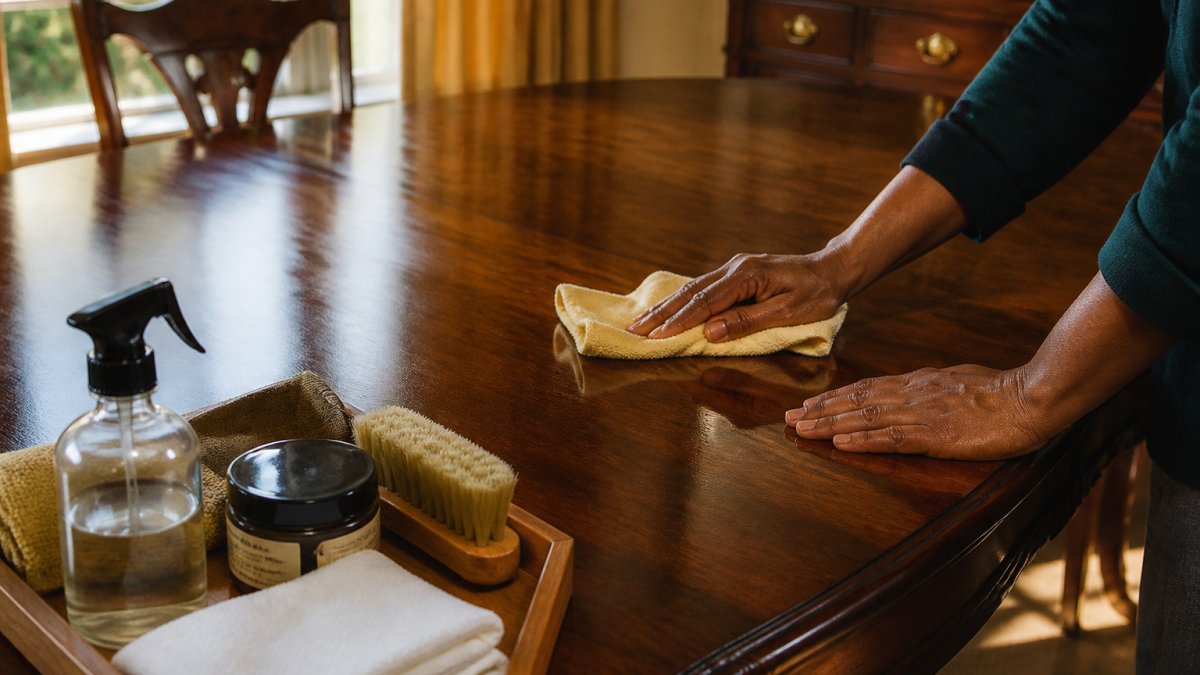
- Dust regularly with a soft, dry cloth to avoid scratching the finish.
- Keep pieces away from direct sunlight, which can fade and dry out wood.
- Maintain steady humidity, since large swings can crack wood and loosen joints.
- Use coasters and placemats to protect surfaces from water rings and heat.
- Condition wood finishes periodically with a product made for that finish type.
- Tighten loose joints early before they cause larger damage.
Test any cleaner or conditioner on a hidden spot first, because the wrong product can strip or darken a finish.
Guidance on caring for wood furniture
Deciding Whether a Heirloom Piece Fits Your Budget
Start by deciding what you want from the purchase. If the goal is a piece for daily use and family memories, the financial return matters less. If the goal is resale profit, be realistic about the odds.
Set a budget you can afford without strain, then ask:
- Will I use this for many years?
- Can I repair or refinish it if needed?
- Would I still want it if its resale value stayed flat?
If the answers are mostly yes, a heirloom piece can be a worthwhile purchase. If not, a well-made new piece or a lower-cost option may serve you better.
For furniture that fits lasting use and family traditions, browse what we offer at African American Expressions and compare pieces against the checklist above. Our team is happy to help you plan a purchase that matches your budget and goals.
Frequently Asked Questions
Does heirloom furniture hold its value?
Sometimes, but not reliably. Heirloom furniture can keep its usefulness for decades, and some pieces from recognized makers or with documented provenance do sell well. However, most furniture depreciates on the resale market, and appreciation is uncertain. Condition, maker, age, and demand for the style all shape what a piece brings. Treat heirloom furniture as a purchase for long-term use first, and assume any resale return is a bonus rather than a guaranteed investment.
What is considered heirloom furniture?
Heirloom furniture generally refers to well-built pieces made to last for generations, often from solid wood with traditional joinery. The term is used loosely in retail, so it does not carry a formal definition. Some sellers apply the label to new furniture, while antiques are often passed down within families. Looking at materials, construction, and repairability will tell you more than the label alone.
How can you tell if furniture is well made?
Check the materials first. Solid wood and real hardwood generally outlast particleboard or thin veneers. Look at the joints: dovetails, mortise-and-tenon, and corner blocks suggest sturdier construction than staples or loose glue. Pull on drawers, test chairs, and inspect finishes for even coverage. Ask the seller about the maker and warranty, and be cautious when 'heirloom quality' is the only selling point.
