

Table of Contents
- Black History Month 2026 vs Traditional Classroom Curriculum: Key Differences
- How Culturally Responsive Teaching Strategies Transform Black History Instruction
- Inclusive History Curriculum Examples and Implementation
- Moving Beyond February: Year-Round Integration Into Core Subjects
- Primary Sources and Multiliteracy Approaches in Modern Teaching
- Addressing Textbook Bias and Systemic Representation Gaps
- Navigating Curriculum Restrictions While Maintaining Pedagogical Integrity
- Classroom Resources and Tools for Enhanced Black History Education
- Frequently Asked Questions
Last Updated: September 23, 2026
Black History Month 2026 vs Traditional Classroom Curriculum: Key Differences
According to Johns Hopkins University research, most schools teach Black history, but materials often lack rigor and quality, failing to provide a comprehensive view of the African American experience. This gap between intention and execution defines the central tension in modern education: schools recognize the importance of inclusive pedagogy, yet traditional curricula remain fragmented and incomplete.

The 2026 Black History Month theme, "A Century of Black History Commemorations," signals a broader shift in how educators approach African American heritage.
The real difference isn't whether schools teach Black history, it's how they teach it, when they teach it, and whether the content reflects historical rigor or cultural tokenism. Traditional curricula often reduce Black history to a handful of names and dates. Modern, inclusive approaches integrate African American heritage throughout the academic year, weaving it into core subjects like STEM, English, and social studies.
| Approach | Coverage | Integration | Rigor | Student Engagement |
|---|---|---|---|---|
| Traditional February-only | Limited to key figures | Isolated unit | Surface-level | Passive learning |
| Year-round inclusive | Comprehensive across subjects | Woven into core curriculum | Academic depth | Active participation |
| Culturally responsive teaching | Full historical narrative | All disciplines | Critical thinking | Student-led inquiry |
This comparison matters because the approach educators choose directly impacts whether students develop genuine understanding or simply memorize facts.
How Culturally Responsive Teaching Strategies Transform Black History Instruction
Culturally responsive teaching isn't a new concept, it's a fundamental shift in pedagogical framework that places African American history at the center of instruction rather than the margins. This approach recognizes that students learn more effectively when they see themselves reflected in the curriculum and when instruction acknowledges the systemic representation gaps that have shaped American education.
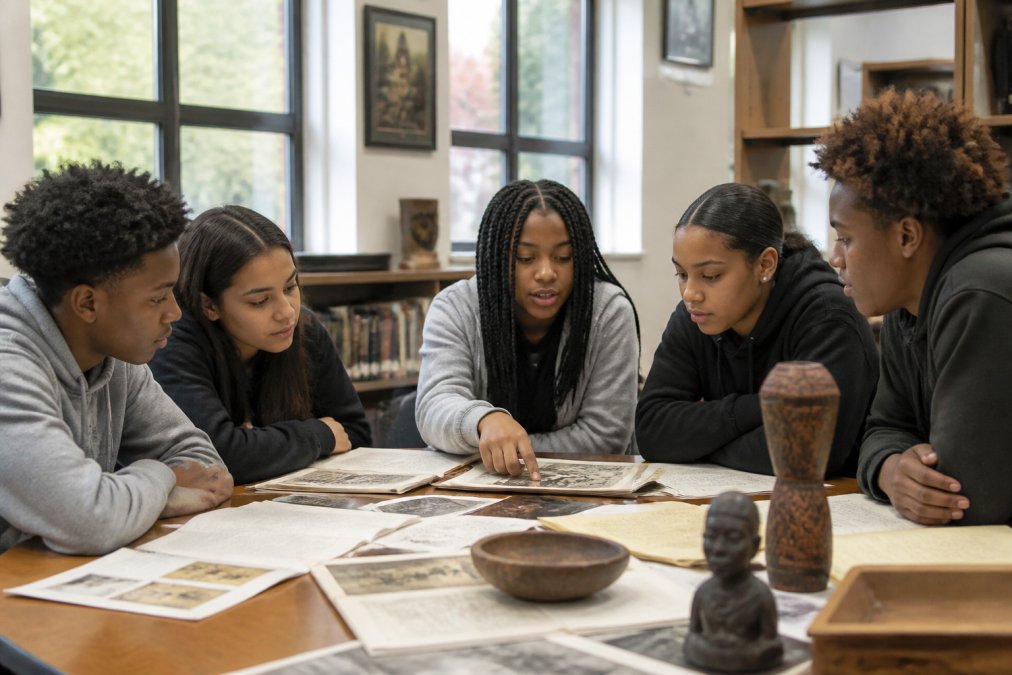
The mechanics are straightforward: instead of teaching Black history as a separate subject, culturally responsive educators integrate African American perspectives into existing lessons. A mathematics class explores statistical inequities in healthcare access. An English class analyzes slave narratives alongside canonical literature. A science class examines the contributions of Black inventors and scientists to modern technology.
Research from Share My Lesson documents that educators are moving away from limiting Black history to a single month, advocating for it to be taught as American history throughout the year. This represents a fundamental shift in instructional philosophy, one that treats African American heritage not as supplementary content but as essential to understanding American society.
The challenge lies in execution. Teachers face competing pressures: curriculum restrictions, limited training in culturally responsive methods, and the practical difficulty of redesigning lessons mid-year. Yet schools that have committed to this approach report measurable improvements in student engagement and academic achievement across demographics.
Inclusive History Curriculum Examples and Implementation
Inclusive curriculum integration means embedding Black history across disciplines, not isolating it. Here's what this looks like in practice:

English and Language Arts: Students read slave narratives, civil rights speeches, and contemporary African American literature alongside traditional canon texts. They analyze rhetoric, historical context, and narrative perspective, developing literacy skills while studying Black authors.
Social Studies: Rather than a single "Black History Month" unit, the year-round curriculum weaves African American history into every era: colonial period (slavery's economic role), founding era (enslaved people's contributions to nation-building), industrial revolution (Black workers' labor), civil rights movement (ongoing struggle for equity).
STEM Integration: Students research Black scientists, engineers, and mathematicians whose contributions are often erased from textbooks. They explore how systemic barriers affected access to education and careers. They analyze data on healthcare disparities, environmental justice, and technological innovation.
Visual and Performing Arts: Curriculum incorporates African American visual artists, musicians, dancers, and filmmakers. Students create projects responding to these works, developing both artistic and analytical skills.
The practical challenge in developing a Black History Month curriculum is resource availability. According to K-12 Dive, vagueness in state-level curriculum restrictions is causing teachers to exercise increased caution in their instructional strategies. This creates a chilling effect: teachers uncertain about what content is permitted often default to safer, traditional approaches rather than risk administrative scrutiny.
Schools implementing inclusive curricula successfully use multiple strategies: professional development on culturally responsive teaching, curriculum audits identifying gaps and bias, partnerships with cultural organizations, and access to quality educational materials. Organizations like the Smithsonian and the National Education Association now provide updated resource packs specifically designed for 2026 classrooms.
Moving Beyond February: Year-Round Integration Into Core Subjects
The shift from Black History Month observance to year-round integration represents the most significant change in educational practice. February recognition remains valuable as a focal point for celebration and awareness. But limiting Black history to 28 days treats it as supplementary rather than foundational.
Year-round integration means Black history becomes inseparable from American history. Students don't study slavery as a historical anomaly, they understand it as the economic foundation of colonial America.
Primary Sources and Multiliteracy Approaches in Modern Teaching
Primary sources, original documents, speeches, photographs, oral histories, and artifacts, form the foundation of rigorous Black history instruction. Unlike textbook summaries, primary sources allow students to engage directly with historical evidence and develop their own interpretations.
Effective primary source use includes:
- Written documents: slave narratives, letters, speeches, newspaper articles, legal documents
- Visual texts: photographs, paintings, political cartoons, advertisements, film
- Oral histories: recorded interviews with civil rights participants, community members, and historians
- Material culture: artifacts, quilts, tools, clothing that tell stories of daily life and resistance
Addressing Textbook Bias and Systemic Representation Gaps
Textbook bias remains one of the most persistent barriers to comprehensive Black history education. Traditional textbooks often minimize or misrepresent African American contributions, agency, and resistance.
Common problems include:
- Erasure: Black figures and movements receive minimal coverage or are omitted entirely
- Misrepresentation: African Americans are portrayed as passive victims rather than active agents of change
- Distortion: Historical events are framed through a white perspective, minimizing the significance of Black leadership
- Fragmentation: Black history is isolated in separate chapters rather than integrated throughout
- Outdated content: textbooks lag behind current historical scholarship by years
Navigating Curriculum Restrictions While Maintaining Pedagogical Integrity
The tension between legal compliance and pedagogical responsibility has intensified. State-level curriculum restrictions create uncertainty about what content teachers can safely present. Some restrictions target "divisive concepts" broadly defined. Others specifically limit how teachers can discuss race, racism, and systemic inequality.
- Frame content as historical inquiry: Teaching about racism is not "promoting" it, it's analyzing historical evidence
- Use primary sources: Student analysis of historical documents feels less ideological than teacher interpretation
- Center student voice: When students draw their own conclusions from evidence, instruction appears more neutral
- Document pedagogical decisions: Keep clear records of curricular choices and their educational rationale
- Build administrative support: Educate administrators about culturally responsive teaching and its academic benefits
Classroom Resources and Tools for Enhanced Black History Education
Effective classroom resources include:
- Primary source collections: digitized documents, photographs, and oral histories
- Activity-based learning materials: puzzles, games, and interactive books that make history engaging
- Lesson plans: pre-designed units aligned to standards and incorporating best practices
- Professional development: training in culturally responsive teaching and primary source analysis
- Community partnerships: connections with museums, historical societies, and cultural organizations
The gap between what students should learn and what many currently do remains substantial. But the shift is underway. Schools adopting year-round, inclusive approaches report higher student engagement, improved academic outcomes across demographics, and stronger sense of community belonging. Teachers trained in culturally responsive methods report greater job satisfaction. Students see themselves reflected in curriculum and develop genuine understanding of African American history's centrality to American narrative.
Frequently Asked Questions
What is the theme for Black History Month in 2026?
The official theme for Black History Month 2026 is 'A Century of Black History Commemorations.' This theme emphasizes celebrating a century of progress, recognition, and the ongoing contributions of African Americans to society. Educational institutions are using this theme to structure programming and lesson plans that honor historical milestones and contemporary achievements throughout February.
How do culturally responsive teaching strategies differ from traditional Black history lessons?
Culturally responsive teaching strategies center on student identity, cultural heritage, and lived experiences, moving beyond memorization of dates and figures. Traditional lessons often treat Black history as a standalone topic limited to February, while responsive approaches integrate African American perspectives into English, STEM, social studies, and other core subjects year-round. This creates deeper critical thinking and stronger student engagement with historical inquiry.
What resources are available for schools implementing inclusive history curriculum?
Schools can access updated 2026 resource packs from the Smithsonian, National Education Association (NEA), and organizations like Share My Lesson. Tools include primary source collections, lesson plans addressing systemic representation gaps, and classroom materials that support multiliteracy approaches. Products like the Black Heritage Word Search Book (featuring 100 puzzles and trivia covering civil rights, inventors, and HBCUs) and Black Heritage Trivia Game Cards (with 114 questions on pivotal moments and cultural achievements) help educators engage students while building academic rigor.
How are curriculum restrictions affecting Black history instruction in schools?
Vagueness in state-level curriculum restrictions is causing educators to exercise increased caution in instructional strategies, according to K-12 Dive reporting. Teachers face uncertainty about balancing traditional instruction with inclusive content that addresses systemic representation and critical thinking. This tension between legal compliance and pedagogical integrity has prompted schools to seek clearer guidance and vetted resources that meet educational standards while providing comprehensive historical narratives.