

Table of Contents
- What Culturally Responsive Teaching Means for Elementary Students
- Understanding Your Students' Cultural Backgrounds and Identities
- Building Trust and Supportive Teacher-Student Relationships
- Culturally Responsive Teaching Examples You Can Use Tomorrow
- Designing Culturally Responsive Lesson Plans That Honor Student Voice
- Selecting Diverse Books for Elementary Students and Inclusive Materials
- Family Engagement in Culturally Responsive Teaching and Community Partnerships
- Measuring Impact and Avoiding Tokenism
- Frequently Asked Questions
Last Updated: October 13, 2026
What Culturally Responsive Teaching Means for Elementary Students
Culturally responsive teaching is an approach that uses students' cultural backgrounds, identities, and lived experiences as the foundation for what happens in the classroom. At African American Expressions, we understand that when teachers honor who their students are, their families, their communities, their stories, learning becomes deeper and more meaningful. A 2025 study involving 863 students found that culturally responsive teaching improved engagement, belonging, and achievement, with identity affirmation explaining 42.3% of the intervention's total effect (ScienceDirect research on culturally responsive teaching impact).
Culturally responsive teaching isn't about adding a few books or celebrating holidays once a year. It's about fundamentally changing how you design lessons, select materials, and interact with students every single day. The research identifies critical reflection, valuing cultural diversity, and efficacy in teaching in a diverse setting as important elements (Taylor & Francis Online study on pre-service teacher preparation).
Here's what makes this approach different from typical instruction:
- It starts with students, not curriculum. You learn about each child's background first, then build lessons around their experiences.
- It validates student identities. Students see themselves reflected in the materials, discussions, and examples you use.
- It connects learning to real life. Lessons tie to students' communities and everyday situations they understand.
- It builds belonging. When students feel seen and valued, they engage more fully in learning.
Understanding Your Students' Cultural Backgrounds and Identities
You can't teach responsively without knowing your students. Start by actively learning about each child's background, family structure, languages spoken at home, cultural traditions, and what matters most to them.
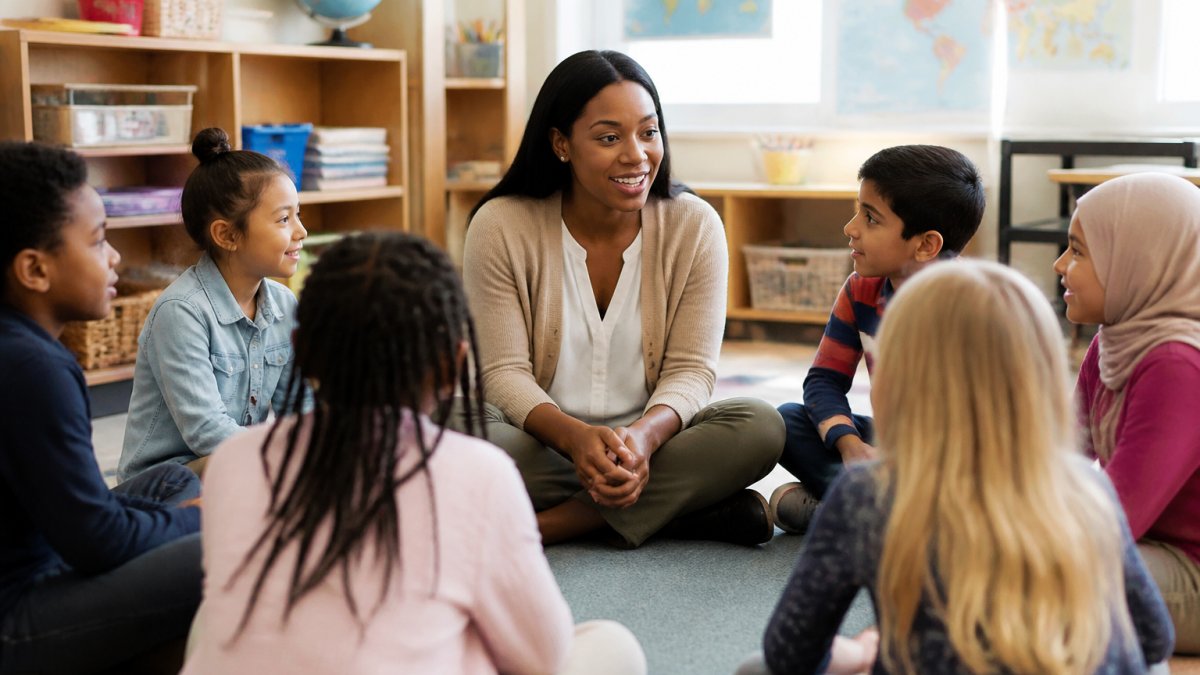
The most effective teachers ask questions and listen carefully:
- What languages are spoken in your home?
- What holidays or celebrations does your family observe?
- What are you proud of about your family or community?
- What do you like to do outside of school?
- Who are the important people in your life?
Guidance from the National Association for the Education of Young Children emphasizes that information about a child and family helps teachers support the child's social and emotional adjustment to the early childhood environment (NAEYC strategies for supporting young learners).
Create simple surveys or have informal conversations with families. Ask parents to share their child's strengths, interests, and cultural practices. Some families may prefer written communication. Others may respond better to a phone call or in-person meeting.
Document what you learn in a way that's easy to reference. When you know that Marcus speaks Spanish at home, you can include Spanish words in lessons.
This isn't extra work on top of teaching. It's the foundation that makes your teaching more effective.
Building Trust and Supportive Teacher-Student Relationships
Trust is the soil where culturally responsive teaching grows.
Show up as your whole self. Let students know you're learning too. If you don't know something about a student's culture, say so.
Be consistent in your words and actions. If you say you value student voice but then ignore student ideas, students feel the contradiction.
Create routines that show care:
- Greet each student by name every morning
- Remember details students share and ask follow-up questions
- Notice and affirm effort, not just correct answers
- Respond to student concerns with genuine interest
- Follow through on promises you make
Listen more than you talk. When a student shares something about their family or community, listen fully. Ask clarifying questions. Reflect back what you heard.
Address conflicts and mistakes directly and fairly. If you make a mistake, mispronouncing a name, saying something insensitive, acknowledge it, apologize, and correct it.
Culturally Responsive Teaching Examples You Can Use Tomorrow
Here are specific, ready-to-use examples you can implement in elementary classrooms:
Read-aloud selection: Instead of only using the textbook stories, choose picture books that feature characters from different cultural backgrounds and family structures. Books like The Snowy Day by Ezra Jack Keats, Hair Love by Matthew A. Cherry, or Last Stop on Market Street by Matt de la Peña show diverse children in authentic situations. After reading, ask: "Who in this story reminds you of someone you know? Why?"
Math word problems: Create problems that reflect students' lives. Instead of generic scenarios, use names and situations from your classroom community.
Social studies projects: Instead of studying "Native Americans" as a unit in the past tense, invite local tribal members to share current culture and history.
Writing prompts: Ask students to write about their own experiences.
Classroom displays: Feature student work, family photos, and images that represent the cultures in your classroom. Include labels in multiple languages.
Music and movement: Use songs and dances from different cultures. Teach students about the origins and meaning.
Guest speakers: Invite family members to share their work, hobbies, or expertise. A parent who is a chef, musician, nurse, or gardener becomes a teacher.
Designing Culturally Responsive Lesson Plans That Honor Student Voice
Culturally responsive lesson planning starts with asking: "Whose voices and experiences are included in this lesson? Whose are missing? How can I design this so every student sees themselves?"
Here's a simple planning framework:
-
Start with student interest or experience. What do your students care about? What experiences do they share? Build from there.
-
Choose a topic that connects to students' lives. Instead of "Transportation," ask "How do people in our community get where they need to go?" This grounds the topic in students' reality.
-
Select diverse materials and perspectives. If you're teaching about community helpers, include books and images showing people from different backgrounds in those roles. If you're teaching history, include perspectives from different groups, not just the dominant narrative.
-
Build in student choice. Let students choose how to show their learning. Some might write, others might create art, build something, or perform. Different ways of showing learning honor different strengths.
-
Include reflection and dialogue. Ask students to think about what they learned and what it connects to in their own lives. Create space for students to share ideas and learn from each other.
-
Evaluate for bias. Before teaching, check: Are all groups represented positively? Are there stereotypes? Would families from different backgrounds feel respected? Adjust as needed.
A practical planning tool is to map out one unit using these questions. Write the topic, then list: (1) Student experiences or interests connected to this topic, (2) Diverse materials and perspectives you'll include, (3) Ways students can participate and show learning, (4) How you'll connect this to students' communities.
Selecting Diverse Books for Elementary Students and Inclusive Materials
Books are mirrors and windows. They're mirrors when students see themselves reflected in stories. They're windows when students look into experiences different from their own. A strong classroom library includes both.
When selecting diverse books for elementary students, look for:
- Authentic representation. Characters from different cultures should be portrayed with depth and authenticity, not stereotypes. A book about a Korean American family should feel true to real life, not exaggerated.
- Multiple perspectives. Include books written by authors from the cultures they're writing about. A story about African American history should ideally be written by an African American author.
- Contemporary and historical stories. Include books showing people from different backgrounds in modern situations, not just historical contexts.
- Different family structures. Include books with single parents, grandparents raising children, same-sex parents, adoptive families, and extended families.
- Varied abilities and experiences. Include books featuring characters with disabilities, different abilities, and different life circumstances.
Build your classroom library intentionally. Audit what you have: What cultures are represented? What's missing? Set a goal to add books that fill gaps.
African American Expressions offers resources that support this work. The Black Heritage Word Search Book ($17.99) combines word searches, trivia, and coloring activities that celebrate Black excellence and culture, perfect for independent reading time or classroom activities.

Display books at students' eye level. Rotate featured books regularly. Let students choose books for read-aloud time. When students see themselves in the books you read together, they understand that their stories matter.
Family Engagement in Culturally Responsive Teaching and Community Partnerships
Families are your most important partners. They know their children best and can teach you about their culture, values, and strengths. When you partner with families, culturally responsive teaching becomes much more powerful.
Start with genuine invitation, not just information-sharing. Instead of only sending home permission slips or test scores, ask families: "What would you like me to know about your child?
Create multiple ways for families to be involved:
- Share expertise. Invite family members to share skills, traditions, or knowledge with the class.
- Contribute to learning. Ask families to help students collect family stories, recipes, photos, or traditions to bring to school.
- Provide feedback. Ask families what's working and what isn't. Listen to concerns and adjust.
- Celebrate together. Include families in classroom celebrations and learning events.
- Communicate regularly. Share positive news about their child, not just problems.
Remove barriers to participation. Some families work multiple jobs and can't come during school hours. Offer evening or weekend options. Some families may feel uncomfortable in school settings. Meet them in their community instead.
Build genuine relationships with families, not just transactional interactions. Learn their names and pronounce them correctly. Remember details they share.
Measuring Impact and Avoiding Tokenism
Culturally responsive teaching should change what happens in your classroom, not just add a few activities. Measure whether your approach is actually making a difference for students.
Look for these signs of impact:
- Increased engagement. Are more students participating in discussions? Are they asking questions and taking intellectual risks?
- Sense of belonging. Do students feel safe and valued? Do they see themselves reflected in the classroom?
- Academic growth. Are all students, especially those from marginalized groups, making progress in learning?
- Student voice. Are students' ideas, choices, and perspectives shaping what happens in the classroom?
- Family connection. Are families engaged and do they feel their child is known and valued?
Avoid tokenism, the appearance of inclusion without genuine change. Tokenism looks like:
- Celebrating one culture for one month, then forgetting about it
- Featuring only certain students' families or backgrounds
- Using stereotypical activities instead of authentic representation
- Adding diverse materials without changing how you teach
- Inviting families to perform but not to shape learning
Real culturally responsive teaching is ongoing and embedded in everything you do. It's not an add-on.
Reflect regularly. Ask yourself: Am I learning about all my students' backgrounds, or just some? Are all families feeling welcomed, or just certain groups? Do my materials represent all students authentically? Where am I still learning?
Join a professional learning community focused on culturally responsive teaching. Read books and articles. Take courses. Learn from colleagues. This work is ongoing, you're always growing.
Culturally responsive teaching transforms elementary classrooms when teachers genuinely know and value their students. African American Expressions supports this mission by providing culturally affirming resources, from the Black Heritage Word Search Book to the Black History Journal, that help students celebrate their identities and see themselves reflected in learning.

Frequently Asked Questions
What is culturally responsive teaching in elementary school?
Culturally responsive teaching is an approach that recognizes and values students' cultural identities, prior knowledge, and lived experiences as assets in the classroom. It involves using students' cultural backgrounds to make learning meaningful and relevant. The strategy draws on students' cultural capital and lived experiences to create a classroom where every child feels seen and included.
What are examples of culturally responsive teaching strategies for elementary students?
Effective strategies include inviting students to share family traditions and stories, selecting diverse literature that reflects multiple cultures, connecting math and science lessons to students' communities, and using music and art from different cultures. You can also create classroom displays that celebrate students' heritages, invite family members to share their professions or skills, and design projects where students research their own family histories. These methods make learning personal and affirm each student's identity.
How can teachers include diverse books and perspectives in elementary lessons?
Start by auditing your classroom library to ensure books feature protagonists from various racial, ethnic, and cultural backgrounds. Choose literature where characters' cultures are central to the story, not just background details. Partner diverse books with discussions that encourage students to see themselves in stories and recognize characters who share their experiences. Use books as springboards for writing assignments where students create their own culturally grounded narratives. Resources like the Black Heritage Word Search Book can reinforce cultural learning through engaging activities that celebrate achievement and history.
How do you know if culturally responsive teaching is working?
Look for increases in student engagement, sense of belonging, and academic participation. Track whether students are contributing more to discussions, completing assignments with greater enthusiasm, and showing improved attendance. Ask students directly about how seen and valued they feel in your classroom. Monitor academic performance data alongside these qualitative indicators.