

Table of Contents
- Define Your Fundraising Event Purpose and Goal
- Identify Your Target Audience and Community Supporters
- Community Fundraising Event Ideas That Drive Revenue
- Create a Fundraising Event Planning Checklist
- Set Your Budget and Plan for Break-Even
- Fundraising Event Promotion Ideas to Build Attendance
- Fundraising Products for Schools and Churches
- Execute, Measure, and Retain Your Donors
- Frequently Asked Questions
Last Updated: October 12, 2026
Define Your Fundraising Event Purpose and Goal
A community fundraising event is a structured gathering designed to raise money for a nonprofit, school, church, or community organization while bringing people together around a shared cause. Get clear on why you're holding it and how much you need to raise.
Ask three questions: What mission does this support? How much must you raise? By what date? These answers guide every decision.
According to Bloomerang's 2026 nonprofit fundraising research, 27% of nonprofits host five or more fundraising events per year, which means event planning is core to nonprofit operations. Your fundraising goal should be realistic but ambitious.
Document your purpose in writing and share it with your team. When everyone understands the why, they'll work harder to make it succeed.
Identify Your Target Audience and Community Supporters
Your target audience determines the format, venue, promotion strategy, and even the refreshments. Don't assume your event appeals to everyone.
Ask: Who cares most about your cause, young families, seniors, young professionals, faith communities, or a mix? Where do they spend time?
Research from Bloomerang's donor preference analysis shows that 33% of donors prefer in-person fundraising events, which means your community supporters value face-to-face connection. This is your advantage. Use it.
Build a list of community supporters beyond your immediate network:
- Current donors and volunteers
- Local business owners
- Faith leaders and community organizations
- Parents and educators
- Neighborhood associations
- Social media followers
Segment your audience into tiers: core supporters who volunteer or give larger donations, secondary supporters who attend and buy tickets, and tertiary supporters who share on social media. Each needs a different message.
Community Fundraising Event Ideas That Drive Revenue
The best community fundraising event idea matches your audience, budget, and team capacity. You don't need elaborate, you need what works.
Here are proven formats that generate strong net proceeds:
Ticket-based events work when your audience will pay upfront. Dinner galas, concerts, fitness classes, or workshop series charge $25 to $150 per person. The advantage: predictable revenue. The challenge: heavy promotion to fill seats.
Auction events use donated items or services. Silent auctions work online or in-person; live auctions create excitement, and people bid higher in a room together.
Raffle and games appeal to people who want a chance to win.
Food and beverage events tap into community appetite. Pancake breakfasts, bake sales, taco nights, or potluck dinners all work.
Sponsorship-driven events shift the financial burden to local businesses.
Choose a format your volunteers can execute without burning out. An overly complex event with an exhausted team delivers poor results.
Create a Fundraising Event Planning Checklist
Most checklists tell you what to do but not when. A community-based event lives or dies on sequencing: consult the community before picking a format, lock the format before booking a venue, and book the venue before promoting. Use the week-by-week plan below, counting backward from event day.
Weeks 10-8: Consult and define
- Hold two listening sessions (one in person, one virtual) with residents, past volunteers, and the people your cause serves. Ask: What problem matters most right now? What gathering would you attend?
- Form a 5-7 person planning committee with at least two people from outside your organization. Shared ownership separates a community event from an organizer-led one.
- Write a one-page purpose statement: cause, dollar goal, date window, audience.
- Choose a format based on what the listening sessions surfaced, not what worked elsewhere.
Weeks 8-6: Lock the foundation
- Confirm date, venue, and rain-or-shine backup. Check the venue against expected attendance, not hoped-for attendance.
- Verify permits, insurance, and accessibility requirements before signing anything.
- Recruit volunteer leads with one owner per function: promotion, logistics, sponsorship, finance, volunteer coordination.
- Build the budget and calculate break-even (worked example below).
- Begin sponsor and in-kind outreach; sponsors need 6-8 weeks of lead time.
Weeks 6-4: Build and promote
- Launch promotion across email, social, local media, and flyers.
- Open registration or ticket sales and publish the link everywhere at once.
- Confirm vendors, entertainment, and food with written commitments.
- Recruit volunteers and assign shifts. Aim for a 1:8 volunteer-to-guest ratio for seated events and 1:15 for casual walk-through events.
Weeks 3-1: Confirm and rehearse
- Remind registrants and send a separate ask to anyone who opened but didn't register.
- Run a full venue walkthrough: registration flow, donation collection, sound, signage, restrooms, accessibility routes.
- Brief every volunteer on their role, the schedule, and escalation contacts.
- Prepare the event-day pitch and thank-you template in advance.
Event day and the two weeks after
- Set up 90 minutes before doors open and test payment processing before the first guest arrives.
- Collect donations via at least three methods: cash, card, and mobile or QR.
- Send thank-you messages within 3-5 days with a photo and a specific statement of how funds will be used.
- Hold a 60-minute debrief within two weeks. Record attendance, gross revenue, expenses, net proceeds, and one change you'd make.
| Phase | Timing | Decision gate |
|---|---|---|
| Community consultation | 10-8 weeks out | Format chosen by community input |
| Foundation lock | 8-6 weeks out | Venue, permits, budget, break-even confirmed |
| Promotion and sales | 6-4 weeks out | Registration open on all channels |
| Confirmation and rehearsal | 3-1 weeks out | Vendors confirmed, volunteers briefed |
| Execution and follow-up | Event day + 2 weeks | Donors thanked, metrics documented |
Print this plan, assign one owner per phase, and review it weekly so nothing slips.
Set Your Budget and Plan for Break-Even
A budget tells you what you plan to spend.
Step 1: Separate fixed and variable costs.
Fixed costs stay the same regardless of attendance: venue rental, permits, insurance, entertainment, signage, and promotion.
| Cost type | Examples | Behavior |
|---|---|---|
| Fixed | Venue, permits, insurance, entertainment, promotion | Same at 50 or 500 guests |
| Variable | Food per plate, printed materials, giveaways, card processing | Rises with each guest |
Step 2: Calculate your break-even attendance.
Break-even attendance = Fixed costs ÷ (Revenue per attendee − Variable cost per attendee).
Worked example.
For $5,000 in net proceeds, you need $3,000 in fixed costs plus $5,000 net, $8,000 in total contribution.
Become a part of our AAE family and start fundraising today! →
Step 3: Layer in sponsorship and in-kind support.
Sponsorship changes the math faster than any other lever because it reduces fixed costs directly.
When you approach sponsors, give them a specific number and a specific benefit.
Step 4: Build in a contingency.
Add 10-15% of total expenses as a contingency line. Weather, last-minute vendor changes, and higher-than-expected attendance all cost money.
Step 5: Track actuals against the plan.
After the event, compare every line to your estimate.
A break-even number turns fundraising from hope into arithmetic. Know it before you sell the first ticket.
Fundraising Event Promotion Ideas to Build Attendance
Promotion is where many community fundraising events fail. You can host the perfect event, but if nobody shows up, you've wasted time and money. Start 6-8 weeks out and use multiple channels:
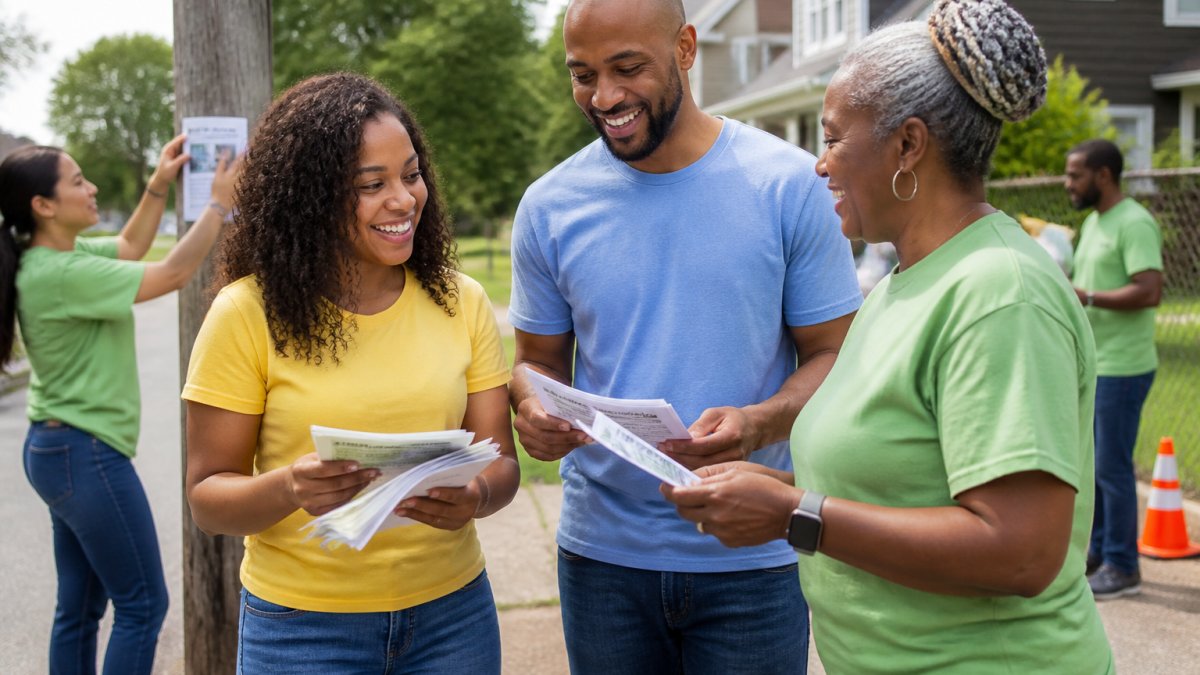
Email and direct outreach reaches your warmest audience first. Send personalized emails to past donors, volunteers, and supporters with the purpose, date, and registration details. Follow up 3 weeks and 1 week before.
Social media builds awareness. Post on Facebook, Instagram, and TikTok 2-3 times per week with behind-the-scenes content, volunteer stories, and countdown graphics, and encourage followers to share.
Community bulletin boards reach neighbors who don't follow you online. Post flyers at libraries, coffee shops, gyms, community centers, and faith organizations with a tear-off contact tab.
Local media outreach amplifies your message. Send a press release to local newspapers, radio stations, and community blogs 4-6 weeks before, and offer to interview a volunteer or beneficiary.
Word-of-mouth recruitment is still the most effective channel. Ask volunteers to personally invite 5-10 friends each; personal invitations convert at 3-5x the rate of impersonal promotion.
Track which promotion channels drive the most registrations. Double down on what works. Cut what doesn't.
Fundraising Products for Schools and Churches
Schools and churches often need fundraising that doesn't require heavy volunteer labor or complex logistics. Product-based fundraising lets supporters contribute by buying items they actually want.
At African American Expressions, we've partnered with schools and churches for over 34 years to provide culturally inspired fundraising products that supporters love. Our collection includes calendars, canvas art, stationery, and home décor that celebrate Black heritage and identity.
Here's why product fundraising works:
- Low upfront cost: No inventory to buy upfront, you take orders and deliver products.
- High profit margins: Programs like ours offer 40% commission on every sale, so more money reaches your mission.
- Easy volunteer engagement: Volunteers show products and take orders. No event logistics required.
- Extended selling window: Campaigns run 2-4 weeks, giving supporters multiple chances to purchase.
- Recurring revenue: Supporters who love the products order again next year.
Schools use fundraising products for athletics, arts programs, and classroom supplies. Churches use them for community outreach, building maintenance, and youth programs. The products serve double duty: they fund your mission and celebrate Black culture and pride.
Choose products your community actually wants. Generic merchandise sits in closets; meaningful, culturally relevant items get displayed and used.
Execute, Measure, and Retain Your Donors
Event day arrives. Set up early and test your sound system, donation collection, and registration table. Brief volunteers 30 minutes before guests arrive and assign clear roles: registration, refreshments, donations, cleanup.
During the event, focus on donor experience. Thank people for coming, explain how their contribution makes a difference, and make donating easy with multiple payment methods (cash, card, mobile, QR codes).
After the event, measure your results:
- Attendance
- Gross revenue
- Actual expenses
- Net proceeds
- Which promotion channels drove the most attendance
- Volunteer and attendee feedback
Document these metrics. Compare them to your original goal. Celebrate wins. Identify improvements for next year.
Most importantly: retain your donors. Send thank-you messages within 3-5 days with a photo or video, explain specifically how their donation will be used, and invite them to your next community fundraising event.
Donors who feel appreciated give again. Those who feel ignored don't.
Launching a community fundraising event requires clear purpose, realistic planning, and consistent execution.
Frequently Asked Questions
What makes a community fundraising event successful?
A successful community fundraising event combines a clear purpose, realistic fundraising goal, engaged volunteers, and strong promotion. Research shows 33% of donors prefer in-person fundraising events, and 27% of nonprofits host five or more events annually because they work. Success depends on knowing your target audience, selecting the right venue, recruiting committed volunteers, and following up with donors afterward. The best events balance revenue generation with genuine community connection.
How do I calculate break-even and net proceeds for my fundraising event?
Start by listing all expenses: venue rental, supplies, food and refreshments, promotion, insurance, and permits. Subtract total expenses from projected revenue (ticket sales, donations, sponsorships, and product sales). Your break-even point is when revenue equals expenses. For example, if expenses total $1,500 and you expect 200 attendees at $10 per ticket, you break even at 150 tickets. Anything above that is net proceeds. Plan conservatively, assume 70% of expected attendance and factor in a 10-15% contingency for unexpected costs.
What are the best community fundraising event ideas for schools and churches?
Effective formats include bake sales, silent auctions, community dinners, talent shows, car washes, and product sales. Schools and churches often see strong results with culturally meaningful events like heritage celebrations, benefit concerts, and craft fairs. Product-based fundraisers, selling calendars, stationery, or home decor items, allow supporters to contribute while receiving something tangible. The key is choosing an event format that aligns with your community's interests and your organization's capacity to execute it well.
How far in advance should I start planning a community fundraising event?
Plan 8-12 weeks ahead for a mid-sized event (100-300 attendees). This timeline allows you to secure a venue, recruit and train volunteers, arrange sponsorships, obtain permits and insurance, and execute a robust promotion campaign. For smaller events (under 100 people), 4-6 weeks is workable if your team is experienced. Larger or more complex events may need 16+ weeks. Starting early reduces stress, improves volunteer recruitment, and gives you time to adjust plans based on community feedback.