

Table of Contents
- Understanding African American Art Styles for Modern Interiors
- How to Choose Art for a Modern Home That Reflects Your Heritage
- Selecting Your Focal Point and Anchor Artwork
- Black Art Gallery Wall Ideas and Arrangement Techniques
- African American Living Room Decor: Room-by-Room Styling
- Coordinating Art with Your Color Palette and Furnishings
- Lighting, Preservation, and Practical Display Solutions
- Sourcing Authentic African American Art and Building Your Collection
- Frequently Asked Questions
Last Updated: October 12, 2026
Understanding African American Art Styles for Modern Interiors
Style African American art in your home by starting with the styles that resonate most with your heritage and aesthetic. African American art encompasses diverse movements, each with distinct visual language and cultural significance. Understanding these styles helps you select pieces that feel authentic to your space and values.
The most popular styles for modern homes include Harlem Renaissance art, which celebrates the cultural flowering of the 1920s-1930s with bold portraits and community themes. Afrofuturism blends African heritage with futuristic imagery, creating striking contemporary pieces. Folk art and quilting traditions honor ancestral craftsmanship. Abstract expressionism and Black Power art deliver strong visual impact through color and form.
Each style brings different energy to a room. Harlem Renaissance pieces work well in living spaces where you want warmth and historical connection. Afrofuturism suits contemporary minimalist interiors. Folk art and textiles add texture and authenticity. Abstract work creates visual drama without narrative weight.
How to Choose Art for a Modern Home That Reflects Your Heritage
Choosing art that reflects your heritage requires balancing personal meaning with design compatibility. The best pieces tell a story, either of your own journey or of the cultural traditions you honor.
Begin by asking yourself what aspects of African American heritage matter most to you. Are you drawn to historical figures and moments? Contemporary expressions of identity? Spiritual and ancestral themes? Your answer shapes which artists and styles to explore.
Next, evaluate how a piece makes you feel. Does it inspire you? Does it spark conversation? Does it feel like home? Art that creates emotional connection will anchor your space authentically. Avoid selecting pieces purely because they match your color scheme or fit a trend.
Quality matters. Look for work from established Black artists and emerging creators who invest in their craft. At African American Expressions, we curate pieces that honor artistic excellence and cultural authenticity. Check artist backgrounds, materials used, and production methods. Authentic work shows care in every detail.
Selecting Your Focal Point and Anchor Artwork
Every room needs a focal point, a piece that draws the eye and anchors the entire design. Your focal point artwork sets the tone for how other elements relate to the space.
Choose one significant piece as your anchor. This might be a large framed painting, a relief art sculpture, or a striking textile. The Harriet Tubman Relief Art is an excellent focal point choice for a modern home.

Your focal point should be the largest or most visually dominant piece in the room. Place it at eye level, centered on the wall where it naturally draws attention when you enter. This positioning makes the artwork the visual anchor that everything else supports.
Consider scale carefully. A small piece on a large wall looks lost. A piece that's too large overwhelms a modest room. Measure your wall space and choose accordingly. Most focal point pieces work best on walls at least 8 feet wide.
Black Art Gallery Wall Ideas and Arrangement Techniques
A gallery wall displays multiple pieces in a cohesive arrangement. This approach works beautifully when you have several smaller pieces or want to create a dynamic visual narrative.
Planning Your Layout and Spacing
Start by laying out your pieces on the floor before hanging anything. Arrange them in different configurations to find what feels balanced. Common layouts include grid patterns (evenly spaced pieces of similar size), salon-style arrangements (varied sizes with intentional spacing), or linear layouts (pieces in a horizontal or vertical line).
Spacing between pieces should be consistent, typically 2 to 3 inches apart. This creates visual rhythm and prevents the wall from feeling cluttered. Use painter's tape to mark positions on the wall before drilling holes. Measure twice, hang once.
Consider the overall shape of your arrangement. Does it form a rectangle, square, or organic cluster? The shape should complement your room's architecture. A tall, narrow arrangement suits hallways. A horizontal arrangement works above sofas or dressers.
Mixing Frame Styles and Sizes
Varying frame styles and sizes creates visual interest while maintaining cohesion. You might combine wood frames, metal frames, and mats of different colors. The key is intentional variety, not random mixing.
Choose a unifying element to tie different frames together. This might be a consistent mat color, similar frame width, or matching accent details.
Odd numbers of pieces (3, 5, 7) tend to feel more balanced than even numbers. If you're mixing sizes, place larger pieces toward the center and smaller ones around the edges. This creates visual weight distribution that feels natural.
African American Living Room Decor: Room-by-Room Styling
Your living room is where heritage art makes the strongest statement. This is your gathering space, your expression of identity, and often the first room guests see.
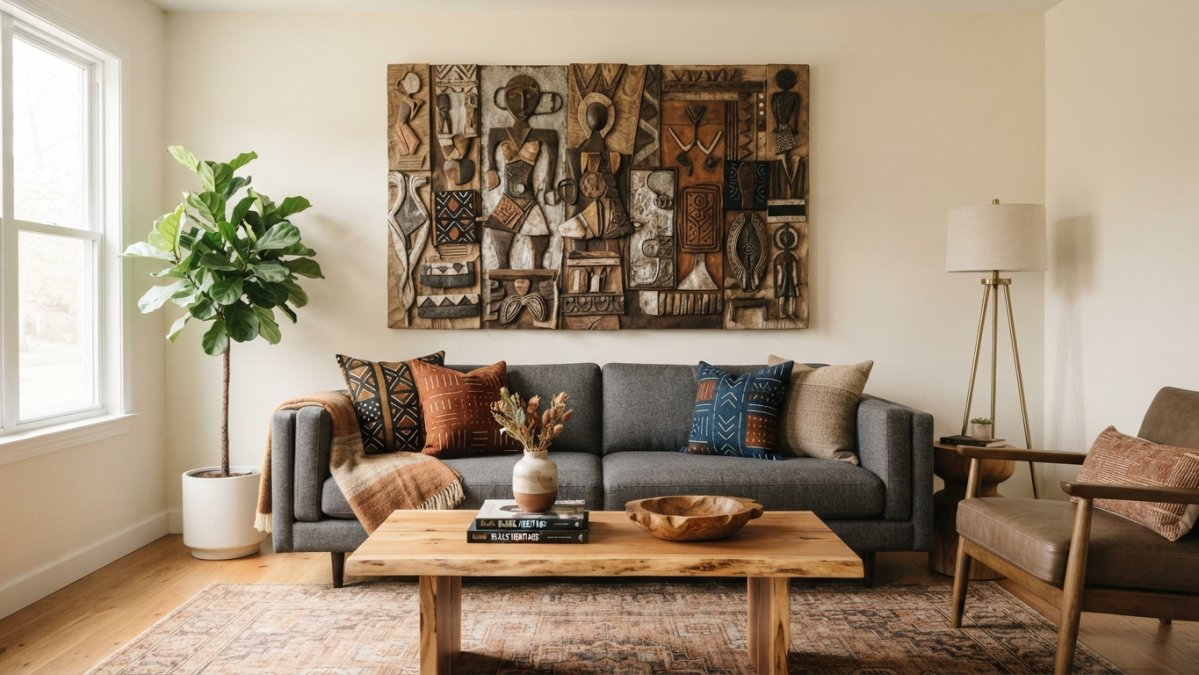
Living Rooms: Creating Visual Balance and Negative Space
Start with your focal point artwork positioned above the sofa or on the wall facing the main seating area. This placement makes it the natural visual anchor of the room.
Complement your focal point with smaller pieces on adjacent walls or shelves. These supporting pieces should relate visually or thematically to your main artwork without competing for attention.
Balance artwork with furniture and accessories. If your art is bold and colorful, use furniture in neutral tones. If your art is subtle, you can introduce more pattern through pillows, rugs, and textiles. The goal is harmony, not visual competition.
Layer textures through accessories. Add throw pillows in complementary colors, a woven rug, and natural wood side tables. These elements work together to create a curated, intentional space that celebrates both heritage and contemporary design.
Bedrooms and Hallways: Scale and Proportion
Bedrooms call for a more intimate approach. A medium-sized piece above the bed creates focus without overwhelming the space. Hallways work beautifully for gallery walls or series of smaller pieces that tell a visual story as people move through your home.
In bedrooms, consider pieces that evoke calm and reflection. Contemporary portraiture or spiritual-themed work often suits these spaces. Scale the artwork to the wall, a small bedroom needs a proportionally smaller focal piece than a spacious master bedroom.
Hallways are perfect for creating a visual journey. Arrange pieces in a line that guides the eye down the corridor. Use consistent spacing and frame styles for cohesion. This creates a gallery experience within your home.
Coordinating Art with Your Color Palette and Furnishings
Your artwork should dialogue with your room's existing colors and furnishings, not fight against them.
Identify your room's dominant colors, wall color, major furniture pieces, large rugs. Then choose artwork that either complements or intentionally contrasts with these colors. If your room features warm earth tones, African American art with gold, rust, and deep browns creates harmony. If your space is minimalist with whites and grays, vibrant artwork creates striking contrast.
Consider the mood you want to create. Bold, saturated colors energize a space. Muted, earthy tones create calm. Contemporary minimalist interiors benefit from artwork with clean lines and limited color palettes. Eclectic spaces can handle busier, more complex pieces.
Match frame finishes to your furniture metals. If your lamps have brass bases, use brass-toned frames. If your furniture features matte black legs, choose black frames. This creates visual continuity that ties the room together.
Lighting, Preservation, and Practical Display Solutions
Proper lighting transforms how artwork appears and protects it from damage. Preservation ensures your pieces remain beautiful for years.
Use dedicated picture lights or directional spotlights to illuminate artwork without creating glare. Avoid placing art in direct sunlight, which fades colors over time. If your artwork gets afternoon sun, consider UV-protective glass or acrylic for framing.
Humidity and temperature fluctuations damage art. Keep rooms between 45-55% humidity and maintain stable temperatures. Avoid hanging art directly above heating vents or air conditioning units. These environmental controls preserve both canvas and framing materials.
For valuable or sentimental pieces, invest in professional framing with acid-free materials. This prevents deterioration and shows respect for the artwork's cultural and artistic significance.
Renter-friendly options include command strips and adhesive hooks that hold art securely without wall damage. These solutions work well for gallery walls and allow you to adjust arrangements without commitment.
| Display Method | Best For | Durability | Ease of Change |
|---|---|---|---|
| Professional framing | Valuable, sentimental pieces | Excellent | Low |
| Floating frames | Modern, minimalist spaces | Very good | Medium |
| Command strips | Renters, frequent changes | Good | High |
| Gallery wall systems | Multiple pieces, flexibility | Good | High |
Sourcing Authentic African American Art and Building Your Collection
Building a meaningful collection takes time and intentional choices. Start with one or two pieces that genuinely move you, then expand thoughtfully.
Research artists and their backgrounds. Authentic African American art comes from artists with genuine connection to the traditions and communities they represent. Support both established artists and emerging creators. Read artist statements and learn their stories, this deepens your appreciation and connection to the work.
Galleries, art fairs, and online platforms like African American Expressions offer curated selections. When you purchase from Black-owned businesses, you support artists directly and contribute to cultural economic strength.
Budget for quality over quantity. One exceptional piece beats five mediocre ones. As your collection grows, pieces will speak to each other, creating a visual narrative of your values and heritage.
Building a home that honors your heritage through art is a journey of discovery. Start with pieces that speak to your heart, arrange them thoughtfully, and let your space evolve.
Frequently Asked Questions
How do you style African American art in a minimalist modern home without it looking out of place?
The key is treating your artwork as the statement piece in a clean, uncluttered space. Choose one bold focal-point piece, like a relief art work or contemporary portrait, and let it anchor the room with plenty of negative space around it. Pair vibrant or textured artwork with neutral walls and simple furniture with clean lines. This approach honors the art's cultural significance while maintaining modern aesthetics. Textiles like throw pillows or a woven accent can echo the artwork's colors without competing for attention.
What's the best way to create a Black art gallery wall in a small space?
Start with a tight, cohesive arrangement rather than spreading pieces across the wall. Use consistent frame styles or a unified color story to create visual harmony. Measure your wall carefully before hanging, aim for 2-3 inches between frames. Choose a mix of sizes, but keep the overall composition compact and balanced. Odd numbers of pieces (3, 5, or 7) tend to feel more intentional. A smaller gallery wall, even just 3-4 pieces, can have more impact than a scattered arrangement and respects the room's proportions.
How do I choose the right size artwork for my wall and furniture?
A general rule: artwork should be 50-75% the width of the furniture below it. For a sofa, that might mean a piece 4-6 feet wide. In hallways or above smaller surfaces, go smaller. Stand back from your space and imagine the piece in place, it should feel anchored, not lost or overwhelming. For relief art pieces like the Harriet Tubman Relief Art (39" x 29"), this size works beautifully as a solo focal point in most living rooms or bedrooms, creating presence without dominating the space.
How do I coordinate African American art with my existing color palette and furniture?
Pull 2-3 colors from your artwork and repeat them in textiles, accessories, or accent walls. If your piece features deep jewel tones or vibrant colors, echo those in throw pillows, area rugs, or wall paint rather than trying to match exactly. Pair traditional or contemporary African American art with modern furniture by using natural materials, wood, linen, leather, that complement organic forms found in many pieces. Let the art inform your color story, then build the room around it for a cohesive, intentional look.