

Table of Contents
- Why Holiday Shipping Returns Spike and What It Costs
- Create a Clear Holiday Return Policy That Customers Find Easily
- How to Return a Package: Make the Process Simple for Customers
- Generate and Track Return Shipping Labels
- Set Up Return Tracking So Customers Know What's Happening
- Automate Returns Processing to Reduce Operational Burden
- Reduce Avoidable Returns Through Accurate Product Descriptions
- Negotiate Carrier Rates and Manage Return Shipping Costs
- Frequently Asked Questions
Last Updated: October 21, 2026
Why Holiday Shipping Returns Spike and What It Costs
According to Pierbridge's analysis of retail return patterns, consumers initiate returns at rates that spike significantly during the post-holiday period.
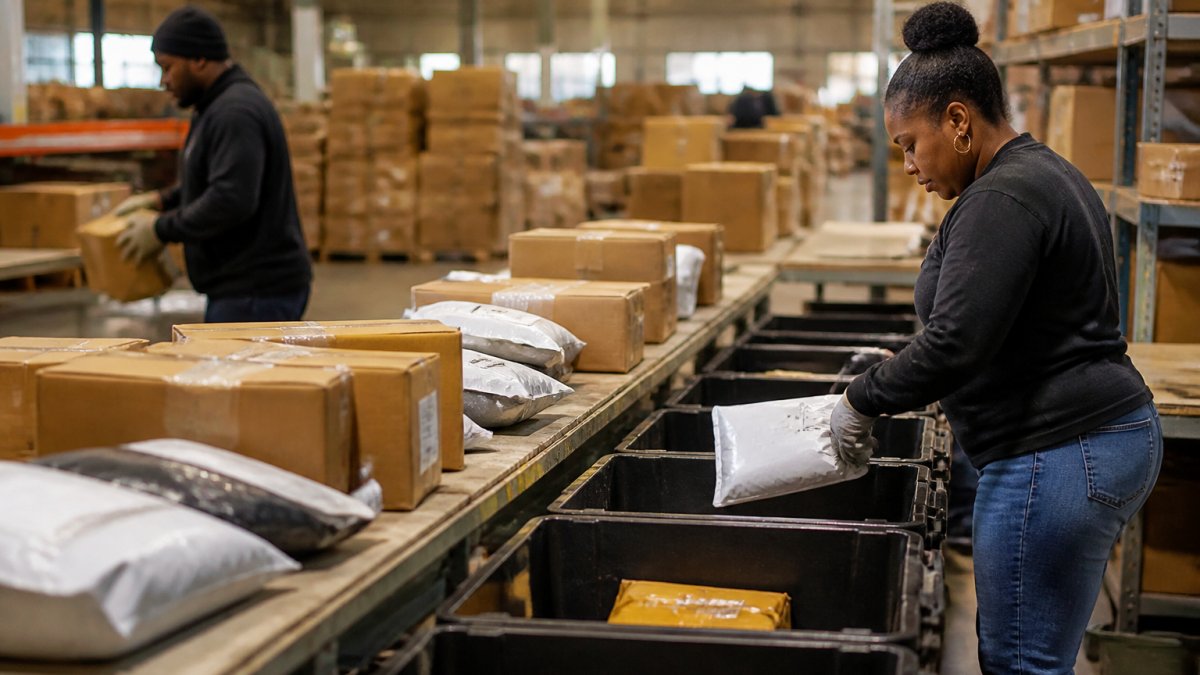
The cost goes beyond refunds: your team must manage incoming packages, verify items, update inventory, arrange return shipping, and communicate with customers.
At African American Expressions, we understand how critical this period is for e-commerce and retail operations, including our fundraising partners.
Create a Clear Holiday Return Policy That Customers Find Easily
Your return policy is the first line of defense.
Make your policy obvious:
- Display it prominently on every product page
- Include it in order confirmation emails
- Add a dedicated returns page linked from your homepage footer
Extend your holiday return window beyond your standard policy, many retailers offer 30 to 60 days for holiday purchases. State deadlines clearly to avoid confusion.
Include these key details in your policy:
- Exact return deadline for holiday purchases
- What condition items must be in (tags attached, unused, etc.)
- Whether original packaging is required
Test your policy by reading it yourself. If you get confused, customers will too. Simplify until anyone can understand it in under two minutes.
How to Return a Package: Make the Process Simple for Customers
Customers should be able to start a return in under five minutes. The more steps you add, the more returns you lose. Some customers will simply keep items rather than navigate a complicated process.
Provide Multiple Drop-Off Options
Offer several ways to return items so customers can choose what works for them.
Common drop-off options include:
- USPS locations (customers can drop off at any post office)
- UPS stores and UPS drop boxes
- FedEx locations
More options raise your return completion rate, some customers have a UPS store nearby but no USPS office, while others prefer a local pharmacy or retail partner.
Offer Clear Return Instructions
Step-by-step instructions prevent confusion and reduce support inquiries. Write them for someone who has never returned anything before.
Your return instructions should include:
- How to initiate the return (online form, email, phone number)
- What information they need (order number, reason for return)
- Where to print the shipping label
Include a visual guide if possible, screenshots or photos showing exactly where to click help customers complete the process faster.
Generate and Track Return Shipping Labels
Return shipping labels are the backbone of your returns operation.
Generate labels automatically when a return is initiated and email the PDF so customers can print it at home or on their phone.
Your label should include:
- Your business's return address
- A unique return authorization number (RMA)
- Barcode for tracking
Unique return authorization numbers are critical: they connect each incoming package to the original order, making sorting and processing much faster.
Make the label prominent in your return email, bold text and clear formatting so customers see it immediately.
Set Up Return Tracking So Customers Know What's Happening
Customers want visibility into whether their return is in transit, has arrived, and is being processed. Tracking reduces support inquiries and builds trust.
Provide tracking information in two ways:
Automated email updates: Send an email when the return label is created, when the carrier scans the package, and when it arrives at your facility. Keep messages brief and include the tracking number prominently.
Self-service portal: Let customers log into their account and check return status anytime.
The tracking portal should display:
- Current status of the return
- Estimated delivery date to your facility
- Expected refund date
This transparency prevents frustrated customers from calling or emailing repeatedly. They can see progress themselves and understand what to expect.
Automate Returns Processing to Reduce Operational Burden
Manual returns processing is slow and error-prone: your team spends hours matching packages to orders, updating inventory, and processing refunds.
According to WeSupply Labs' recommendations for holiday returns management, automation dramatically reduces the operational burden of handling return-related tasks during peak seasons. The right systems let your team focus on exceptions rather than routine work.
Become a part of our AAE family and start fundraising today! →
Map the End-to-End Return Workflow First
Before you buy software, write down every step a return passes through and assign an owner. A workable holiday workflow looks like this:
- Return authorization, Customer submits a request through the return portal or support channel. Owner: customer service or the returns portal rules engine. Output: an approved RMA with a reason code.
- Label generation, The system issues a prepaid label tied to the RMA. Owner: returns platform. Output: a printable or QR-code label with tracking.
- In-transit tracking, Carrier scans update the return status automatically. Owner: carrier integration. Output: status visible to the customer and to your team.
- Receiving and intake, The warehouse scans the RMA barcode on arrival. Owner: receiving team. Output: package logged against the original order.
- Inspection and disposition, Staff verify condition, completeness, and reason code, then route the item to restock, refurbish, liquidate, donate, or recycle. Owner: returns inspector. Output: a disposition decision recorded in the system.
- Refund or exchange, The system triggers the refund or exchange per policy once inspection clears. Owner: finance or the automated rules engine. Output: customer notification and ledger entry.
- Restock and resale, Inventory updates in real time so the item is sellable again. Owner: inventory or merchandising team. Output: updated stock counts.
- Reporting and review, Weekly review of cycle time, cost per return, and exception rates. Owner: operations manager. Output: process fixes for the next peak.
Share this workflow with every team that touches a return, when everyone knows who owns each step, handoffs stop falling through the cracks.
Use Automation to Enforce the Workflow
Automation is most valuable when it enforces the rules you defined above. Practical uses include:
- Return portals that only accept returns inside the holiday window and only for eligible items, which cuts disputes before they start.
- Automated label generation tied to the RMA so every package that arrives can be matched to an order by barcode.
- Routing rules that send high-value or fraud-flagged returns to a manual inspection queue and route routine returns straight through.
Start with automated label generation and barcode matching. Those two features alone remove most of the manual matching work. Add inventory sync and automated refunds as volume grows.
Design for Exceptions, Not Just the Happy Path
Most returns follow the happy path, but cost and frustration live in the exceptions. Build explicit rules for:
- Items that arrive damaged or incomplete
- Returns without an RMA or with a mismatched RMA
- Returns that arrive after the holiday window closes
Give each exception a named owner and a target resolution time. A common pattern is a 24-hour turnaround on exception review during peak weeks so customers aren't left waiting while a package sits in a holding area.
Integrate With Your Existing Stack
Choose tools that integrate with your e-commerce platform, warehouse management system, and payment processor. Disconnected systems create more work, not less. Your returns software should pull order data automatically, push inventory updates in real time, and write refund records back to accounting without a manual export.
Keep a Human in the Loop Where It Matters
Automation should not mean abdicating judgment. Keep people on high-value inspections, fraud review, and refunds above a threshold you define, automate the routine 80% so your team can focus on the 20% that protects margin and customer trust.
Reduce Avoidable Returns Through Accurate Product Descriptions
Many returns happen because the product doesn't match customer expectations.
Write descriptions that answer common customer questions:
- What is it made of?
- What are the exact dimensions?
- What colors or styles are available?
Use high-quality photos from multiple angles. Show the product in use if possible.
For African American Expressions products, calendars, canvas art, stationery, and home décor, accurate descriptions are especially important.
Include customer reviews and testimonials in product listings. Real customers sharing their experience provides social proof and sets accurate expectations.
Negotiate Carrier Rates and Manage Return Shipping Costs
Return shipping costs add up fast during peak seasons. A single return might cost $5 to $15 depending on weight, distance, and carrier; multiply that by hundreds of returns and margins shrink quickly. The fix isn't just negotiating a lower rate, it's measuring what each return actually costs and using that number to make policy, carrier, and automation decisions.
Negotiate Volume Discounts With Carriers
Negotiate volume discounts with carriers. If you're shipping significant volume, especially during the holiday season, carriers will work with you on rates.
Key points to discuss:
- Volume commitments (how many shipments per month)
- Weight-based discounts (lighter packages cost less)
- Zone-based pricing (returns to your facility might qualify for better rates)
Compare carriers for return shipments specifically. Sometimes USPS is cheapest for lightweight returns while UPS or FedEx offers better rates for heavier items.
Consider offering customers a choice of carriers. Some prefer USPS, others UPS or FedEx.
Separate Return Shipping From Outbound Shipping in Your Books
Track return shipping costs separately from outbound shipping. Understanding this expense helps you make better decisions about return policies and carrier selection. Some businesses factor return shipping into initial pricing to cover the cost upfront.
At minimum, track these line items separately:
- Outbound shipping paid by the customer
- Outbound shipping subsidized by you
- Return label cost
When these are lumped together, return shipping looks cheaper than it is and you underinvest in the fixes that would actually reduce it.
Measure Return Performance With a Small Set of KPIs
You can't improve what you don't measure. Define a handful of metrics and review them weekly during peak season and monthly afterward. Common measures include:
- Return cycle time, Days from the customer initiating a return to the refund being issued. Shorter is better, and it is the metric customers feel most directly.
- Cost per return, Total return-related cost divided by the number of returns processed. Track it by carrier and by reason code so you can see where the money goes.
- Refund speed, Average time from package receipt to refund. Fast refunds reduce support contacts and improve repeat purchase rates.
Set a baseline before peak season, then compare against it after. Even a modest improvement in cycle time and cost per return compounds across hundreds of holiday returns.
Use Cost Data to Choose the Right Trade-Off
Every returns decision is a trade-off. Use your cost data to make it deliberately:
- Free returns vs. paid returns, Free returns raise completion rates and customer satisfaction but shift cost to you. Paid returns reduce volume but can push customers to keep items they do not want.
- Refund vs. exchange, Exchanges keep revenue and reduce disposition cost, but they require inventory to be available and add a second shipment. Offer exchanges first in the return portal and measure the conversion rate.
- Restock vs. liquidate, Restocking is cheapest when the item is sellable and in season. Post-holiday, seasonal items may be cheaper to liquidate or donate than to hold.
Review and Renegotiate After the Season
After the holiday rush, pull your carrier invoices and KPI dashboard together. Compare actual return volume and cost against what you negotiated, then use that data in your next carrier conversation, actual volume is a stronger negotiating position than projected volume. Feed the lessons back into your policy, packaging, and product descriptions so next season starts from a better baseline.
Frequently Asked Questions
How long does a holiday shipping return usually take to process?
Processing time depends on your operational capacity and return volume. Most retailers aim for 5-10 business days from when a return arrives at the warehouse. During peak holiday season, processing can extend to 2-3 weeks if you lack automation. Automation tools and clear workflows reduce this significantly. Set customer expectations upfront in your return policy so they know when to expect a refund or exchange.
What should you do if a holiday return package is delayed or lost?
First, check return tracking to confirm the package status with your carrier. If tracking shows it's stuck, contact the carrier within 7-10 days of the delay. For lost packages, file a claim with the carrier and provide the customer with proof of submission. Offer a replacement or refund while the claim is pending to maintain trust. Keep records of all delayed and lost returns to identify carrier patterns and renegotiate rates if needed.
Can a gift be returned without a receipt?
Yes, most retailers accept gift returns without a receipt if the customer has a shipping label or order confirmation email showing the original purchase. Clarify this in your holiday return policy upfront. Require order number, email address, or the original shipping label to verify the purchase. This reduces return fraud while accommodating gift recipients who don't have physical receipts. Make the policy visible on your website and in shipping confirmation emails.
How can businesses reduce shipping costs on holiday returns?
Negotiate prepaid return shipping rates with major carriers (USPS, UPS, FedEx) well before the holiday season. Prepaid labels cost less per unit than customer-paid returns. Offer incentives for lower-cost return methods, such as in-store drop-off or regional carrier pickups. Use return management software to consolidate shipments and reduce per-package fees. Track return costs by carrier and method to identify the most economical options for your business.