

Table of Contents
- How to Clean Canvas Prints Without Damaging Them
- The Best Protective Spray for Canvas Art and Other Sealants
- Canvas Print Longevity Tips: Light, Humidity, and Air
- Storage and Transport: Protecting Canvas Art Prints in Transit
- Repairing Minor Damage and Maintaining Frames
- Professional Restoration vs. DIY: When to Call an Expert
- Frequently Asked Questions
Last Updated: October 1, 2026
How to Clean Canvas Prints Without Damaging Them
Canvas prints hold up well when you clean them the right way. The key is to dust often, use gentle tools, and keep liquids to a minimum. This guide from African American Expressions walks through how to care for canvas art prints so your pieces stay vibrant for years.
Dusting and Routine Surface Care
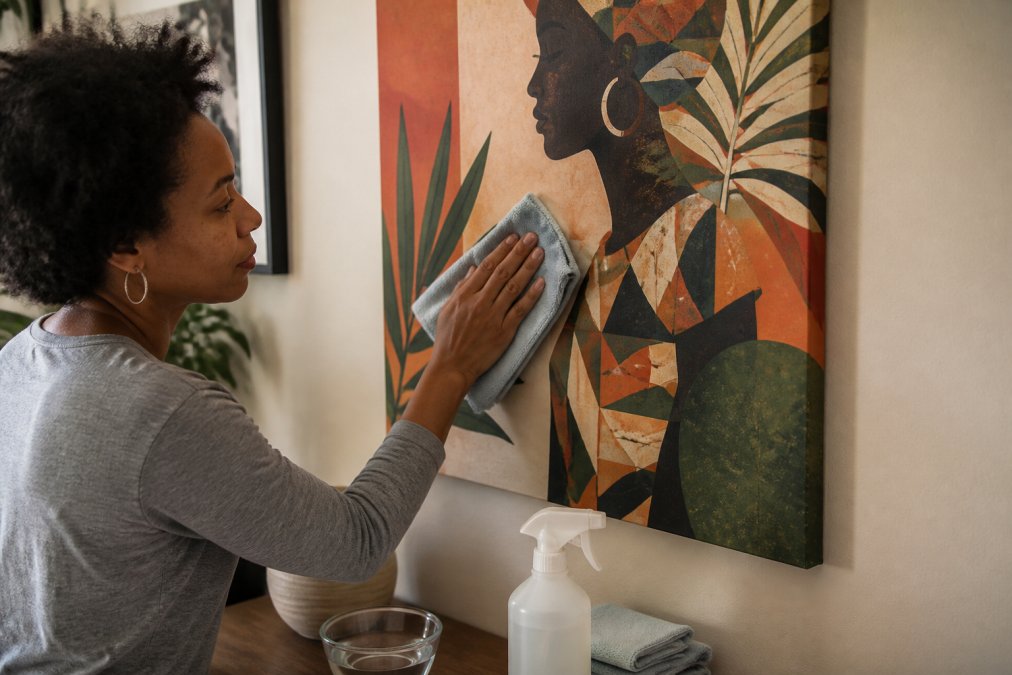
Dust your canvas prints every two to four weeks with a soft, dry microfiber cloth or a soft-bristled brush. Work in light strokes from top to bottom. This removes surface dust before it settles into the canvas texture.
A few habits keep the surface clean:
- Dust before you vacuum a room, not after
- Support the back of the canvas with one hand while you wipe
- Never press hard or scrub in circles
- Keep the cloth dry unless you're treating a stain
Handling Stains and Discoloration Safely
For most stains, a lightly damp cloth with plain water is enough. Wipe gently, then let the area air dry. Never soak the canvas.
The Best Protective Spray for Canvas Art and Other Sealants
The best protective spray for canvas art is a UV-resistant, non-yellowing sealant formulated for canvas or giclee prints. Look for an archival-quality product labeled as non-yellowing and UV-stabilized. It shields the surface from dust, moisture, and UV exposure without changing the canvas texture.
How Sealants Actually Work
A protective coating forms a thin sacrificial layer over the ink and canvas weave. When UV light, moisture, or airborne grime hits the print, that layer absorbs the damage instead of the image. Over time the coating itself degrades, which is why reapplication every few years is common in bright rooms.
There are three main types you'll encounter:
- Aerosol UV sprays, fast to apply, even coverage, but easy to over-apply and can leave a slight sheen if you spray too close.
- Brush-on liquid varnishes, more control and a thicker film, but brush strokes can show on textured canvas if you're not careful.
- Water-based acrylic sealants, low odor, flexible, and less likely to yellow than solvent-based formulas.
When to Seal and When to Skip It
Seal a print when it hangs in a bright room, a hallway, or any spot with heavy foot traffic. Skip sealing when the print already has a factory coating or hangs in a low-light, low-dust space.
Here's a quick way to decide:
| Situation | Seal It? | Why |
|---|---|---|
| Bright room with direct sun | Yes | Blocks UV fading |
| Factory-coated print | No | Already protected |
| Kitchen or bathroom | Yes | Guards against moisture |
| Climate-controlled gallery wall | No | Low risk, low reward |
| High-traffic hallway | Yes | Resists dust and touch |
| Unsealed giclee in a sunny room | Yes | Ink is most vulnerable without a barrier |
Application Mistakes That Ruin Prints
Most sealant failures come from application, not the product:
- Spraying too close. Hold the can 10-12 inches away and use light, overlapping passes. A heavy coat pools in the weave and dries unevenly.
- Skipping the test patch. Always test on the back edge first. Some inks react to solvents and shift color.
- Sealing a dirty print. Dust and oils get locked under the coating permanently. Clean first, seal second.
- Applying in humid conditions. High humidity traps moisture under the film and can cause clouding.
Apply in thin coats outdoors or in a well-ventilated area, and let each coat cure fully before adding another. Two thin coats beat one heavy coat every time.
The Long-Term Trade-Off
Sealing isn't free protection. A coating adds a layer between viewers and the artwork, and some collectors avoid it on signed or limited-edition pieces because it can complicate future conservation. If the print has resale or sentimental value, weigh the fading protection against the loss of a pristine surface. For everyday decor, sealing is a low-risk way to extend color life by years.
Canvas Print Longevity Tips: Light, Humidity, and Air
Longevity comes down to three things: light, humidity, and airflow. Control those, and a canvas print can look sharp for decades.
A few rules to follow:
- Keep humidity steady, ideally between 40% and 50%
- Avoid bathrooms, basements, and attics
- Leave a small gap behind the canvas for air circulation
- Use curtains or UV-filtering glass near windows
- Keep prints away from heating vents and radiators
Storage and Transport: Protecting Canvas Art Prints in Transit
Store canvas prints flat or upright in a rigid box, never stacked face-to-face. Place acid-free paper between surfaces. Wrap each piece in bubble wrap, then seal it in a storage box that keeps out dust and moisture.
For transport, follow these steps:
- Wrap the canvas in acid-free paper or a clean cotton sheet
- Add corner protectors to guard the stretcher bars
- Cushion all sides with bubble wrap
- Place the wrapped print in a rigid, snug box
- Label it "Fragile" and "This Side Up"
Climate-Specific Storage: Humidity vs. Dry Air
Most guides give one set of storage rules. In practice, the right approach depends on where you live, and this is where canvas care gets specific.
-
Add silica gel packets to storage boxes and swap them every two to three months
-
Never store canvas in a garage, shed, or basement without a dehumidifier
-
Keep a small gap between the canvas and the box wall so air can move
-
Watch for a musty smell, it's the first sign of mold before you see spots
-
Canvas fibers dry out and become brittle, so avoid storing near heating vents or in hot attics
-
A room humidifier set to 40-45% protects both the canvas and the stretcher bars
-
Wood stretcher bars shrink in dry air and can pull the canvas loose at the corners
-
Skip silica packets, they'll pull out what little moisture remains
In mixed or seasonal climates:
- Store in an interior closet rather than an exterior wall or garage
- Check stored prints at every season change, not once a year
- A cheap hygrometer (under $15 at most hardware stores) tells you what your storage space is actually doing
Long-Term Storage vs. Short-Term Storage
The rules change depending on how long the print will be boxed:
| Duration | Wrapping | Environment |
|---|---|---|
| Under 1 month | Bubble wrap + rigid box | Any climate-controlled room |
| 1-6 months | Acid-free paper + bubble wrap | Interior closet, stable humidity |
| 6+ months | Acid-free paper, no plastic, flat storage | Climate-controlled, checked quarterly |
Moving Day: What Changes
A move adds vibration, temperature swings, and handling that normal storage doesn't. For a move:
- Use a dedicated art box or build a custom crate for anything larger than 24 inches
- Never let a canvas ride flat in a packed trunk where other boxes can shift onto it
- Transport in the passenger cabin if the piece is valuable, trunk heat can exceed 120°F in summer
- Unpack within 24 hours of arrival so the canvas can re-acclimate before hanging
Repairing Minor Damage and Maintaining Frames
Small dents, loose corners, and frame scuffs are fixable at home. Most major damage is not.
Frame maintenance matters too:
- Dust the frame with a dry cloth weekly
- Tighten loose hanging hardware every few months
- Touch up wood scratches with a matching stain pen
- Check for moisture stains behind the frame
Professional Restoration vs. DIY: When to Call an Expert
Call a professional for tears, water damage, mold, or flaking paint. These problems need a conservator with the right tools and materials. DIY fixes usually make them worse.
Try DIY first for:
- Minor dents and dimples
- Slightly loose corners
- Dust and light surface grime
- Frame scuffs and loose hardware
Call a pro for:
- Rips or punctures in the canvas
- Water stains or mold growth
- Flaking, cracking, or peeling paint
- Warped or broken stretcher bars
- Valuable or signed original pieces
Frequently Asked Questions
How long do canvas art prints last?
Canvas art prints can last decades when cared for properly. The global wall art market, valued at $25.2 billion in 2026, reflects how many people invest in canvas pieces. Longevity depends on display conditions: stable temperature, low humidity, and no direct sunlight. Prints with protective varnish or UV-resistant coatings resist dust and fading better. Following a regular maintenance routine that includes gentle dusting and moisture control keeps colors vibrant and the canvas texture intact for years.
What is the best way to clean a canvas print without damaging it?
Start by dusting with a soft, dry microfiber cloth or a soft-bristled brush. For grime, lightly dampen a cloth with distilled water and wipe gently, testing a small area first. Avoid household cleaners, abrasive materials, and chemical cleaners, which can damage the protective varnish or canvas. If a mild detergent is needed for stubborn stains, dilute it heavily and test in an inconspicuous spot. Never soak the canvas or apply pressure that could stretch or sag the fabric.
Should I seal my canvas art prints, and if so, with what?
Sealing is optional if your print already has a protective coating or varnish from the manufacturer. If you choose to seal, use a spray designed specifically for canvas art, such as a UV-protective or archival-quality spray. Apply in thin, even coats in a well-ventilated area, following the product instructions. Avoid generic craft sealants that may yellow or crack. For valuable or giclee prints, consult a professional conservator before applying any spray, since some coatings can alter the canvas texture or sheen.
What environmental factors cause canvas prints to fade?
Direct sunlight and UV exposure are the leading causes of fading in canvas art prints. Humidity swings cause warping, sagging, and mold growth, while dust buildup dulls colors over time. Display canvas in a climate-controlled space away from windows, radiators, and air vents. Keep humidity steady and ensure air circulation. Rotating prints out of direct light every few months, or using UV-filtering glass if framed, extends the life of the artwork significantly.
Caring for canvas art takes a few minutes a month, but the payoff lasts for years. African American Expressions has spent 34 years helping families and organizations find meaningful, culturally inspired decor, and our fundraising program lets schools and churches earn 40% on every sale. Browse our canvas collection, or start a fundraiser today and bring both beauty and support to your community.