

Table of Contents
- The Real Cost of Printable vs. Pre-Made Decor
- DIY Black History Month Classroom Decor: A Teacher's Time Investment
- Professional Black Heritage Wall Art: When Printables Fall Short
- Reusability and Sustainability: The Long-Term Value
- Accessibility and Inclusivity in Printable Decor
- Verdict: Is Printable Black History Month 2026 Decor Worth It?
- Frequently Asked Questions
Last Updated: September 25, 2026
The Real Cost of Printable vs. Pre-Made Decor
The short answer is yes, but conditionally. Printable Black History Month 2026 decor is worth it when you need fast, low-cost coverage across a classroom or hallway and you have the time to print, trim, and mount it yourself. It stops being worth it when your time is worth more than the savings, or when the display needs to last beyond February.

At African American Expressions, we have watched this trade-off play out for 34 years, and the math is less obvious than the $4.95 price tag on a downloadable kit suggests. The 2026 theme, "A Century of Black History Commemorations," marks 100 years since the first national observance of Black history, according to History.com's coverage of the centennial. That milestone is driving demand for historical displays, which means more printable kits competing for your download.
Breaking Down the Digital Download Budget
A typical printable kit costs $3 to $10 and covers one bulletin board. Pre-made border rolls, posters, and cutouts run $15 to $60 for the same wall space. On paper, printables win by a wide margin.
The gap narrows once you add supplies. Cardstock, ink, laminating pouches, and adhesive vinyl typically add $10 to $25 per project. Print at a library or copy shop and the per-page cost climbs further.
| Item | Printable Route | Pre-Made Route |
|---|---|---|
| Base decor | $3-$10 download | $15-$60 retail |
| Paper and ink | $10-$25 | Included |
| Lamination | $5-$15 | Often pre-coated |
| Setup time | 2-4 hours | 30 minutes |
| Reusable next year | Yes, if laminated | Yes |
The Time-to-Money Conversion Most Guides Skip
Here is the neutral comparison the marketplaces will not give you. Take the printable route at its best case: a $5 download, $15 in supplies, and three hours of prep. That is $20 out of pocket plus three hours of your labor. The pre-made route at its best case is a $40 kit that mounts in 30 minutes.
The printable route only wins if your three hours are worth less than the $20 you saved. Run the arithmetic on an hourly prep rate and the picture sharpens fast. At a $15 per hour opportunity cost, three hours of DIY prep is $45 in labor, which pushes the true printable cost to $65 against a $40 pre-made kit. At a $10 per hour rate, the printable route lands near $50 and the gap nearly closes. The break-even sits around $6 to $7 per hour of prep time, and most working educators value their prep hours well above that. Investing in durable materials often shifts the long-term value of canvas prints into a more favorable light for those who prefer permanent displays over temporary paper decorations.
That is the mechanism competitors bury: printables are not cheaper, they are cheaper if you discount your own time to zero.
Hidden Costs of DIY Printing
Ink is the line item most teachers forget. A full-color 24-page kit can drain a home cartridge, and replacement sets run $30 to $50. School printers often cap color printing or charge per page, which erases the savings entirely.
When Pre-Made Actually Costs Less
Pre-made decor wins outright in three scenarios. First, when your prep window is under a week and you cannot absorb a multi-hour cutting session. Second, when you do not own a color printer or laminator, because the startup costs erase the download savings on a single project. Third, when the display needs to look uniform across a long hallway, since matching pre-made border rolls and cutouts produce a cleaner line than trimming dozens of individual pages by hand.
DIY Black History Month Classroom Decor: A Teacher's Time Investment
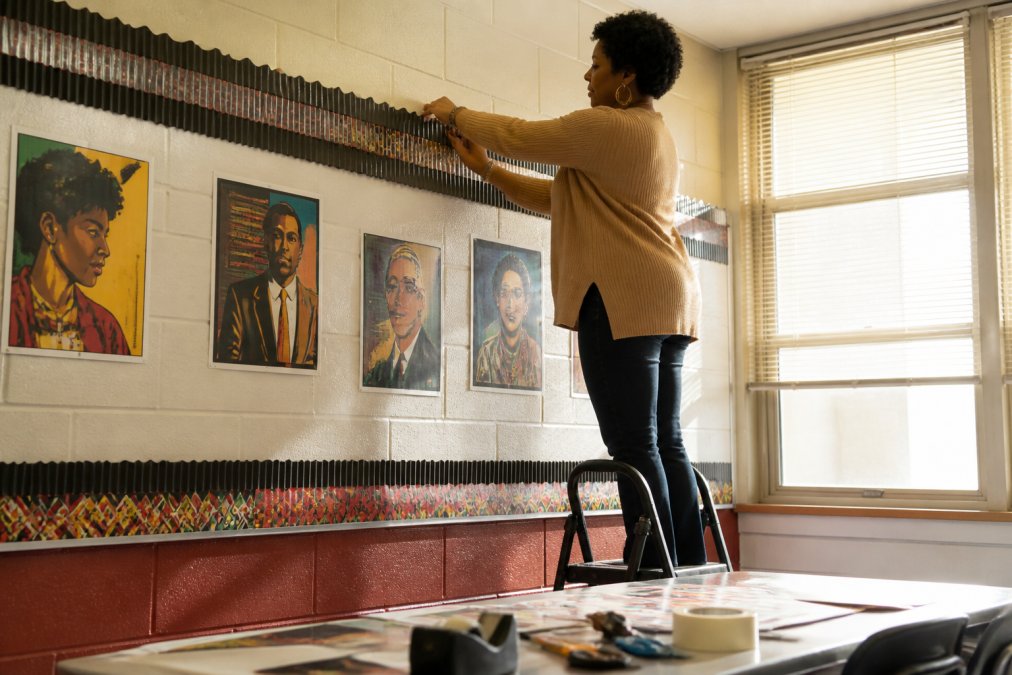
The real currency in DIY Black History Month classroom decor is time, not money. A single bulletin board takes two to four hours to print, trim, laminate, cut again, and mount. Multiply that across a hallway display and you have lost a weekend.
Professional Black Heritage Wall Art: When Printables Fall Short
Professional Black heritage wall art solves a problem printables cannot: permanence. A printed poster communicates a temporary celebration. A framed piece communicates that the heritage belongs in the room year-round.

Reusability and Sustainability: The Long-Term Value
Reusability flips the cost-benefit analysis of digital downloads in year two. A laminated printable set that survives storage can be redeployed for three to five Februaries, which drops the effective annual cost below $5.
Accessibility and Inclusivity in Printable Decor
Accessibility is the angle almost no printable kit addresses, and it should decide your purchase. High-contrast text, large-print labels, and readable fonts matter for students with low vision, and most decorative kits prioritize visual impact over legibility.
A Practical Accessibility Checklist for Printable Displays
Before you buy or download a kit, run it against a short checklist. None of these require special software, and each one addresses a real classroom need.
- Contrast. Body text and labels should hit a strong contrast ratio against their background. Light gray text on a pastel border looks elegant in a product photo and disappears from across a room.
- Type size. Figure names and captions should be readable from the back of the room, not just from the front row. If you have to squint at the preview image, the printed version will be worse.
- Font choice. Decorative script fonts are common in heritage kits and are the hardest to read for students with dyslexia or low vision. Pair one display font with one clean sans-serif for all informational text.
- Color reliance. Do not let color alone carry meaning. If a timeline uses color to separate eras, add a text label too, so students with color vision deficiency can follow it.
- Alt text and captions. For any digital display or slide version of the decor, add alt text to images of historical figures. A printable poster cannot carry alt text, but the digital companion can.
- Physical reach. Mount interactive elements at a height students can actually reach, including students who use wheelchairs. A trivia card taped above a doorway is decoration, not an activity.
Cultural Sensitivity Is Part of Accessibility
Inclusive decor also means going beyond the same five historical figures. A board that features only well-known national leaders misses the local organizers, inventors, and artists who make heritage feel present rather than distant.
Matching the Format to the Learning Need
The takeaway is that accessibility and inclusivity are not add-ons you bolt onto a display after you buy it. They are selection criteria. A kit that fails the checklist is not worth the download, no matter how low the price.
Verdict: Is Printable Black History Month 2026 Decor Worth It?
Is printable Black History Month 2026 decor worth it? Yes for temporary, high-coverage displays where you control the printer and have prep time. No if you need the display to last, if your time is scarce, or if you want the heritage represented year-round rather than for four weeks.
Frequently Asked Questions
What is the theme for Black History Month in 2026?
The 2026 theme is 'A Century of Black History Commemorations,' marking 100 years since the first national observance. This milestone makes 2026 a particularly meaningful year for educational displays and heritage celebrations, as it highlights the long history of recognizing Black contributions to American life. Many printable decor sets for 2026 incorporate this centennial theme with historical timelines and commemorative imagery.
Are printable decorations cost-effective for classrooms and offices?
Printable decor can be cost-effective if you already have a printer and supplies. A digital download typically costs a few dollars, and you can print multiple copies. However, you must factor in ink, paper, and lamination. For a single classroom, printables often cost less than pre-made sets. For an office or large space, the printing costs can add up, making pre-made options more economical.
How does printable decor compare to professional-grade heritage art?
Printable decor is flat and two-dimensional, while professional Black heritage wall art like the Harriet Tubman Relief Art ($240) offers depth, texture, and a framed presentation. Printables work well for temporary displays, but they lack the durability and visual impact of a framed piece. For a permanent installation or a statement piece, professional art is the better investment.
Can printable decor be reused for future celebrations?
Yes, if you print on sturdy cardstock and laminate the pieces. Laminated printables can be stored and reused for multiple years, making them a sustainable choice. Without lamination, paper decorations tear easily and fade. For reusable classroom displays, laminating your printables is a smart step that extends their life and reduces waste over time.
What are the benefits of supporting established heritage decor brands?
Buying from established brands like African American Expressions means you get quality-tested products, culturally authentic designs, and often support community initiatives. For 34 years, African American Expressions has offered items like the Black Heritage Trivia Game Cards ($24) and puzzles, while also running a fundraising program that gives 40% back to schools and churches. That combination of quality and community impact is hard to match with generic printables.
Most organizations face the same challenge: a meaningful heritage display that lasts longer than a month without blowing the budget. African American Expressions has spent 34 years supplying culturally inspired gifts, stationery, and home decor, and our fundraising program lets schools and churches earn 40% on every sale while stocking their own spaces with pieces built to stay up. Browse the collection, or start a fundraiser and turn your Black History Month display into next year's funding.